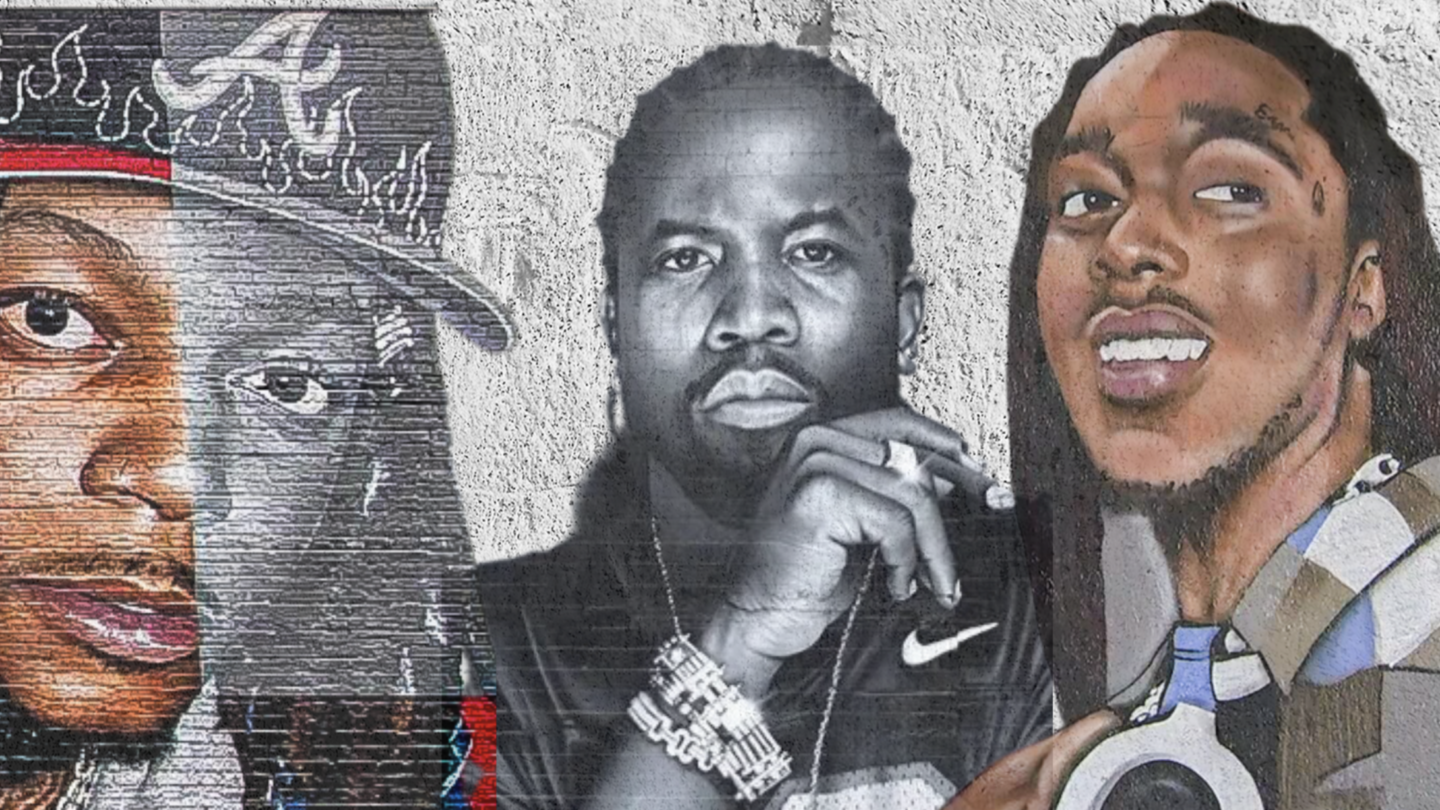
Dr. Regina N. Bradley has spent much of her career constructing scholarly arguments legitimizing Southern hip hop as an art form and a cultural archive of Black Southern life. She teaches a Kennesaw State University course centered on Outkast and wrote what many consider the definitive account of Southern hip hop music. This summer, Bradley takes that work out of the classroom and into a design museum. Her three-part, Museum of Design Atlanta (MODA) lecture series, “How Hip-Hop Made Atlanta,” begins July 9 and ends. All sessions are free and open to the public with an RSVP.
A leading scholar of the hip-hop South
Bradley is an associate professor of English and African Diaspora Studies at Kennesaw State University and co-director of the Hip Hop Studies Consortium at Georgia State University. At Kennesaw State, she teaches a course built around OutKast — the class she has spent years using to help students take the music they love seriously as scholarship.
Her 2021 book, “Chronicling Stankonia: The Rise of the Hip-Hop South” (University of North Carolina Press), presents Outkast and the wider hip-hop South as a pathway to understanding Black Southern life after the Civil Rights Movement. The book was named to the Georgia Center for the Book’s “Books All Georgians Should Read” list in 2022. Bradley also edited “An Outkast Reader,” a collection of essays on the group. Her work has been featured on Netflix, NPR and The Washington Post.
Why hip-hop scholarship and design museum?
In Bradley’s framing, “How Hip-Hop Made Atlanta” is about the reciprocal relationship between culture and civic life, how each influences the other.
“It’s not necessarily design in a sense of like architecture or something like that, but it’s expanding the definition of design,” Bradley said.