ATL Film Party is a free local short-film competition where attendees vote for a winner who receives a cash prize and mentorship. (Arvon Bacon)
This story was updated on Thursday, Nov. 6, 2025, at 7:57 p.m.
Georgia’s film industry slowed down this year. State data shows a significant drop from the $4 billion amassed a few years ago.
The numbers also show that film permits in Atlanta dropped roughly in half over the last year, leaving some in Georgia’s film industry looking for new ways to succeed.
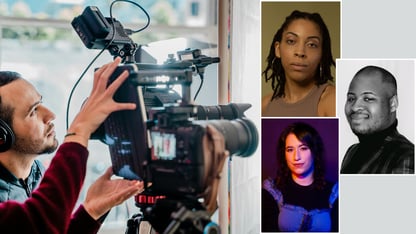
Inside a lecture hall at Clayton State University, senior film student Khalil Shipman sits behind a video camera recording his film class.
“I hope to be a cinematographer and a screenwriter,” says Shipman.
Khalil Shipman, a 24-year-old film student, is behind a video camera recording his film class. (Marlon Hyde/WABE)
The 24-year-old dreams of starting his career in the Peach State, but he worries.
“I have friends that are already in the industry, and I definitely have been hearing that things are slowing down,” says Shipman.
He adds, however, he is seeing signs of hope.
“At the same time, I’ve been hearing about people trying to build community and build networks of local filmmakers from Atlanta,” says Shipman.
Khalil Shipman is a senior film student at Clayton State University. The 24-year-old dreams of being a cinematographer and a screenwriter. (Courtesy of Clayton State University)
“Things are changing, but wherever there’s change, there’s opportunity,” says Shipman’s professor, Jose Acosta. He’s been in the film business for more than 30 years.
“So I encourage our students to each find their own path,” says Acosta.
Acosta says there are opportunities in advertising, podcasting, visual effects. And then there’s the exploding artificial intelligence industry.
“Some of our students are going to avoid artificial intelligence, and some of our students are going to embrace it. Maybe some of them will be successful with both of those strategies,” says Acosta.
Jose Acosta is a professor at Clayton State University and has been in the film business for more than 30 years. (Marlon Hyde/WABE)
Competition is increasing from other states like Nevada and California, which have revised their tax credits and incentives to bring productions there.
Randy Davidson is the CEO and founder of Georgia Entertainment, a media company that covers the film and creative industries in the Peach State.
Recently, he says companies like Marvel, which shot movies like “Black Panther” and “The Avengers” here, are increasingly filming overseas.
“It’s just we’ve been in this period for the last 12 to 18 months, to where international enticements have been unbelievable, you know, from a financial perspective,” says Davidson.
He says there are fewer productions shooting in Georgia than in 2022.
That’s led to a big drop in spending. The Georgia Film Office reports production spending has dropped from over $4 billion in 2022 to around $2.6 billion in 2024.
The Georgia Film Office reports production spending has dropped from over $4 billion in 2022 to around $2.6 billion in 2024. (Courtesy of Georgia Department of Economic Development)
“Companies have had to make some decisions about choosing to go overseas to avoid health care costs or union issues that we face here, threats of strikes at one time, and the strike,” says Davidson.
Davidson says coming out of the pandemic, Georgia was one of the first states to reopen, which led to major film productions flocking here. He says the 2022 numbers are an anomaly and that we should not expect big productions to return to that volume. However, the state remains active in the film industry, according to Davidson, as the new Superman movie shot parts here, and Amazon, Netflix, and Tyler Perry Studios continue churning out content.
He says shooting short-form content and commercials on our soundstages will create additional opportunities.
“I’m confident that this is not going anywhere. I mean, if you just look around, the kids are on the devices. Content consumption is not declining,” says Davidson.
Davidson says building up local filmmakers will be key, like Brooke Sonenreich. She says the state can do more for creatives, like providing funding or lowering the threshold for tax credits.
“We have to figure out another way to collectively help these independent filmmakers because… They’re getting eaten alive,” says Sonenreich.
For example, just submitting a film to Sundance can cost as much as $125. Sonenreich says filmmakers here sometimes spend a few thousand just to get their film seen, with no guarantee of being selected. And that’s why she started ATL Film Party.
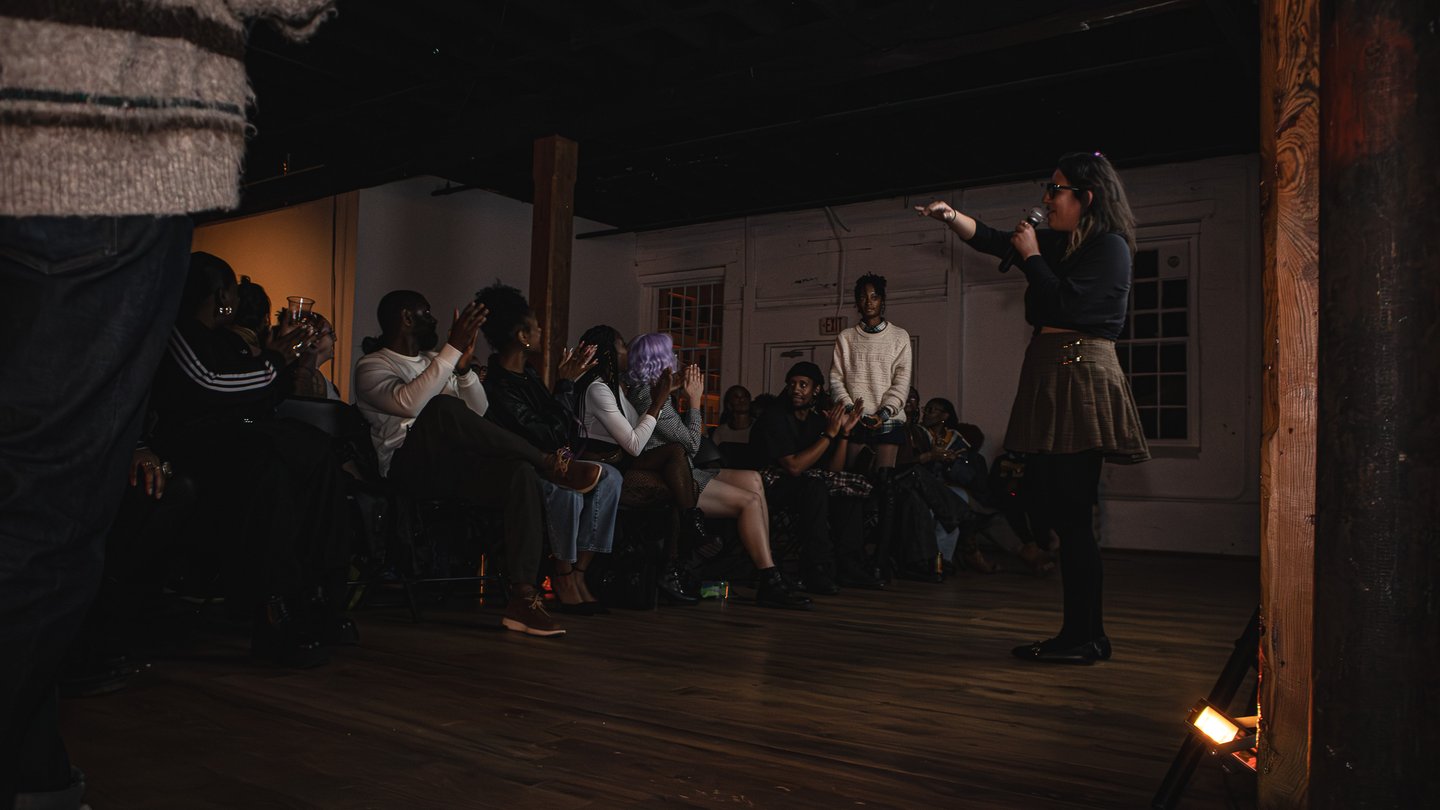
ATL Film Party is a free local short-film competition where attendees vote for a winner who receives a cash prize and mentorship.
“It’s so awesome because I’m able to get the community together to watch everyone’s films. But again, I’m applying for the same grants as everyone else. And the grants are running out,” says Sonenreich.
Brooke Sonenreich speaks to the audience that has gathered for ATL Film Party, which she started. (Arvon Bacon)
Michael Adedeji is also a local filmmaker, and he enjoys the networking opportunities the event provides.
“What Brooke is doing with ATL Film Party, I’ve been to a couple of events, I’ve met some great people, those people I can call right now, we can make something happen,” said Adedeji.
Adedeji says Atlanta needs to continue building community and partnerships if it wants the film industry to bounce back or reinvent itself… especially as the competition grows and the technology changes.