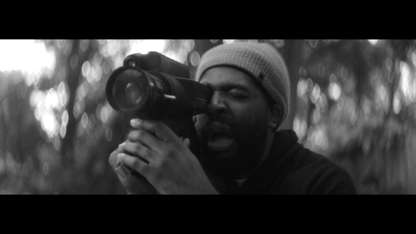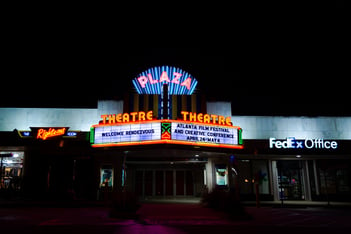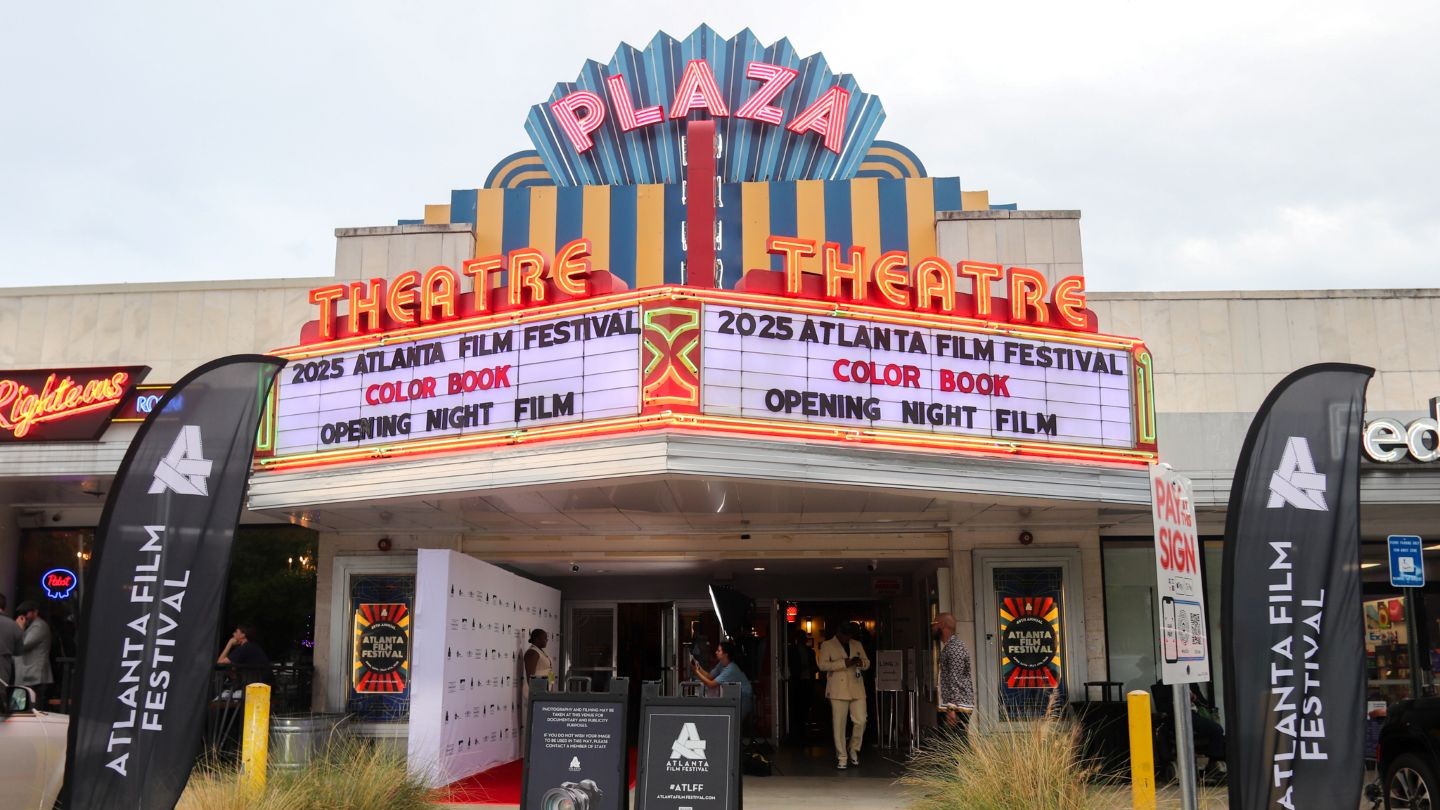
The 49th annual Atlanta Film Festival is running until May 4, the festival attracts over 25,000 attendees through its programming, which includes screenings and events. (Courtesy of the Atlanta Film Festival)
The 49th annual Atlanta Film Festival is officially underway as the local film industry is going through what some are calling a slowdown.
Running until May 4, the festival attracts more than 25,000 attendees through its programming, which includes screenings and events.
“The Atlanta Film Festival, this year especially, is showcasing and putting up front the incredible talent that has always come out of Georgia,” Chris Escobar, the executive director of the Atlanta Film Society says.
He highlights the numerous feature films that are shot, set or owned here.
“Atlantans have been coming into this room to watch films together as a community and especially independent films, particularly over the last four decades, and films made by and with and about Atlanta,” Escobar says.
He unlocks the doors to the Plaza Theatre in Atlanta. Crews are cleaning the floors and setting up chairs in anticipation of thousands of festivalgoers.
“We’re not quite popping popcorn yet, but that would be the move,” he says.
The 49th annual Atlanta Film Festival is running until May 4, the festival attracts over 25,000 attendees through its programming, which includes screenings and events. (Courtesy of the Atlanta Film Festival)
But Escobar adds that the state’s film industry is in a tough place right now.
“What we’re hearing, immediately, is that it’s still really slow,” Escobar says.
Kelsey Moore is the executive director of the Georgia Screen Entertainment Coalition. She says companies have moved to shooting films overseas to save money.
“And that’s not just in Georgia. That is all over the U.S. We’ve seen the last several months between a 30% and 40% drop in production,” Moore says.
This downturn in production is leaving Georgia’s stage space empty.
“The industry as a whole here is hurting. And while we are very hopeful that it is going to come back, and we’ve seen an increase, we’ve see more episodics,” Moore says.
Moore adds it will take a mix of large productions and local talent to build a sustainable future.
“We’re really hopeful, but it’s a tough time for our crew members, our stages, our infrastructure businesses,” she says.
Filmmakers Ryan White and Jessica Hargrave grew up in Atlanta but now live in Los Angeles.
“Ryan and I both grew up in Atlanta. We’ve been best friends since we were little kids. We met in fourth grade. So it’s been over 30 years of friendship and filmmaking together,” Hargrave says.
Their film, “Come See Me in the Good Light,” about two poet lovers who embark on a journey to explore themes of love, mortality, and the fleeting moments of life, is playing on Sunday at the festival.
“We have like 60 friends and family coming… But it’s like a homecoming for us getting to reconvene back in Atlanta,” White says.
“We’re really hopeful, but it’s a tough time for our crew members, our stages, our infrastructure businesses.”
Kelsey Moore, executive director of the Georgia Screen Entertainment Coalition
Georgia State University alum Caroline Rumley’s feature film, “Eponymous,” is being shown on Wednesday. Rumley is a filmmaker who blended sound, found footage, and archival footage to tell the story of a father who invented the automatic machine gun and his son, who created the gun silencer.
“The footage is shot between 1924 and 1936. So it’s very, very early 16-millimeter silent filmmaking, and he shot so much footage. So I just decided when I saw all that footage to try to make the film just using it,” Rumley says.
While Escobar with the Atlanta Film Society says he sees more productions getting started recently, the path forward needs local voices.
“Having those local filmmakers and storytellers is proving that it’s not just something nice for the sake of representation or culture; economically it’s vital and important for what has become such a major industry for Georgia,” Escobar says.
Kelsey Moore says that lawmakers have proposed changes to the tax savings offered in Georgia to help along the recovery. Legislation, such as House Bill 129, which passed both the House and the Senate, seeks to restore a tax credit for film post-production activities, including editing and visual effects, that expired in 2023. The bill also extends the expiration date for the post-production credit to 2031.
HB 129 is now awaiting a signature from the governor.