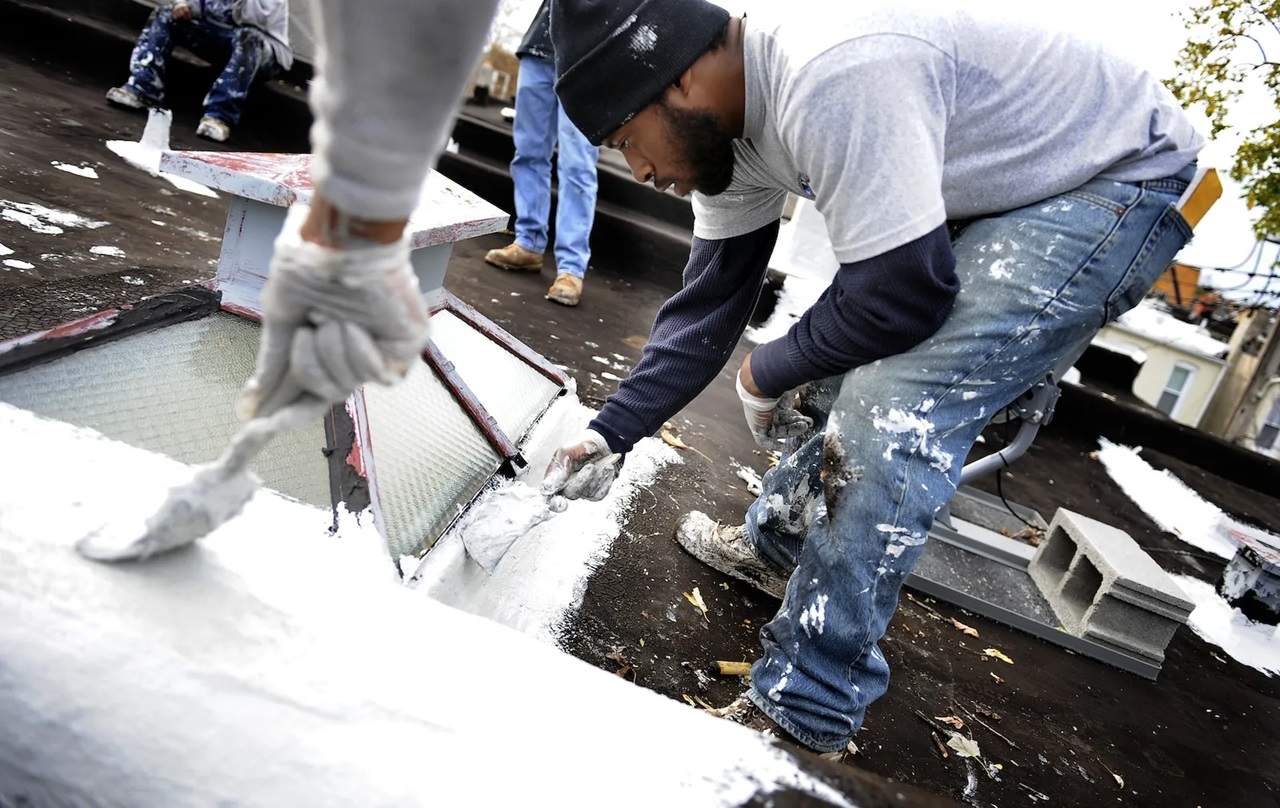
This story was originally published by Grist. Sign up for Grist’s weekly newsletter here.
Walk outside into 100-degree heat wearing a black shirt, and you’ll feel a whole lot hotter than if you were wearing white. Now think about your roof: If it’s also dark, it’s soaking up more of the sun’s energy and radiating that heat indoors. If it were a lighter color, it’d be like your home was wearing a giant white shirt all the time.
This is the idea behind the “cool roof.” Last month, Atlanta joined a growing number of American cities requiring that new roofs be more reflective. That significantly reduces temperatures not just in a building, but in the surrounding urban environment. “I really wanted to be able to approach climate change in the city of Atlanta with a diversity of tactics,” said City Council member Liliana Bakhtiari, who authored the bill, “because it’s far easier to change a local climate than it is a global one.”
Because cities set their own building codes, they can regulate roofs regardless of the whims of the Trump administration, which is aggressively rolling back climate policies. Experts say cool roofs are a simple, relatively cheap, and effective way to save people from extreme heat. “I like to say that reflective materials transform rooftops from problem to power,” said Daniel J. Metzger, a senior fellow at Columbia Law School’s Sabin Center for Climate Change Law. “Cool roofs give homeowners the power to improve health outcomes and air quality while saving money on their own energy bills.”
Read this story now for free
To continue reading, sign up for our newsletter and get unlimited access to WABE.org
You can select your preferences for news and local content. We will never share your email address. Learn how your newsletter sign-up will support WABE and Public Media