It’s awful. And while the clinical term is gastrointestinal distress, reporting on the recent cyclosporiasis outbreak has repeatedly used the descriptor “explosive diarrhea.” According to the Centers for Disease Control and Prevention, cyclosporiasis is an intestinal illness caused by the microscopic parasite Cyclospora cayetanensis.
Dr. Jodie Guest notes that the parasite itself is not new, but the current surge in cases is.
“This is not about a mutation of a parasite. This is a known illness that we typically see most often in the summer,” said Guest. “But in the United States, we usually don’t see more than about 2,000 cases in an entire year. Right now, we suspect at least 5,100 cases, and that is probably a significant undercount. We are at the outbreak level for sure.”
Guest is a professor and senior vice chair in the Department of Epidemiology at Emory University’s Rollins School of Public Health. She answered questions about the latest cyclosporiasis outbreak, which has now been identified in more than half of the U.S., on “Closer Look with Rose Scott.”
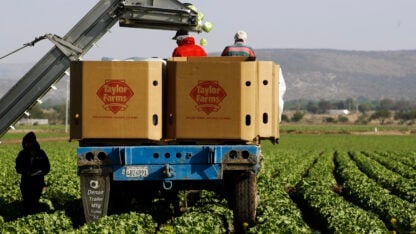
Food and Drug Administration officials said Monday they are continuing to focus on lettuce from Taylor Farms as the source of a multistate outbreak, despite inaccurate test results that the government briefly publicized over the weekend.