Changes coming to Georgia’s work requirement Medicaid ‘Pathways’ program

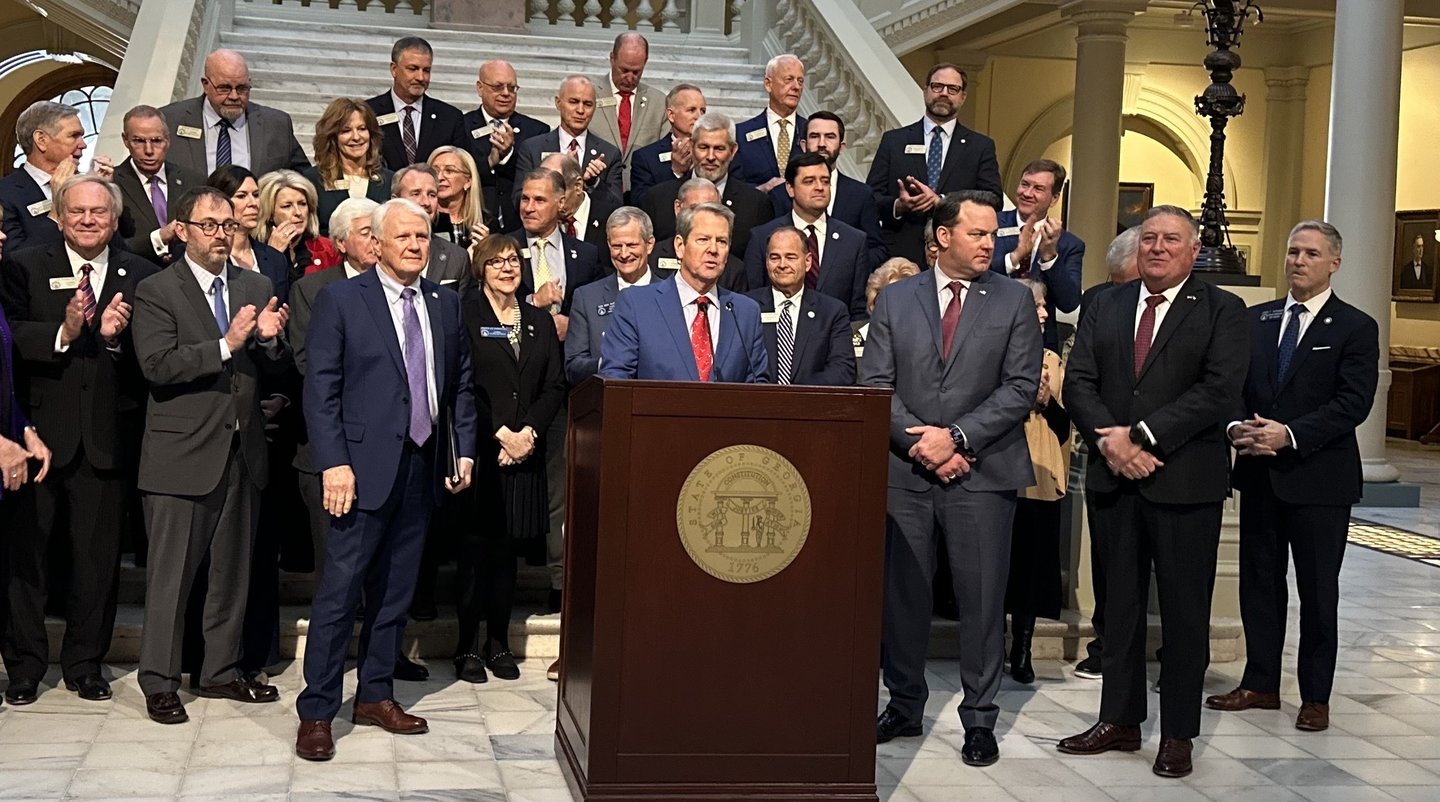
Georgia Gov. Brian Kemp speaks about the state's Pathways to Coverage program at the Georgia State Capitol in Atlanta, Georgia, on Jan. 15, 2025. (Rahul Bali/WABE)

It could soon get easier for Georgians with health insurance through the state’s Pathways to Coverage Medicaid program to maintain coverage.

The program is set to continue until the end of 2026 after the Trump administration granted an extension, shortly after a recent Government Accountability Office report revealed the state has spent more on running Pathways than providing health care.

Pathways offers Medicaid health insurance coverage to adults with incomes up to $15,650 a year for an individual, or $26,650 per year for a family of three, if they document at least 80 hours per month of work, volunteer or educational activities.


The program was initially scheduled to expire at the end of this month.

Republican Georgia Gov. Brian Kemp applied to continue it, arguing it was delayed during Georgia’s legal battles under the Biden administration, which had blocked the work requirement.

The Trump administration’s Centers for Medicare and Medicaid Services approval validates the state’s approach to expanding health care access to some adults who otherwise wouldn’t qualify for Medicaid in Georgia, Kemp said.

“We’re grateful to the Trump administration and CMS for this approval, which supports our innovative, Georgia-centric approach to providing healthcare coverage to thousands of hardworking Georgians,” said Kemp.

“Unlike the previous administration which chose to sue, obstruct, and delay, President Trump and his team have worked alongside us to improve Georgia Pathways and ultimately deliver a better program to Georgians who need it most. We look forward to continuing that partnership in the months ahead,” he added.

Now, the extension is set to begin Oct. 1, 2025, and continue through Dec. 31, 2026.

It includes changes Kemp said would reduce the state’s administrative costs and allow Pathways to cover more low-income Georgians.

The updates include allowing participants to submit paperwork recertifying their work, education, or volunteer hours just at their time of application and annual renewal instead of every month, the current requirements.

Other changes include counting the caregiving activities of parents and legal guardians for children up to age 6 as meeting Pathways’ work requirement. And, making the health insurance coverage retroactive to the day a person’s application was submitted.

Pathways enrollment is lower than the state’s projections, and more than 67% of spending on the program has gone to administrative costs, according to the GAO report, commissioned by Congressional Democrats, including U.S. Sens. Jon Ossoff and Raphael Warnock from Georgia. 

“Administrative spending has outpaced spending for medical assistance (e.g., health care services) under the demonstration. This was likely driven by the upfront administrative changes needed to implement the demonstration, the delayed start date for enrollment, and any duplication in administrative spending due to the delay,” the GAO report found. 

State officials initially projected an enrollment, which began in July 2023, of more than 25,000 people in Pathways’ first full year.

As of May 2025, Georgia numbers showed enrollment at 7,463.

The GAO report found the state spent $54.2 million for administration costs and $26.2 million on health care between 2021 through the middle of 2025. Nearly 90% was federal funding. The state used $20 million in other federal grants to help fund implementation. Pathways’ administrative spending is expected to drop through the end of 2025.

Georgia is on track to spend $6 million in fiscal year 2025 for administrative activities, according to the report, including increased training for staff, and improvements to the application and work-verification system, Gateway. 

Program participants have criticized Pathways’ application process as too cumbersome and riddled with technical glitches. 

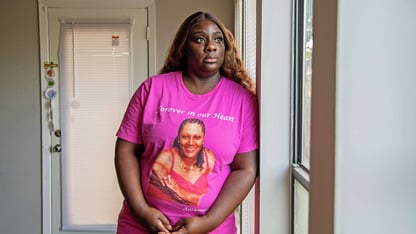
Atlanta Licensed master social worker Tanisha Corporal has faced red tape when navigating Georgia’s Pathways to Coverage program, which offers Medicaid health insurance to adults with incomes up to the federal poverty line if they prove they’re working, in school or job training, or volunteering at least 80 hours a month. (Jess Mador/WABE)

Once in the program, recertifying work hours every month is time consuming, said Atlanta social worker Tanisha Corporal, founder and executive director of the nonprofit Be Well Black Girl Initiative.

“I have to download a PDF and take a screenshot because unlike most portals or websites, you can’t upload a file or a photo. For some reason, when I select uploading a file on Gateway, it does not receive the file. So I open the PDF, I take a screen shot and I upload it as a picture every month,” she said. “In general, every month, it’s probably about five to seven hours, I would say, making sure that all the documentation is in order to make sure that it’s uploaded by the date each month so that the insurance is not canceled.” 

Pathways isn’t insuring enough Georgians to be cost effective, said Natalie Crawford, executive director of the group Georgia First, which has pushed for full Medicaid expansion.

“As someone who is deeply concerned with fiscal responsibility, it makes no sense to me. It absolutely sort of disincentivizes what we say is the stated goal,” she said. 

Republicans’ tax and spending bill recently signed by President Donald Trump includes nationwide Medicaid work requirements similar to Georgia’s.

By 2027, some adults will also have to report at least 80 hours per month of work, education or volunteering to maintain their health insurance coverage.