This coverage is made possible through a partnership between WABE and Grist, a nonprofit environmental media organization.
The Georgia Public Service Commission Friday unanimously approved an expansion deal for Georgia Power expected to cost at least $15 billion. In order to meet rising demand the utility is predicting from large customers, mostly data centers, Georgia Power will build gas turbines and batteries and purchase energy, adding nearly 10,000 megawatts of electricity to its grid.
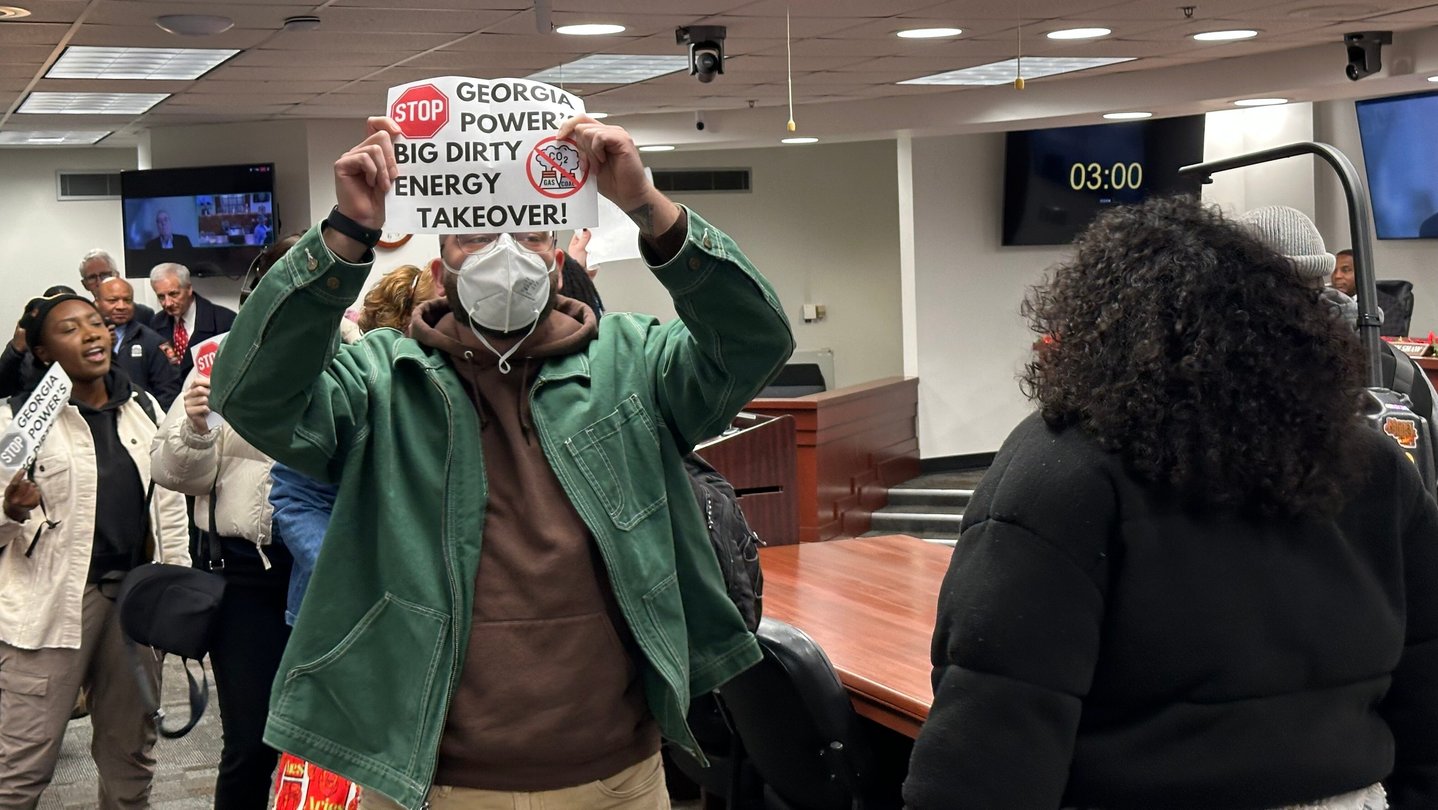
After several rounds of hearings on the controversial proposal and more than an hour of public comments Friday morning, commission Chair Jason Shaw called for a vote. He was met with shouts.
“Nay nay nay! The people say nay!” shouted a group of protesters as they were escorted from the hearing room.
The five commissioners then all voted “aye.”
Under the deal they approved, Georgia Power is promising “downward pressure” of $8.50 per month for the “typical” residential customer, which means someone using 1,000 kwh of electricity a month. That promise, which will apply in 2028 when the utility next brings a rate case before the commission, does not guarantee a rate reduction. Rather, it means that whatever rates the company requests will be offset by that amount.
“We know every dollar counts. This plan means more money stays in your pocket while we power Georgia’s future,” wrote Georgia Power CEO Kim Greene in a statement. “Large energy users are paying more so families and small businesses can pay less, and that’s a great result for Georgians.”
All of this hinges on the data centers: The massive buildout of energy capacity will serve their high electricity needs, and the influx of revenue they’re expected to bring in will pay for the downward pressure on rates. But critics worry that the data centers might not materialize or could relocate in a few years. That could leave ordinary Georgians paying for the new infrastructure for decades.
Commissioner Tim Echols told WABE before the vote that customers will be protected.
“Even if a company does go bankrupt or they scale back what they’re using, we’re going to extract a pound of flesh from them and the ratepayers are gonna get that back,” he said.
Georgia Power, the commission’s staff and the commissioners themselves point to several assurances that data centers and other new, large customers will pay for their own infrastructure. Earlier this year, the commission approved new contract terms that allow the utility to require minimum monthly payments from large customers for 15 years, regardless of how much electricity they actually use and whether they stay in Georgia. The utility has also begun requiring collateral from the new prospective customers.
In hearings last week, Georgia Power said that even after the commission approves the new resources, the utility can delay or cancel projects it doesn’t end up needing. But that will be more difficult now that this deal is approved, said Sierra Club Staff Attorney Isabella Ariza.
“Everything after today, or after the final order stands firm, will be a higher threshold for interveners, for the general public to get any dollar denied from recovery,” she said. “The best bet was to deny the resources now, and the most conservative approach would have been to do that.”
This was the final vote for Echols and Commissioner Fitz Johnson, who both lost elections to Democratic challengers last month. The new commissioners take office in January.