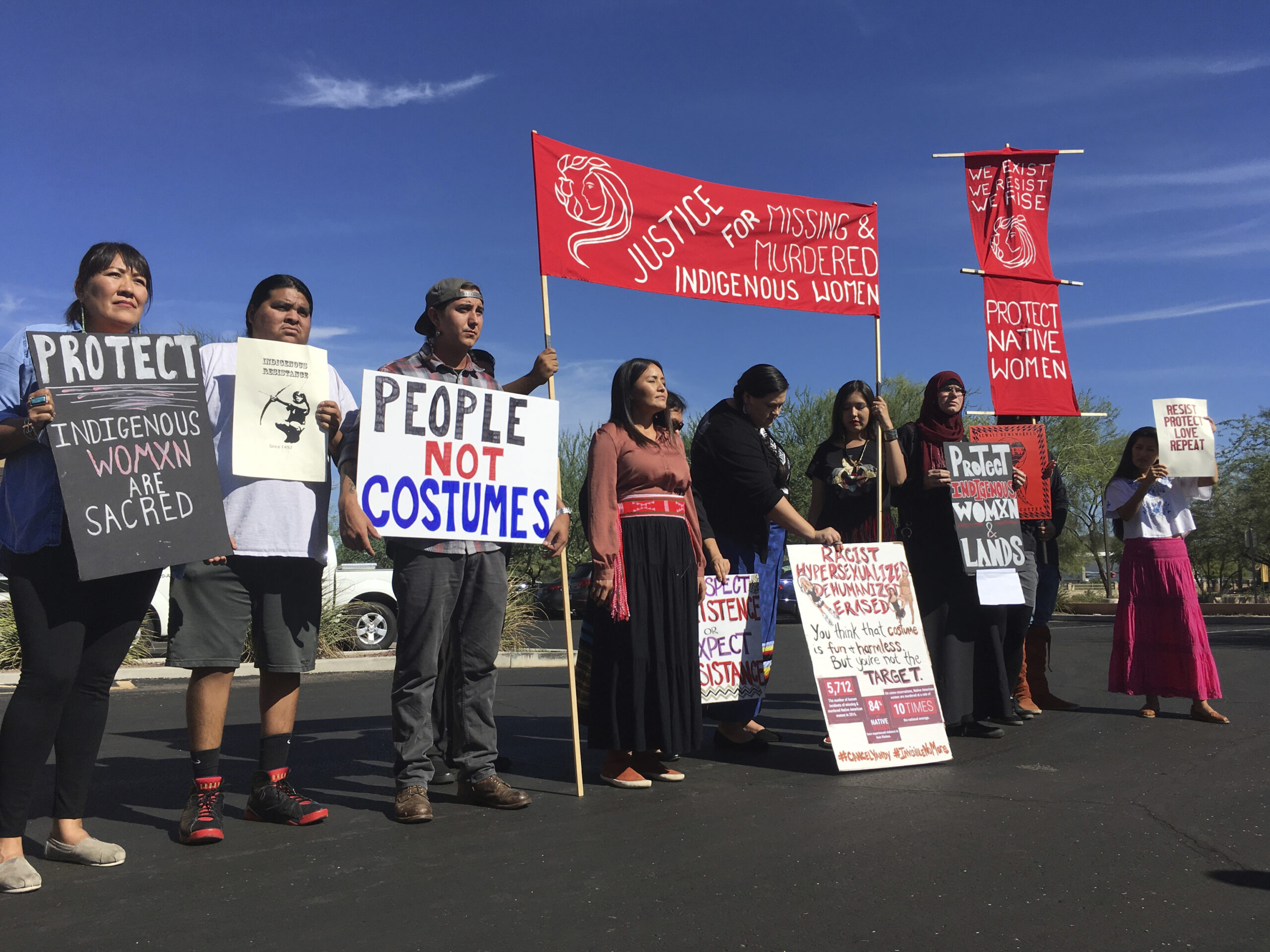
Halloween is around the corner and guess what that means? Someone will metaphorically step in it with an insensitive or straight up racist costume.
The shelves of most costume stores still stock the “Arab Sheikh” outfit complete with the sinister mustache. Or you can order the “Ride a Camel Adult Male Costume.” There are the “Mexican” costumes: wide sombreros, ponchos, handlebar mustaches. There are the people who darken their skin to pose as a black or brown person, although many people understand the degrading and dehumanizing history of blackface now. And every year, there is always the generic “Native American” costume of the woman or man wearing fringe, fake suede, feathers and braids.
“When it comes to Halloween in the Native community it’s like a big eye roll,” said Henu Josephine Tarrant, a New York-based artist and performer of the Ho-Chunk, Hopi and Rappahannock tribes. “It becomes exhausting.”
Read this story now for free
To continue reading, sign up for our newsletter and get unlimited access to WABE.org
You can select your preferences for news and local content. We will never share your email address. Learn how your newsletter sign-up will support WABE and Public Media