DEKALB COUNTY, Ga. — DeKalb County is rolling out a new “blight tax” that will slap much higher taxes on commercial properties deemed severely neglected.
Abandoned and neglected properties threaten the public safety of residents, diminish their property values and stifle the county’s economic development. Making property owners pay property taxes 10 times higher than the regular rate is a way to hold them accountable while also cleaning up the county, officials said.
The new blight tax puts absentee property owners on notice that they either need to clean up their property or sell it to someone else who will, CEO Lorraine Cochran-Johnson said. A property assessed at $350,000 would normally pay about $7,500 in county property taxes; if deemed blighted, the total would jump to $75,000.
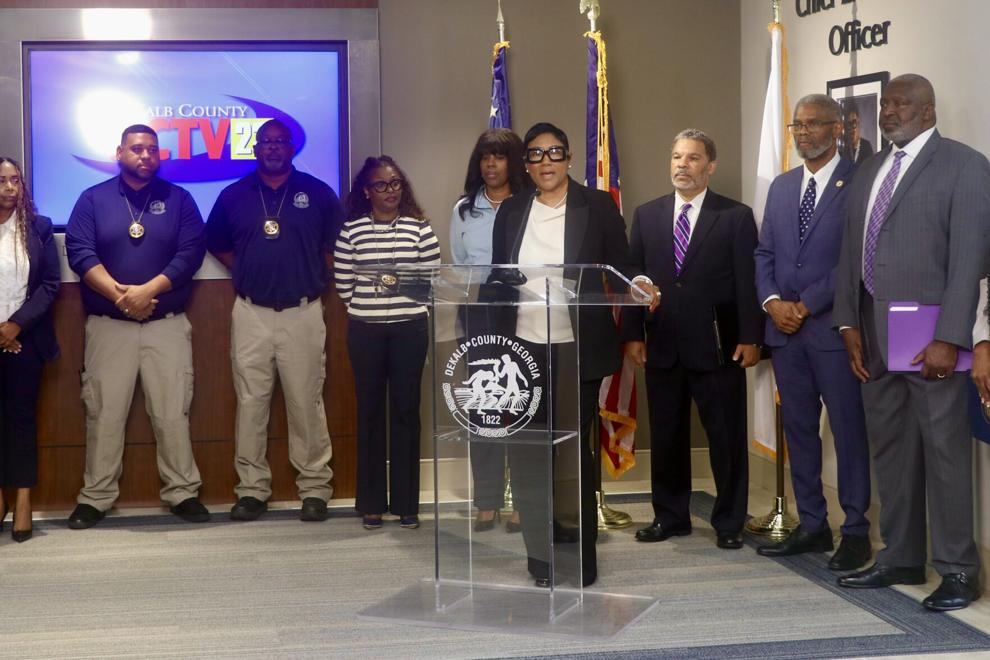
“No longer will business owners who strategically invest in DeKalb County to simply await until there is an uptick in profit be allowed to sit in comfort,” she said at a July 21 press conference at the Manuel J. Maloof Center in Decatur. “Either invest in your properties, or let’s move them along to someone who will.”
The DeKalb County Board of Commissioners approved legislation in November to give the county authority to increase property taxes for blighted properties until violations are corrected. Enforcement went into effect May 10 and officials said they have identified about 10 properties that could be headed to court. Another 50 property cases are pending.
County officials declined to say where the approximately 60 properties being investigated are, but empty and neglected buildings are a common sight in south DeKalb around Glenwood and Candler roads.
Properties can only be declared as blighted by a judge and taxes can only be raised with judicial review, officials stressed, ensuring property owners have due process to appeal their case.
“Our blight tax is what I call a tool — it is a tool that allows us to hold chronically neglected property owners accountable, while protecting the residents who live in these communities, who invest in them and have been forced to live next door to blight for years,” Cochran-Johnson said.
Blight taxes are not new. Stone Mountain approved a blight tax in 2021. Tucker did so in 2024. The city of Atlanta passed a blight tax in 2024 that calls for a tax increase 25 times as high as the regular rate, but has not been able to collect any revenue.
“I can’t speak for other jurisdictions, but we were given the full authority on May 10. We’re not 60 days in, and we have a blight task force. We have 10 cases under review with an additional 50 pending,” Cochran-Johnson said.
She said county officials know where the most neglected properties are and who owns them. The new blight tax is the tool they need to go after those who don’t care for their property and hold them accountable.
“This is about sending a message in the county,” Cochran-Johnson said. “We have, in many ways, not held property owners accountable.”
Code compliance officers within the blight task force will conduct thorough investigations and “have those cases all tied up really nice with a bow and all the evidence” to present to judges, she said. “I’d love for us to be the poster child of how this should be done.”
This story was provided by WABE media partner Decaturish.