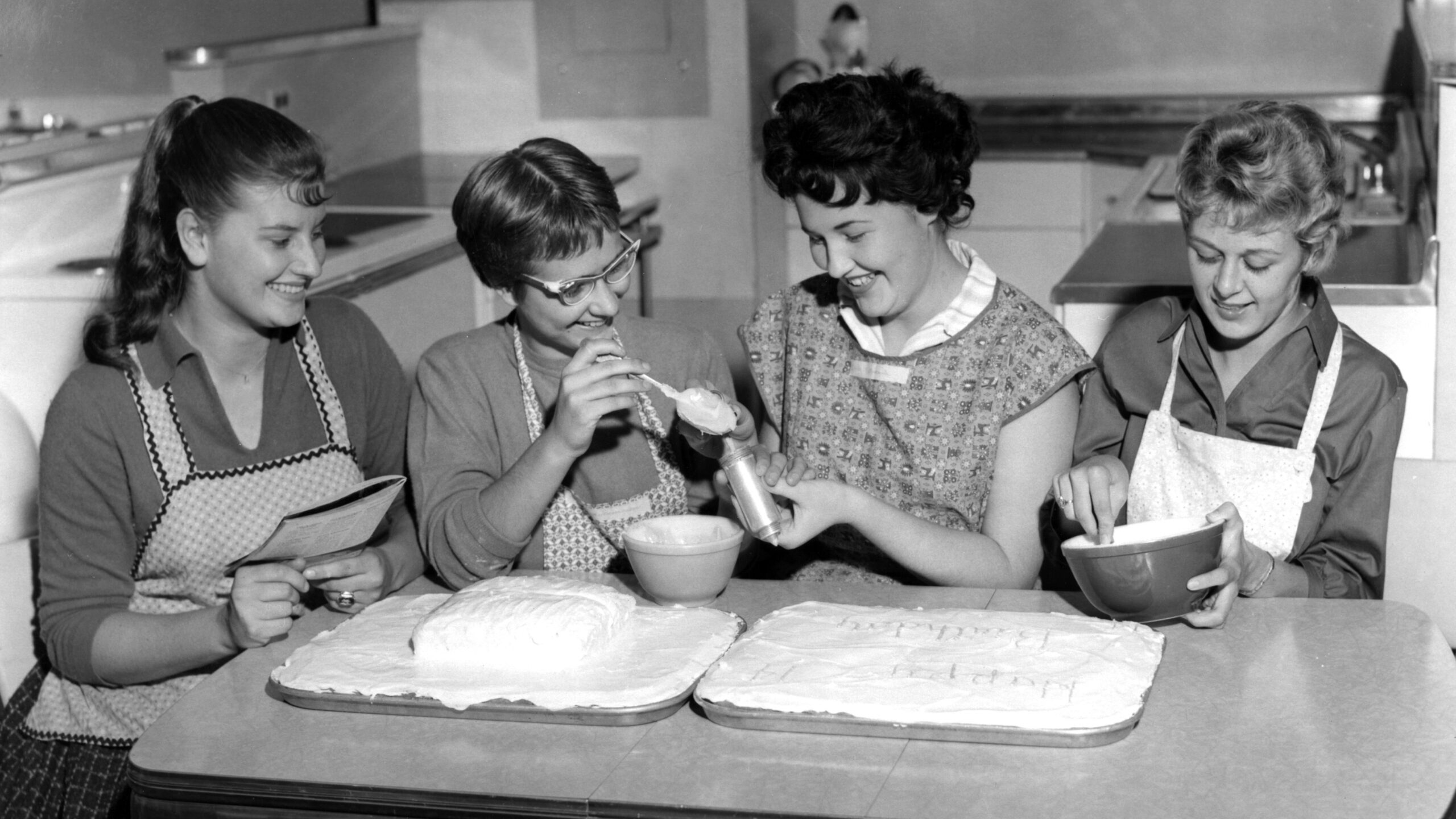
“Sometimes we take for granted that kids know how to wash dishes,” says Susan Turgeson, president of the Association of Teacher Educators for family and consumer sciences. “I never thought I was going to have to explain, step by step, how to put the drain plug in, the amount of soap to be used.”
Yet in many family and consumer sciences (FCS) classes in the United States, once known as “home economics,” teachers are instructing students in basics such as how to keep countertops clean or tell a teaspoon from a tablespoon. In 2010, the Healthy Hunger-Free Kids Act sought to address the rise of childhood obesity. But despite the renewed interest in showing children how to eat well, FCS classes haven’t gained traction along with that movement.
These courses haven’t gone away entirely, but their presence in schools is dwindling. In 2012 there were only 3.5 million students enrolled in FCS secondary programs, a decrease of 38 percent over a decade. Many blame an ongoing shortage of qualified teachers, while others worry that continued focus on testing, along with budget slashing, will make it hard to bring FCS electives back into the curriculum.
Read this story now for free
To continue reading, sign up for our newsletter and get unlimited access to WABE.org
You can select your preferences for news and local content. We will never share your email address. Learn how your newsletter sign-up will support WABE and Public Media