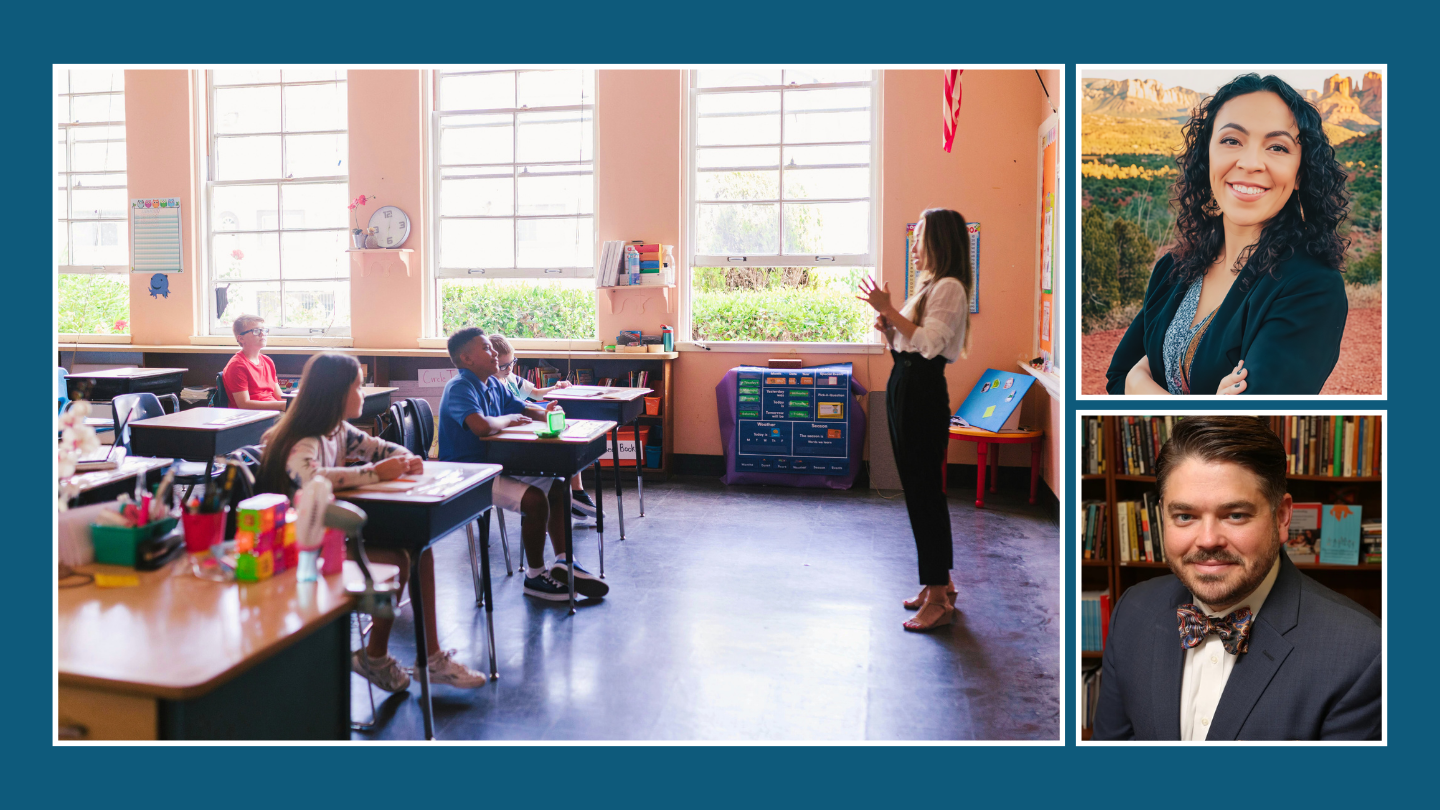
The National Charter School Resource Center reports the charter school movement has gained momentum since the late 1980s. As of the 2022-2023 school year, nearly 4 million students were enrolled in charter schools. That’s up by more than a million students from just a decade before.
Dr. Jameson Brewer, an associate professor of social foundations and education policy at the University of North Georgia, said he sees charter schools as a “weird hybrid” between public and private schools. He’s also critical of charter schools, calling them the worst of both worlds and a lukewarm approach to education.
“Yes, they are supposed to adhere to state and federal laws that include anti-discrimination. They are supposed to serve students who have IEPs,” Brewer said, referring to Individualized Education Programs. “But if you simply don’t hire a full staff of teachers who are trained and certified to teach students with IEPs, [students] will either be counseled out, they might be pushed out, or they might feel like they aren’t welcome there.”
Read this story now for free
To continue reading, sign up for our newsletter and get unlimited access to WABE.org
You can select your preferences for news and local content. We will never share your email address. Learn how your newsletter sign-up will support WABE and Public Media