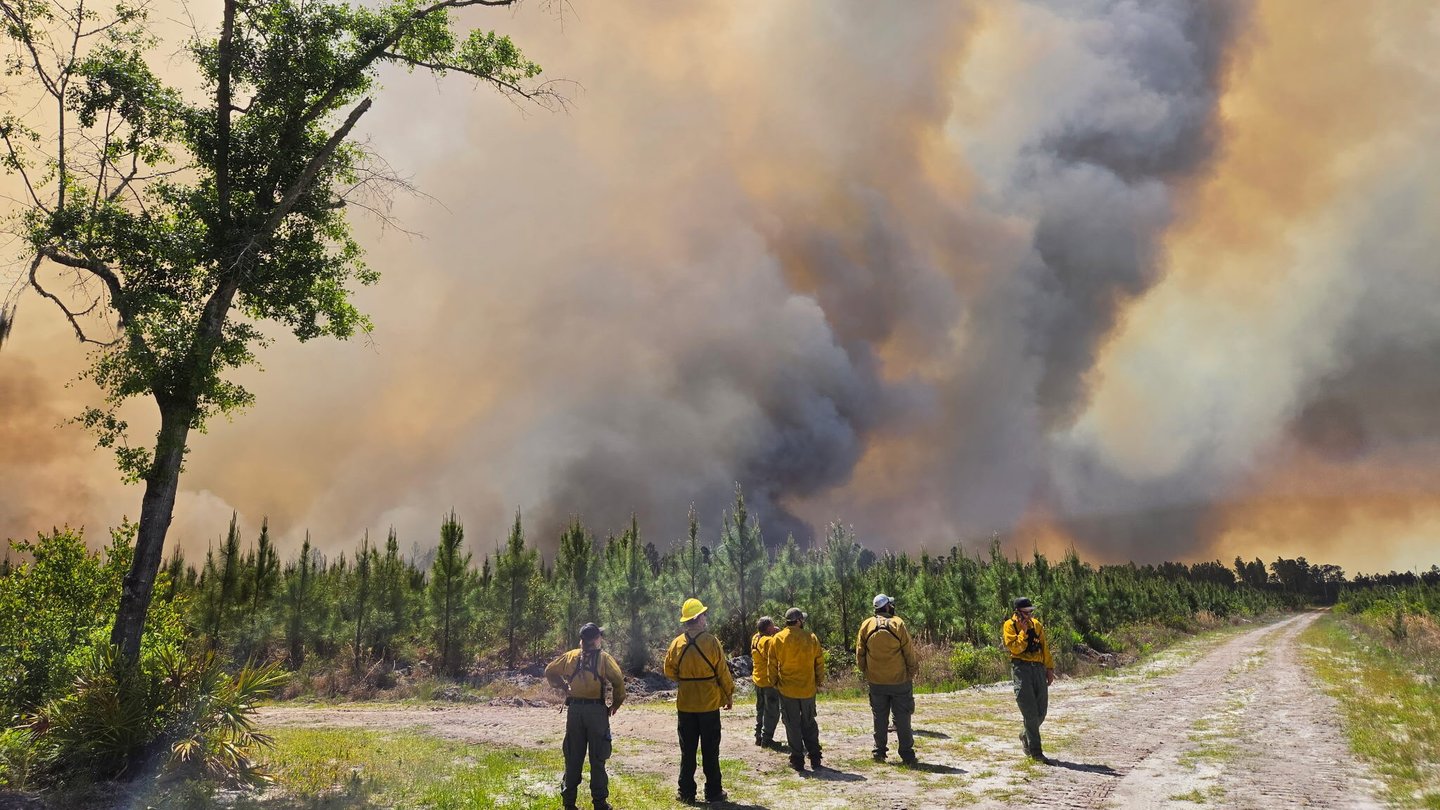
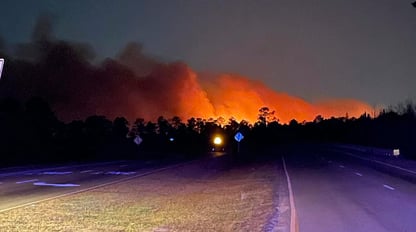
The Georgia Forestry Commission on the scene of the Pineland Road Fire in Clinch County. (Courtesy of the Georgia Forestry Commission)
Gov. Brian Kemp has declared a state of emergency in 91 counties as wildfires rage across South Georgia. More than 27,000 acres of wildfires are burning across the region, according to the Georgia Forestry Association, as most of the state experiences drought conditions.
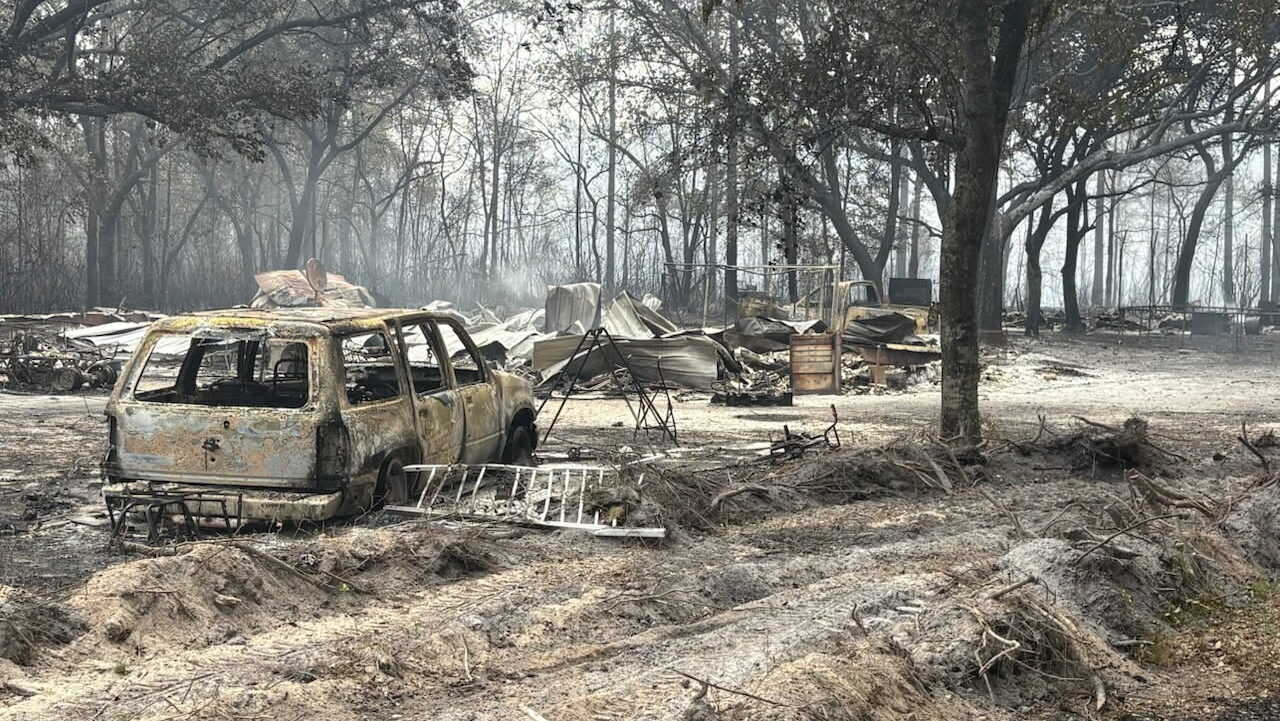
One fire, the Brantley Highway 82 fire, has prompted evacuation orders. Officials say 54 homes have been destroyed. That fire was previously 75% contained, but rapidly spread and intensified. By Wednesday afternoon, it had reached around 5,000 acres and was just 10% contained, according to the Georgia Forestry Commission. Brantley County has set up shelter sites for displaced residents.
The Pinelands Road fire in Clinch County, near the Florida border, began over the weekend and has since spread across more than 16,000 acres. It is also just 10% contained.
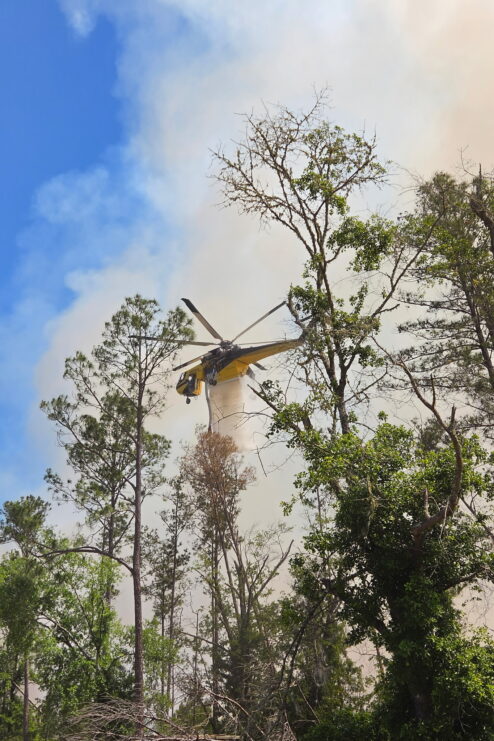
A helicopter fights the Pineland Road Fire in Clinch County. (Courtesy of the Georgia Forestry Commission)
Federal Emergency Management Agency (FEMA) is reimbursing up to 75% of the cost of fighting the Pineland Road fire in Clinch and Echols Counties and the Highway 82 fire in Brantley County, covering expenses like field camps and other supplies.
Smoke from the fires has spread across the region, with unhealthy air quality reported in nearby Brunswick and as far away as Macon and Columbus. Hazy, smoky air has reached as far north as Atlanta, downgrading the air quality there to moderate, meaning it could be risky to some people.
“This is a serious and evolving situation,” said Tim Lowrimore, president & CEO of the Georgia Forestry Association, in a statement on the group’s Facebook page. “We urge all Georgians to remain vigilant. Preventing additional fires right now is critical as responders work to manage this emergency.”
A piece of land that has been burned by the Highway 82 fire in Brantley County, Georgia.
Rainfall and water levels are far below normal across Georgia, increasing fire risk.
The federal and state departments of agriculture have designated 126 Georgia counties as primary natural disaster areas due to the severe, ongoing drought, making them eligible for consideration for Farm Service Agency emergency loans.
It’s common for fires to start in Georgia forests due to lightning strikes, stray cigarettes, sparks from backyard fires and a number of other causes. But normally, thanks to forest management and plenty of rain, most don’t burn very far. Officials say this year is different.
“Under drought conditions, we have that much less water available either in the water table or in our swamps, ditches, drains, lakes,” said state forester Johnny Sabo. “So the wildfires can spread more rapidly.”
A large swath of South Georgia is in an Exceptional Drought, the driest category under the federal drought monitoring system. Much of the rest of the state is in Extreme Drought, the next level down. Local governments are imposing burn bans and asking people not to light any outdoor fires. It’s critical Georgians heed those warnings, Sabo said.
“That is our number one cause of wildfires in the state are humans, unfortunately — people being careless,” he said.
Beyond the current drought, Georgia’s wildfire risk could also increase in the coming years because of the recent closures of several paper mills.
Foresters keep fire risk down by clearing out smaller trees so others can grow tall. But those small trees are typically used to make paper products. Without the mills to buy them, industry experts worry landowners won’t clear them.
“You’ll get more standing timber or downed timber that’s dead and incredibly flammable,” said Erin Lincoln, director of the Center for Forest Business at UGA.
Many Georgia forests also still have downed trees from Hurricane Helene, she said, providing more potential fuel for large fires.