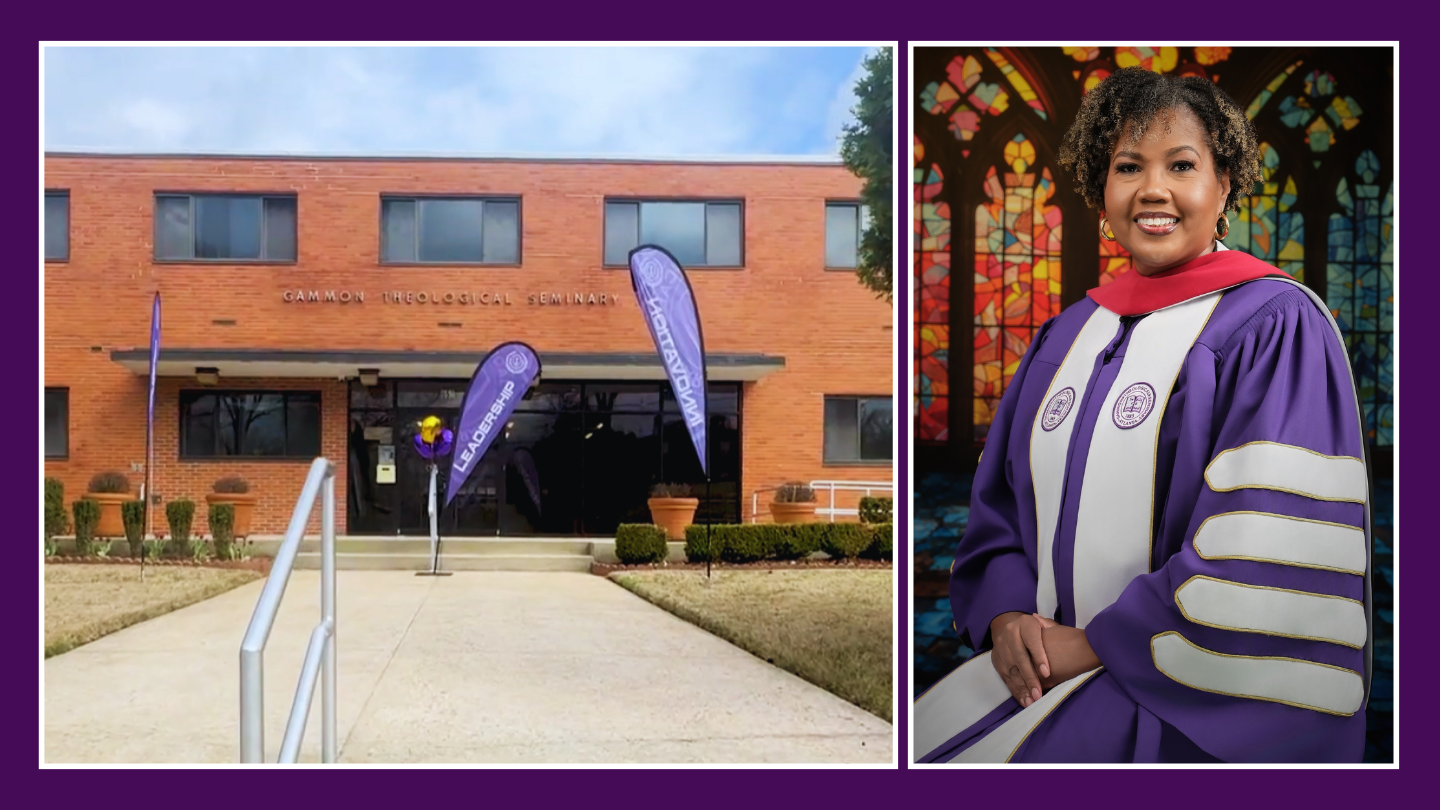
Gammon Theological Seminary president shares vision for faith education following accreditation

Rev. Dr. Candace M. Lewis is leading Gammon Theological Seminary as the institution celebrates a major milestone: earning independent accreditation. (Courtesy of Gammon Theological Seminary)

When asked to share a scripture that speaks to having faith in the present moment, Rev. Dr. Candace Lewis points to Romans 8:28.

“We know that all things are gonna work together for good for those who love the Lord and those who are called according to … God’s purposes,” Lewis said.

Lewis is the president and CEO of Gammon Theological Seminary in Atlanta, long recognized as one of the nation’s most prominent Black schools of theology. Her 2001 appointment marked a historic first in the seminary’s 143‑year history.


She joined Monday’s edition of “Closer Look” to share another major milestone: Gammon has earned independent accreditation from the Southern Association of Colleges and Schools Commission on Colleges.

Lewis says the shift from being part of a consortium to holding its own accreditation opens the door to “a more innovative approach to theological education, a hybrid theological education … It’s created more opportunities for us to be innovative in 2026 that we might not have had under a different model.”

Lewis also emphasized the need to educate future faith leaders differently from past generations. That includes more flexible, online courses.

“I do think the methodologies and how we go about training students have to continue to adapt to the changing culture,” she said.

This evolution is part of Gammon’s 3.0 ideology, which Lewis describes as a commitment to theological reflection that embraces multiple perspectives.

“A theological degree allows you to wrestle with a lot of different viewpoints and find a way to live out your faith faithfully, while recognizing that many perspectives must be considered,” Lewis said.

She also outlined her vision as a leader — one rooted in listening to faculty, staff and students, and in expanding opportunities for women clergy and scholars.