Georgia veterans, nurses groups fear impacts from looming federal VA cuts

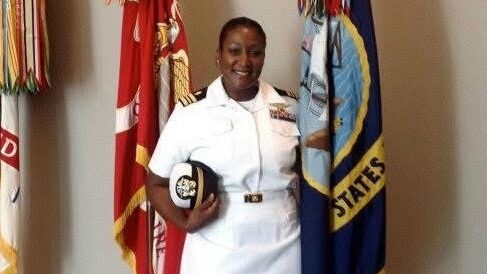
Veteran Teshara Felder served 10 years in the Navy. Her service put her in contact with contaminated air, soil and water, burn pits and other hazards the VA has linked to health conditions, including cancers. (Photo courtesy of Felder)

The United States Department of Veterans Affairs has announced it’s on track to eliminate a total of 30,000 employees nationwide. Georgia veterans who get services through the VA and advocates worry more cuts will erode working conditions and hurt patient care, especially at the Atlanta VA Medical Center, which already suffers from delays and staff shortages.  

Veteran Teshara Felder has experienced healthcare delays firsthand.

At home in Lithonia, she gives her small white, curly-haired dog a quick cuddle and hands him a toy to keep him busy at her feet. 


“Rascal, settle down. Settle down,” Felder says.   

The 46-year-old’s hair is pulled back in a colorful headscarf. She sits at the dining room table. In the chair next to hers is a box fan blowing directly on her. Felder says she needs it all the time now. Her body struggles to maintain a steady temperature.

Felder has a brain tumor.  

“It’s benign, it’s not cancer. But the danger of it being in your brain is that, pressing on any part of the skull is going to cause symptoms,” she says. “And in my case, it’s the hot flashes and the vision problems, heart racing and then I’m short of breath.” 

Felder also lives with what she describes as spells of vertigo-type dizziness that send her looking for the nearest seat.

The brain tumor used to be bigger. Surgery and radiation in 2016 eased her symptoms, she says. Recently though, they have returned.

“It’s scary because I just wish they could tell me what is causing it,” she says, “because I can’t go on through life with these symptoms or with this happening.” 

Felder has wondered if the toxic chemicals she was exposed to during her military service are related to her health symptoms. 

She served 10 years in the Navy as a public health officer stationed around the world. After the attacks of Sept. 11, 2001, her preventive medicine unit embedded with the Marines on multiple combat deployments.

“Twice to Iraq and then once to Afghanistan,” she says. “We were Force Health Protection, where we had to make sure that our troops were not exposed to anything, unclean water, had livable facilities. And then most of all, the air sampling.” 

Felder has wondered how the toxic chemicals she was exposed to during her decade in the Navy affect her health. She applied for coverage under the PACT Act. (Photo courtesy of Felder)

Her job put her in contact with contaminated air, soil and water, burn pits and other hazards that the VA links to a long list of health conditions, including cancers. 

She applied for coverage under the PACT Act. The Biden-era program expanded health care and benefits for veterans exposed to toxins during their service. Felder’s application was denied. She is appealing the denial.

In the meantime, Felder is also hoping for answers from VA specialists. She’s still waiting. 

“I have to wait to see the neurologist, which is four months. And an endocrinology appointment, I did get for September.”  

Felder is also a registered nurse at the VA. She says waits like hers are common. 

Also common are infrastructure breakdowns, staffing shortages, red tape and unanswered veteran phone calls. 

VA eliminated 17,000 employees amid DOGE cuts, with more coming

Those are just some of the issues the Department of Veterans Affairs Office of Inspector General highlighted in a recent report. The office has directed the Atlanta VA Medical Center to improve conditions and ensure access to high-quality care.

Veterans Affairs Sec. Doug Collins told Fox Business that reducing bloat by tens of thousands of VA employees nationwide will improve veteran health care and benefits. 

The Department of Veterans Affairs has so far eliminated 17,000 employees amid the Trump administration’s DOGE cuts to shrink the federal government, including dozens in Atlanta. Another 12,000 employees are expected to go by the end of September, Collins says.

“What we have done is, we’ve been able to use the attrition, use the deferred retirement plan to actually get us to our goal of making sure that we’re more aligned with what we need to be doing, and that is taking care of veterans from day one,” Collins told Fox Business.   

Collins says staff cuts are needed to reduce VA bureaucracy and address patient wait times, and maintains they won’t interfere with VA health care.  

“Making sure our patients are taken care of,” he told Fox Business.   

VA nurse fears more federal cuts could mean more delays for veterans

Registered nurse Irma Westmoreland, who has worked at the Augusta VA Medical Center for more than three decades, is skeptical of the administration’s promises.  

“All of the people that work with us, the physical therapists, the occupational therapists, the pharmacy techs, housekeeping staff, the supply staff, all of those people are on the chopping blocks,” Westmoreland says. 

Westmoreland leads her VA nurses union chapter of National Nurses United, and says losing more VA staff is not going to improve patient care.   

“What’s happening is that if I am passing out trays, going to find a urinal somewhere because we don’t have one on our unit,” she says. “If I’m escorting patients to radiology, I’m being taken away from the patient that I’m trying to take care of.” 

Parts of the nationwide VA system have already been operating under a hiring freeze. 

Westmoreland says many departments are already short-staffed. The VA system’s hiring process was a bottleneck long before Trump’s second term. More federal cuts could mean more delays for veterans waiting for doctor appointments, she says.  

Westmoreland says she is committed to working with patients at the VA for as long as possible. 

“We need to be stepping forward and not stepping back. And that’s what I am doing. I am not going away,” she says. “And, you know, I could retire, but I think the mission is too important — the mission of the veteran and caring for them.”

Do you have information to share about this health story or others? Contact WABE Health Reporter Jess Mador at [email protected], or securely via Signal.