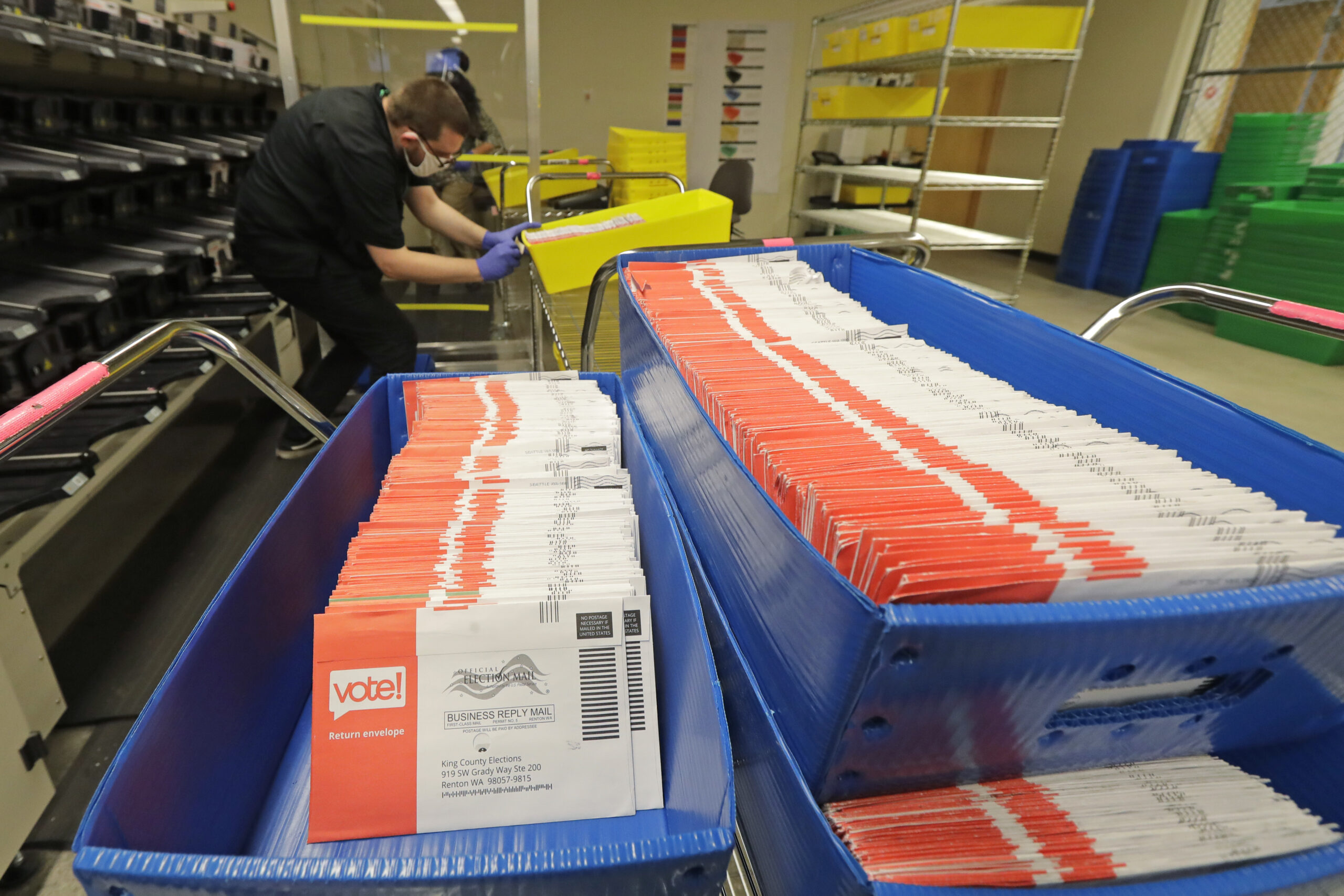
Thousands of absentee ballots get rejected in every presidential election. This year, that problem could be much worse and potentially pivotal in hotly contested battleground states.
With the coronavirus creating a surge in mail-in balloting and postal delays reported across the country, the number of rejected ballots in November is projected to be significantly higher than previous elections.
If ballots are rejected at the same rate as during this year’s primaries, up to three times as many voters in November could be disenfranchised in key battleground states when compared to the last presidential election, according to an Associated Press analysis of rejected ballots. It could be even more pronounced in some urban areas where Democratic votes are concentrated and ballot rejection rates trended higher during this year’s primaries.
Read this story now for free
To continue reading, sign up for our newsletter and get unlimited access to WABE.org
You can select your preferences for news and local content. We will never share your email address. Learn how your newsletter sign-up will support WABE and Public Media