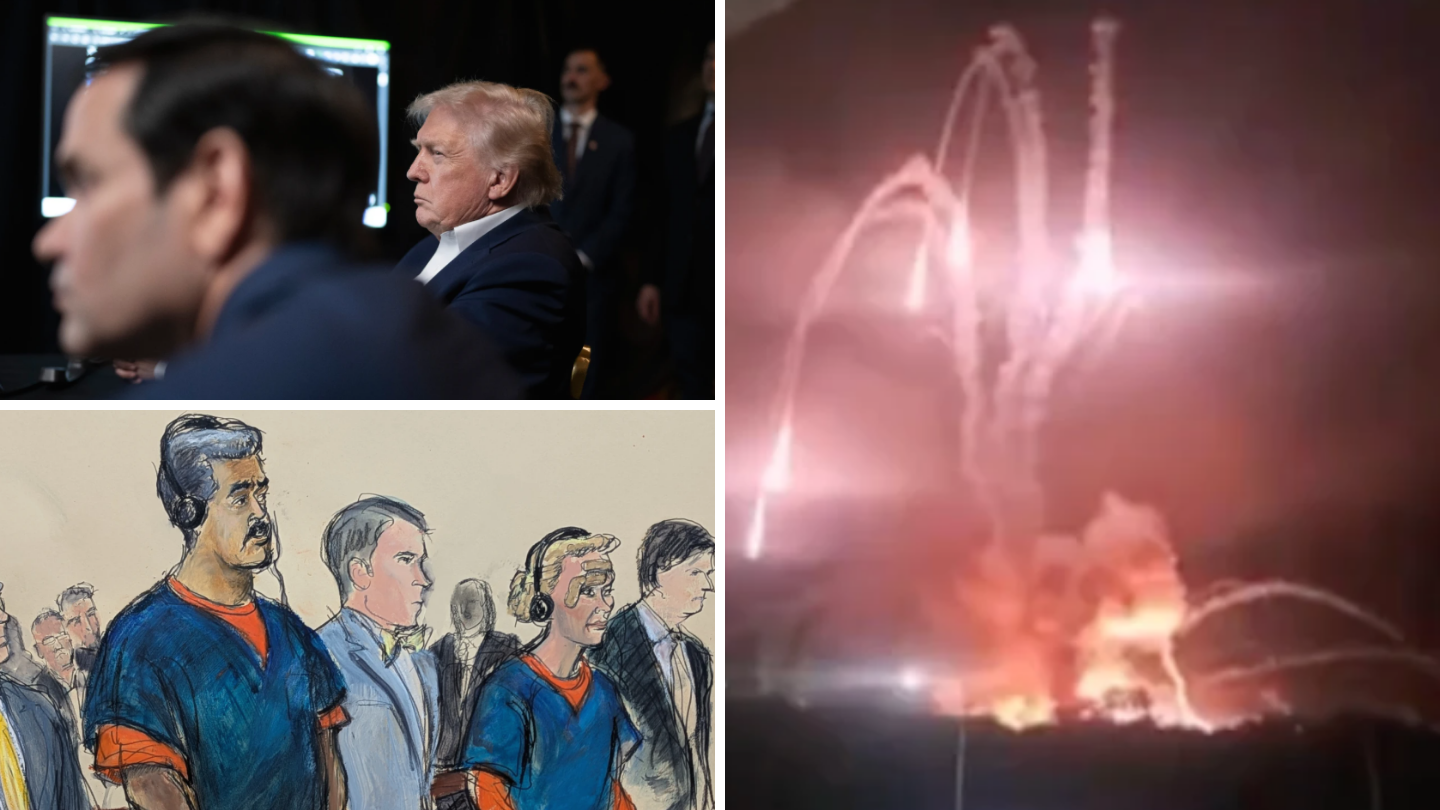
On Saturday, the U.S. military carried out a series of air strikes in Venezuela and captured President Nicolás Maduro and his wife, Cilia Flores.
The Trump administration alleges Maduro and co-conspirators have used “his illegally obtained authority and the institutions he corroded to transport thousands of tons of cocaine to the United States.”
Maduro has been charged with narco-terrorism, cocaine importation conspiracy and possession of machine guns and destructive devices. Maduro and his wife have both pleaded not guilty. Meanwhile, the Trump administration has announced plans for U.S. companies to take over oil production with military support.
Read this story now for free
To continue reading, sign up for our newsletter and get unlimited access to WABE.org
You can select your preferences for news and local content. We will never share your email address. Learn how your newsletter sign-up will support WABE and Public Media