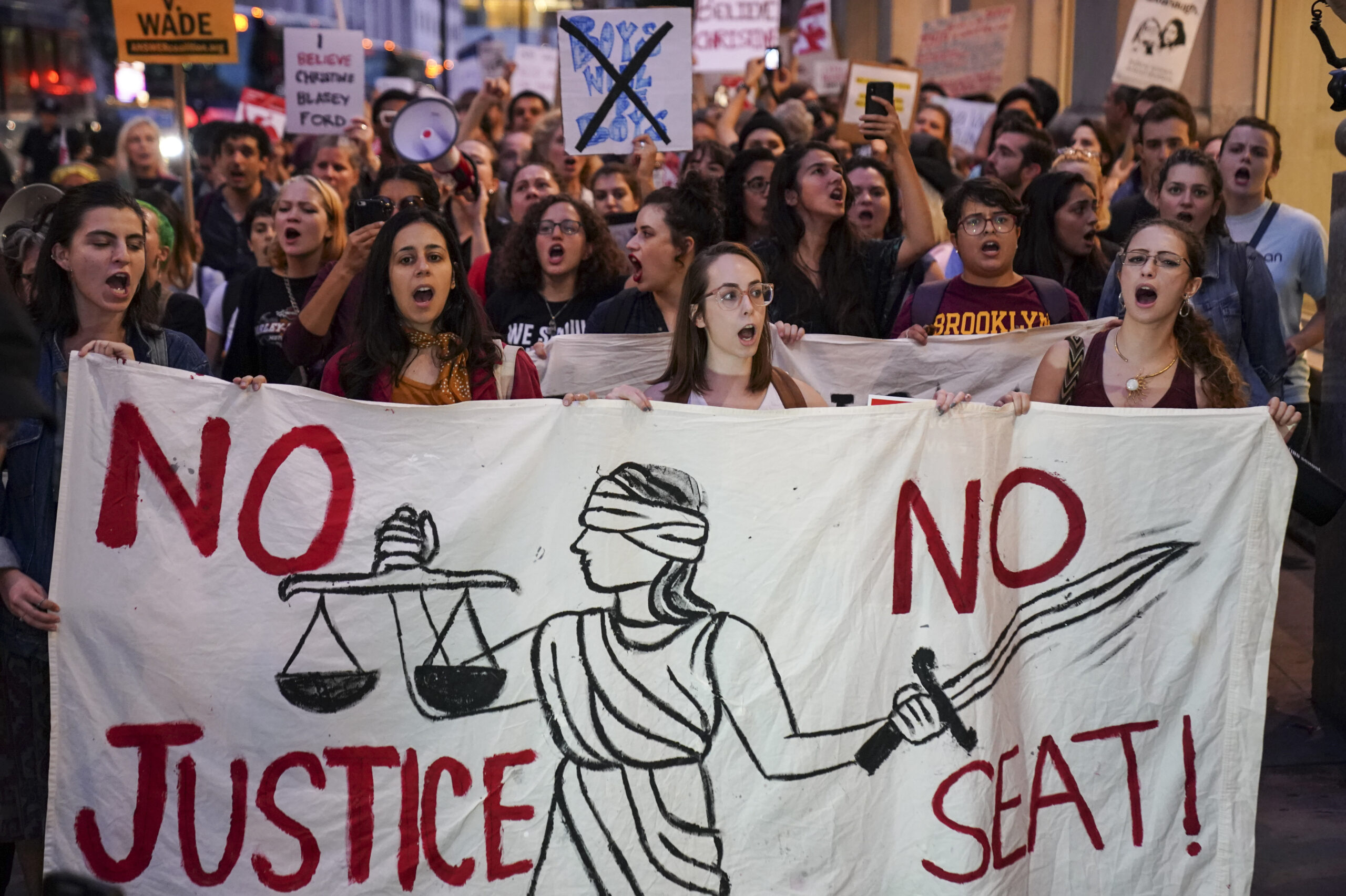
As the fight over the Brett Kavanaugh nomination continues to reverberate throughout the country, the shorthanded Supreme Court began its new term Monday. Republicans had hoped to seat nominee Brett Kavanaugh in time for the start of the term, but that, of course, did not happen.
Just like the beginning of the 2016 term, only eight justices sat on the bench when Chief Justice John Roberts opened the court term. In 2016, after the sudden death of conservative Justice Antonin Scalia, Senate Republican Leader Mitch McConnell held up President Barack Obama’s nomination of Merrick Garland to the Supreme Court for almost a year, leaving the court with eight members until a newly elected President Trump could fill the seat.
The difference this time is that the eight-justice court is evenly split between conservative and liberal justices, with little wiggle room in many closely contested cases. In 2016, Justice Anthony Kennedy, a conservative who sometimes voted with the court’s liberals, was still there.
Read this story now for free
To continue reading, sign up for our newsletter and get unlimited access to WABE.org
You can select your preferences for news and local content. We will never share your email address. Learn how your newsletter sign-up will support WABE and Public Media