To Lorraine Fontana, building a community means meeting people where they’re at.
She would know. Fontana was one of the early members of the Atlanta Lesbian Feminist Alliance (ALFA), which was active from 1972 to 1994. ALFA was a collection of feminists, lesbians and both who gathered to carve out space for and support Atlanta’s lesbian community, and also to be social and meet other like-minded women.
“We didn’t call it intersectional, that word came later,” she said. “But we always thought, ‘Our struggle is everybody’s struggle. If one person is still oppressed, then everybody’s still oppressed.’”
”It was 1969, I had no idea that Stonewall had happened, and I had no sense that I had a different sexual orientation. I just loved Atlanta.”
Lorraine Fontana on coming to Atlanta after being inspired by the Civil Rights Movement
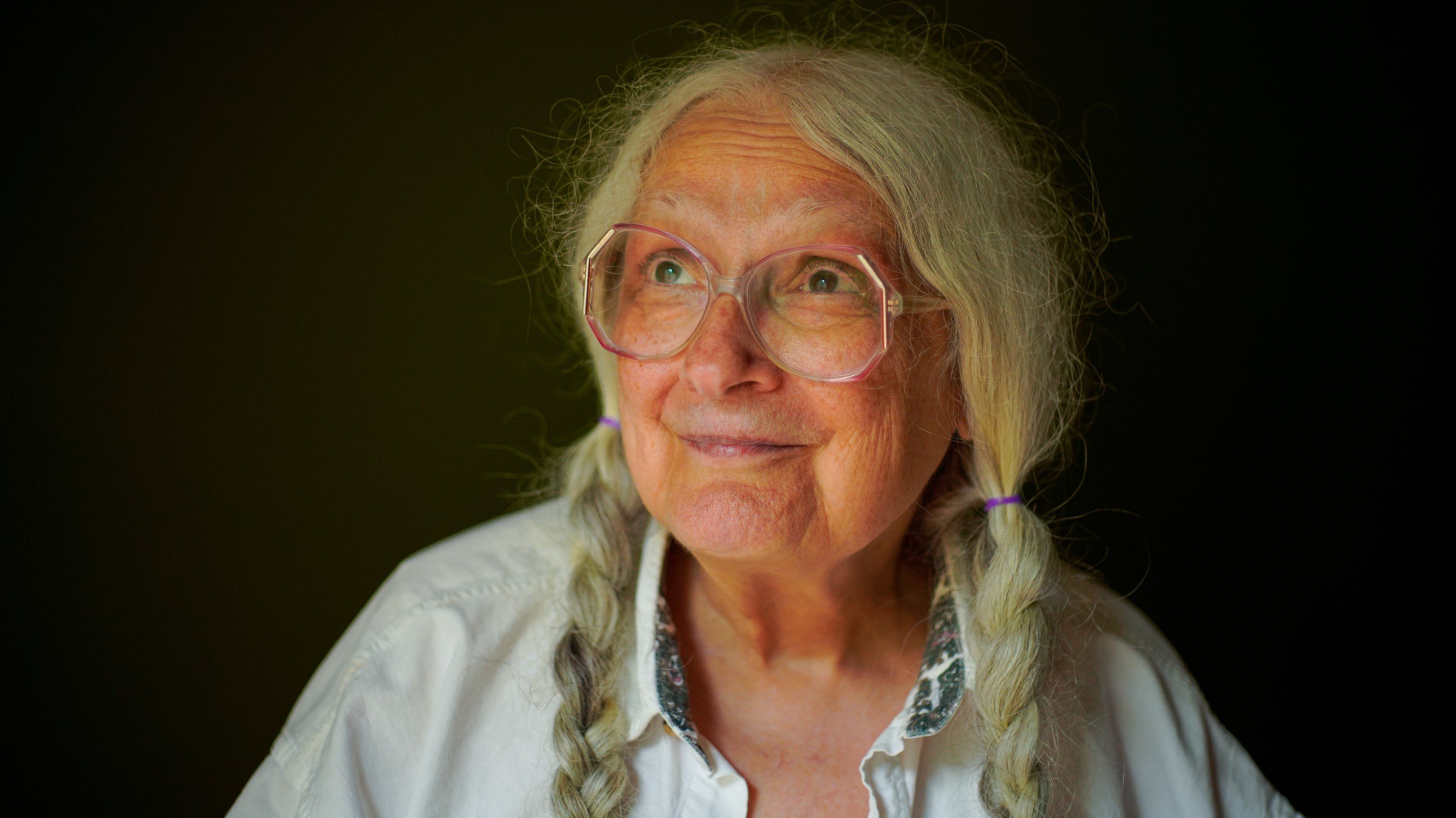
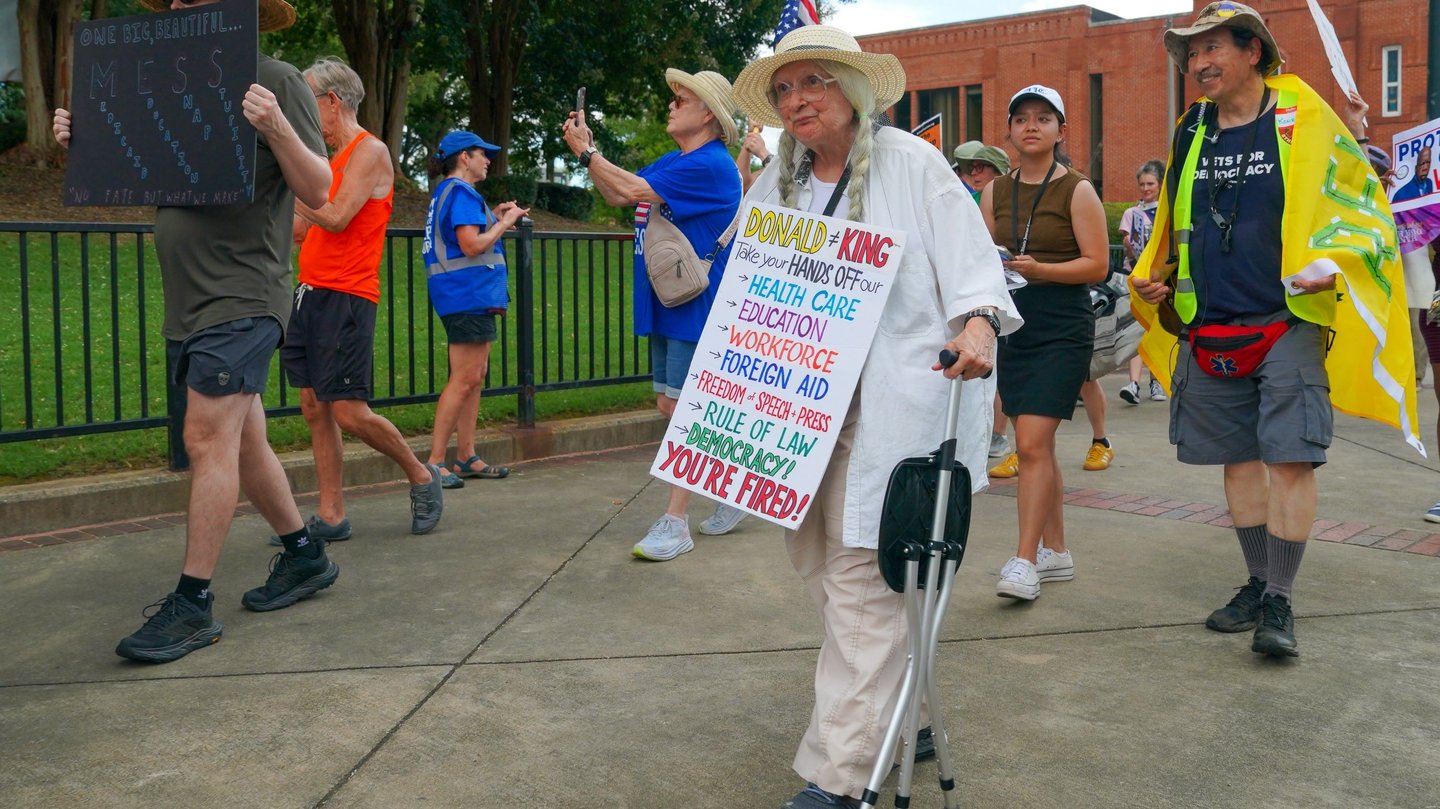
Fontana has an easy smile and a face often framed by two waist-length braids of silver-white hair. At 78 years old, she’s gone viral on Reddit as a “grandma” protesting for peace. She was one of four senior women arrested while protesting outside the Atlanta Public Safety Training Center. Her energy has not waned throughout a lifetime of activism in the South.
“I keep going because what’s the alternative?” she asked. “Despair is not an option to me.”
How a budding activist found community and a calling in Atlanta
Fontana was born and raised in Queens, New York, to a Catholic, Italian-American working-class family. When she was young, she watched the Civil Rights Movement unfold in Atlanta and across the South through news broadcasts on TV. After college, she joined VISTA, a national volunteering program that was a precursor to AmeriCorps.
That’s when she first came to Atlanta.
“Being in VISTA, I got an education especially in poverty. The people I met in the community, the activists, I loved the people that I met,” she said. ”It was 1969, I had no idea that Stonewall had happened, and I had no sense that I had a different sexual orientation. I just loved Atlanta.”
After her volunteering ended, she applied to graduate school at Emory. She dropped out.
“It was so much more interesting doing outside work in the community than in college and school,” she said. “I just couldn’t last.”
She was building community around the same time a city-wide food cooperative formed, Radio Free Georgia launched, and the Bond Community Federal Credit Union was founded. She began to write for the underground newspaper, The Great Speckled Bird.
Then she met the women of two communal households called Upstairs and Downstairs.
“We thought it was important … to make sure lesbian visibility was there. That it’s not just white gay men who are in the movement, because that’s how the media tended to want to cover what gay meant.”
Lorraine Fontana on the early days of the Atlanta Lesbian Feminist Alliance
Fontana said the women were involved in the Civil Rights Movement, Students for a Democratic Society and socialist communist organizations. Some women were openly lesbian. Others aligned with the social justice mindset of the times.
“All this together meant that people were finding each other who liked all those different pieces of themselves,” she said.
Cementing women’s place in Atlanta’s LGBTQ rights movement
In the meantime, Atlanta saw its first Pride event. A year after the Stonewall Riots, people gathered in Piedmont Park. Georgia’s Gay Liberation Front had already formed. Fontana said it was mostly men.
“They had to deal with the sexism and the patriarchal nature of how men were raised,” she said. “They’re telling us in the women’s movement to get out of here because, you know, we don’t want to be seen as lesbian. ‘Get out of here, you lesbians!’ they said.”
So the Atlanta Lesbian Feminist Alliance was born.
“I hardly knew any people my age who, if they were queer, were really out,” she said. “I didn’t know that. Most people didn’t. So there were no elders in the queer community, but there were people I looked up to in the general social justice community.”
Fontana said ALFA prioritized building a foundation for lesbian activism to have space in Atlanta. They wanted others to know that queer people were just as concerned about social issues and cultural movements as anyone else, and that these movements had lesbian support.
“We thought it was important … to make sure lesbian visibility was there. That it’s not just white gay men who are in the movement, because that’s how the media tended to want to cover what gay meant,” she said.
“I keep going because what’s the alternative? Despair is not an option to me.”
Lorraine Fontana on her ongoing activism for social justice causes at age 78
Fontana later moved to the Atlanta suburbs, and ALFA disbanded in 1994. Now, she’s back in Atlanta and is a visible elder lesbian at community gatherings and protests. It’s important to her, because she says young queer people need to keep up the fight,
“When I came out, I didn’t know any queer elders, any elder people who were gay, not at all, no lesbians especially,” she said. “It’s important to be authentic and be who you feel you are. Change if you don’t feel you’re in a good place, that’s fine. And if you find yourself in a community, in a family, in a group that’s still seen as the other, just keep speaking up.”
This story is part of the ongoing series Beyond Pride, in which WABE reporters take a deeper look at the issues affecting LGBTQ people in Georgia. Plus, hear LGBTQ Atlantans in their own words, check out a Pride events calendar running through the fall, LGBTQ coverage from other NPR stations across the South and more.