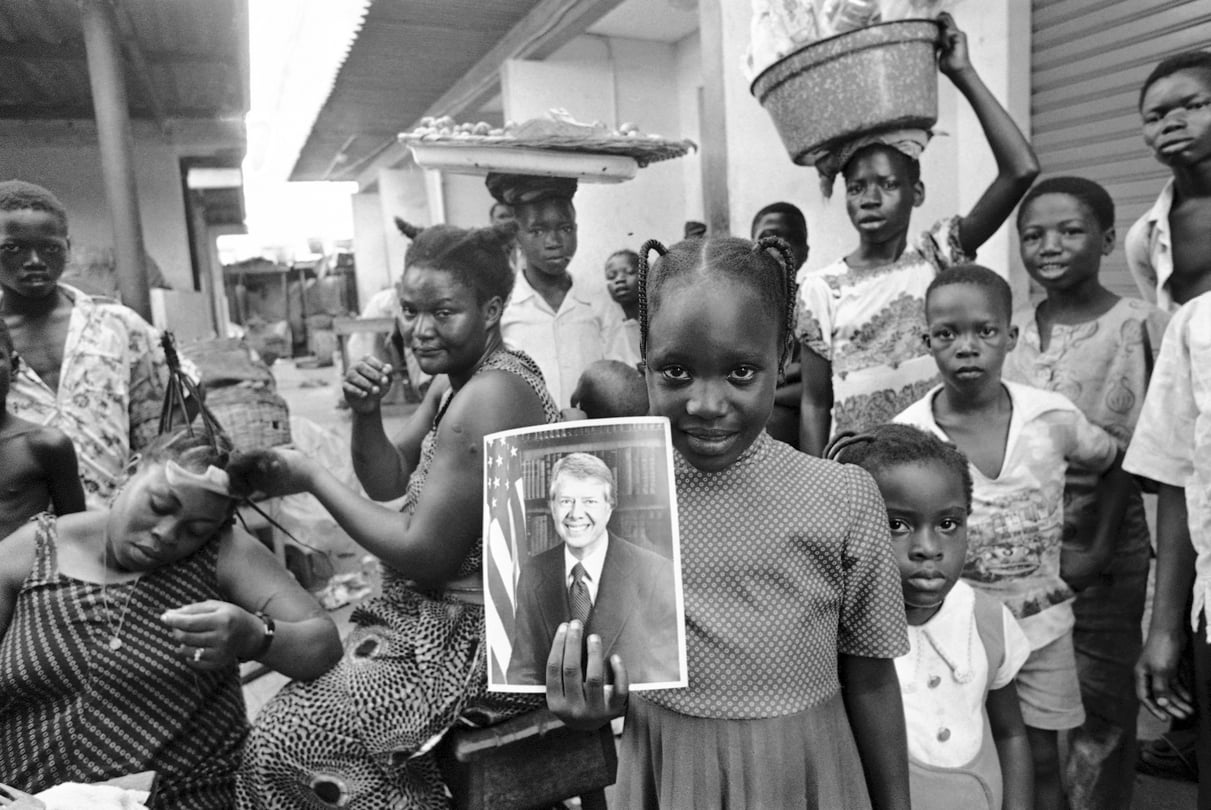
Jimmy Carter was the first U.S. president to make a state visit to sub-Saharan Africa. He once called helping with Zimbabwe’s transition from white rule to independence “our greatest single success.” And when he died at 100, his foundation’s work in rural Africa had nearly fulfilled his quest to eliminate a disease that afflicted millions, for the first time since the eradication of smallpox.
The African continent, a booming region with a population rivaling China’s that is set to double by 2050, is where Carter’s legacy remains most evident. Until his presidency, U.S. leaders had shown little interest in Africa, even as independence movements swept the region in the 1960s and ’70s.
“I think the day of the so-called ugly American is over,” Carter said during his warm 1978 reception in Nigeria, Africa’s most populous country. He said the official state visit swept aside “past aloofness by the United States,” and he joked that he and Nigerian President Olesegun Obasanjo would go into peanut farming together.
Read this story now for free
To continue reading, sign up for our newsletter and get unlimited access to WABE.org
You can select your preferences for news and local content. We will never share your email address. Learn how your newsletter sign-up will support WABE and Public Media