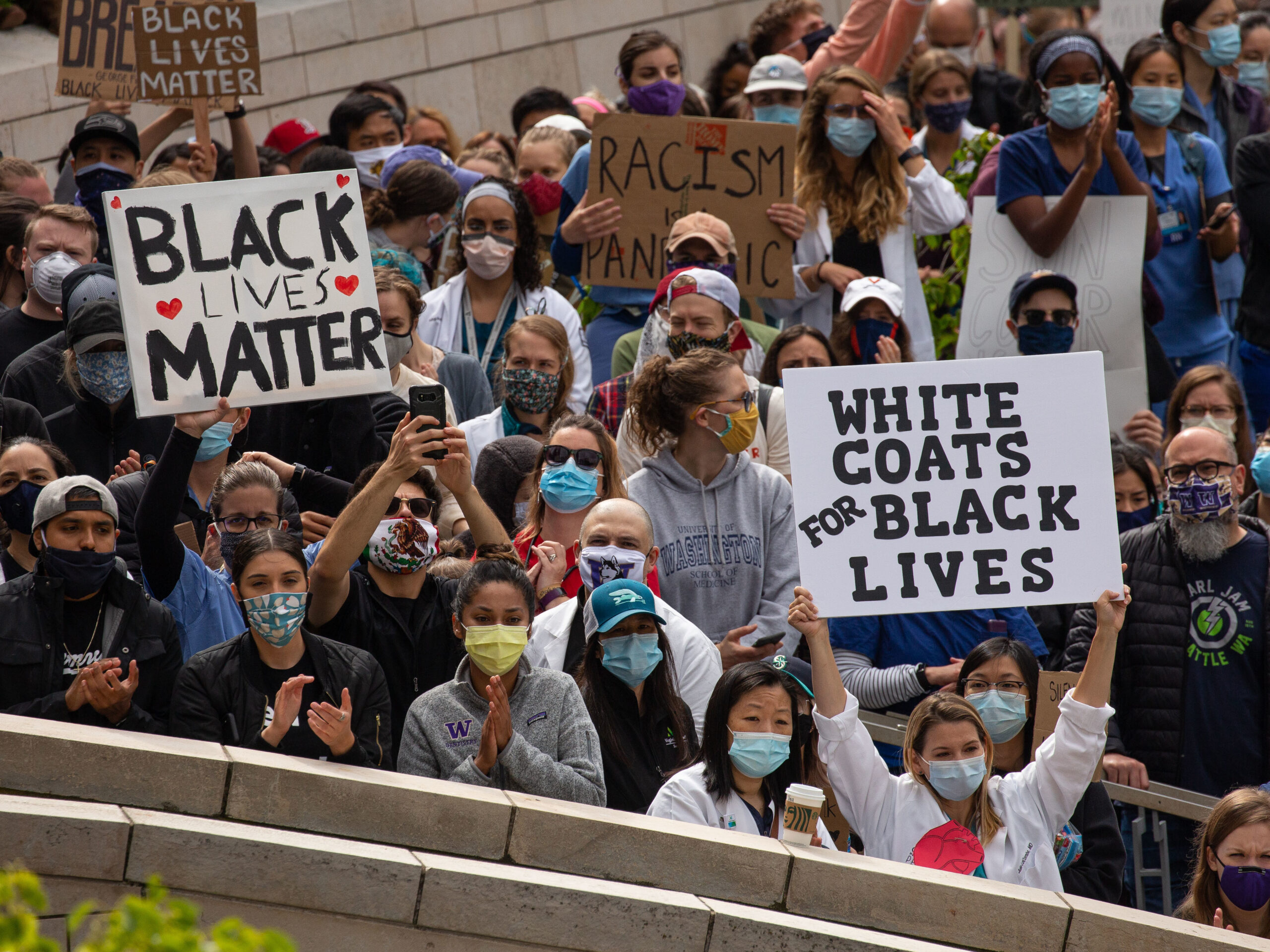
As doctors and nurses across the United States continue to gather outside hospitals and clinics to protest police brutality and racism as part of the White Coats for Black Lives movement, LaShyra Nolen, a first-year student at Harvard Medical School, says it’s time to take medical schools to task over racism, too.
The fight for equality in medical education isn’t new, says Nolen, the first black woman to serve as Harvard Medical School’s student council president. But she’s hopeful that the national conversation around racism in society will force hospitals and medical schools to address racism within their own institutions.
“It wasn’t until over a week of riots that people started to pay attention,” Nolen says. “We bring black med students to these institutions, and they fill quotas, and they make institutions look good. But we’re not protecting them. We need to protect them.”
Read this story now for free
To continue reading, sign up for our newsletter and get unlimited access to WABE.org
You can select your preferences for news and local content. We will never share your email address. Learn how your newsletter sign-up will support WABE and Public Media