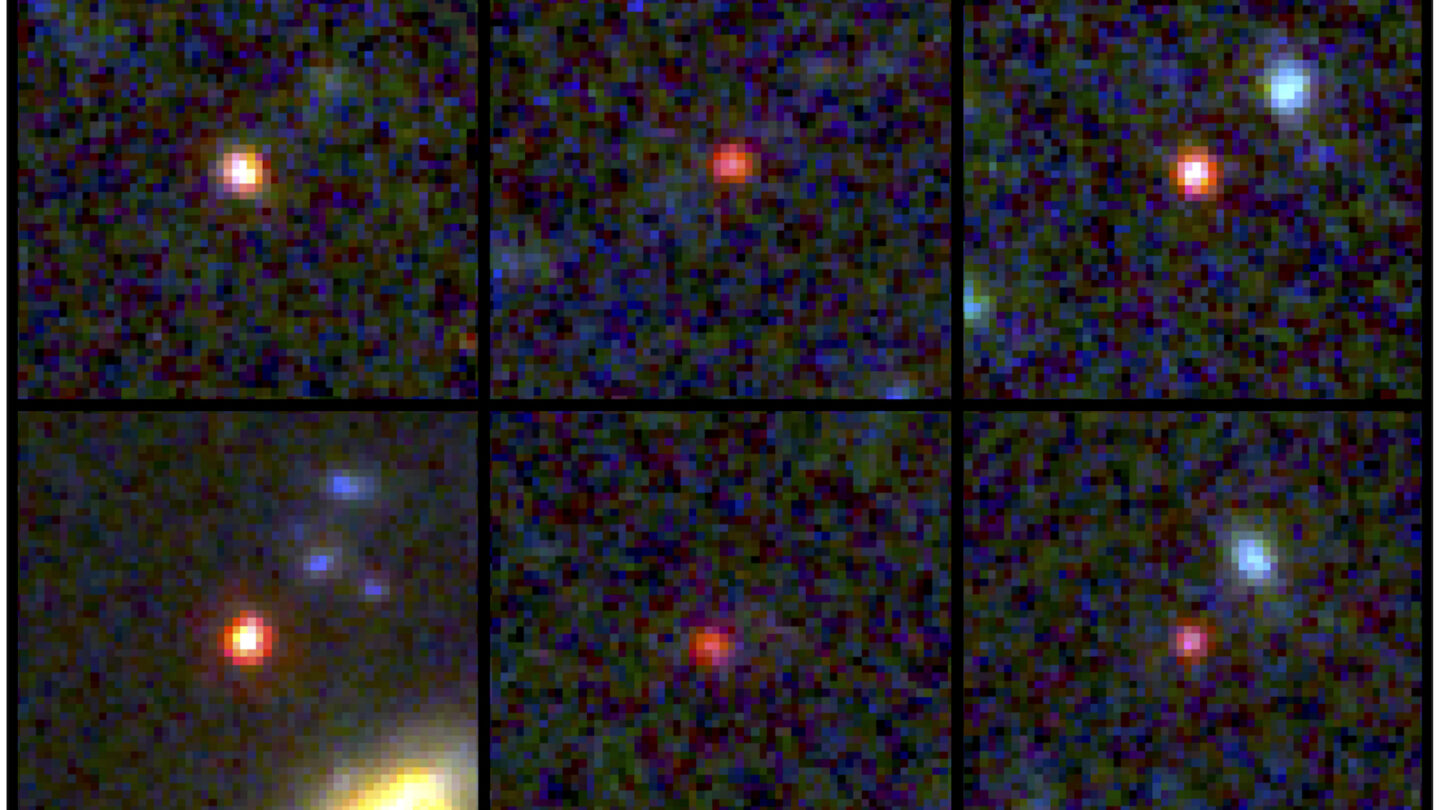
Astronomers have discovered what appear to be massive galaxies dating back to within 600 million years of the Big Bang, suggesting the early universe may have had a stellar fast-track that produced these “monsters.”
While the new James Webb Space Telescope has spotted even older galaxies, dating to within a mere 300 million years of the beginning of the universe, it’s the size and maturity of these six apparent mega-galaxies that stun scientists. They reported their findings Wednesday.
Lead researcher Ivo Labbe of Australia’s Swinburne University of Technology and his team expected to find little baby galaxies this close to the dawn of the universe — not these whoppers.
Read this story now for free
To continue reading, sign up for our newsletter and get unlimited access to WABE.org
You can select your preferences for news and local content. We will never share your email address. Learn how your newsletter sign-up will support WABE and Public Media