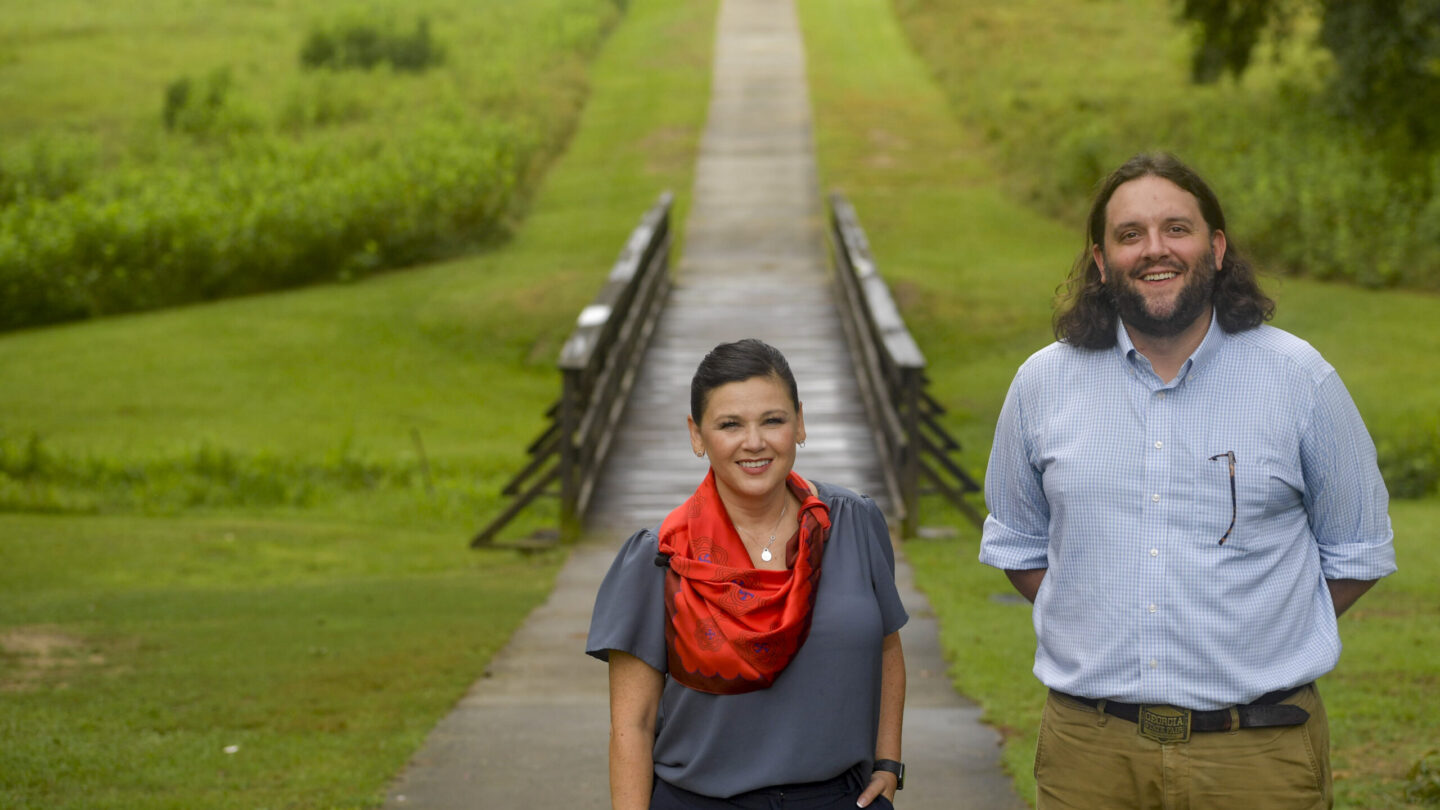
When Tracie Revis climbs the Great Temple Mound, rising nine stories above the Ocmulgee River in the center of present-day Georgia, she walks in the steps of her Muscogean ancestors who were forcibly removed to Oklahoma 200 years ago.
“This is lush, gorgeous land. The rivers are gorgeous here,” Revis said recently as she gazed over the forest canopy to a distant green horizon, broken only by Macon’s skyline, just across the water. “We believe that those ancestors are still here, their songs are still here, their words are still here, their tears are still here. And so we speak to them. You know, we still honor those that have passed on.”
If approved by Congress after a three-year federal review wraps up this fall, the mounds in Macon would serve as the gateway to a new Ocmulgee National Park and Preserve, protecting 54 river-miles of floodplain where nearly 900 more sites of cultural or historic significance have been identified.
Read this story now for free
To continue reading, sign up for our newsletter and get unlimited access to WABE.org
You can select your preferences for news and local content. We will never share your email address. Learn how your newsletter sign-up will support WABE and Public Media