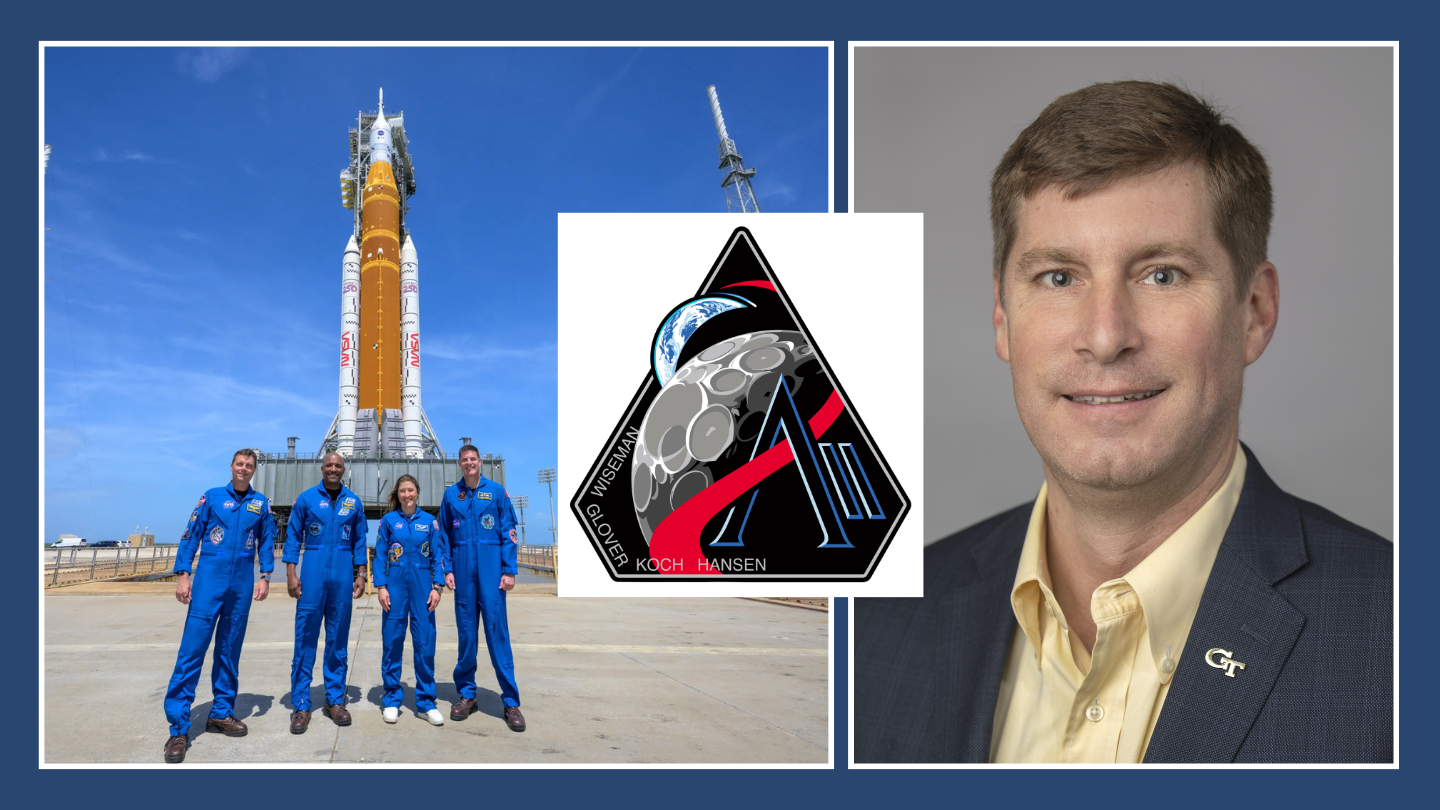
At 6:24 p.m. tonight, history is expected to be made. For the first time since 1972, humans will surpass low-Earth orbit on a return journey around the moon. Artemis II is expected to launch from NASA’s Kennedy Space Center in Florida. The lunar mission will take four astronauts — three Americans and one Canadian — on a ten-day mission.
On the journey will be NASA Astronauts Victor Glover, Reid Wiseman, and Christina Koch, plus Astronaut Jeremy Hansen from the Canadian Space Agency. Glover, the pilot for Artemis II, spoke to “Closer Look” in 2023, and shared the significance of this flight.
“This is the beginning of a journey – not just to get back to the moon, sustainably and responsibly – but also, this is enabling us to create the technology, but also to build the teams that are going to be necessary for going onto Mars,” Glover said.
Read this story now for free
To continue reading, sign up for our newsletter and get unlimited access to WABE.org
You can select your preferences for news and local content. We will never share your email address. Learn how your newsletter sign-up will support WABE and Public Media