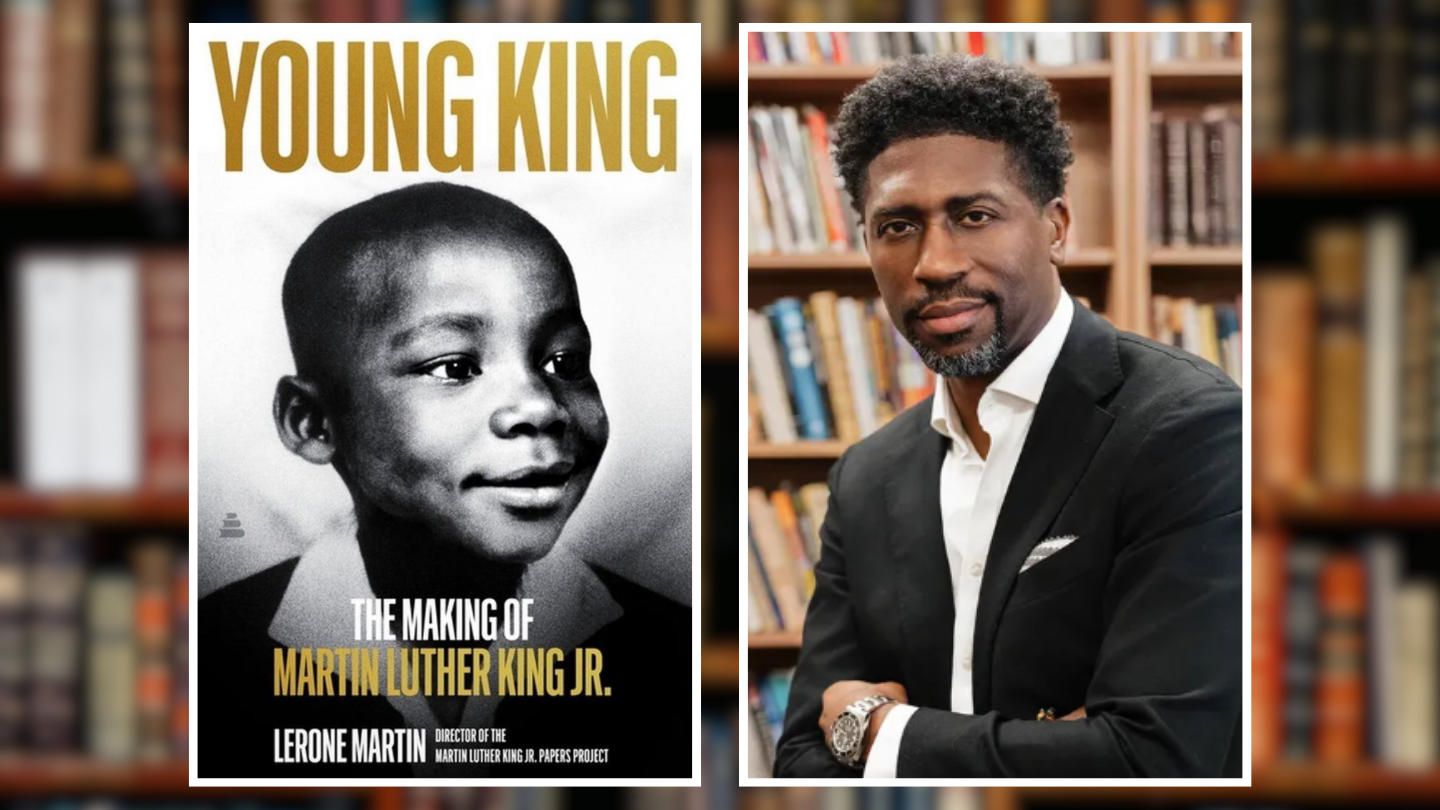
Martin Luther King Jr. was known for his moral courage, but as a child, he also had a scrappy side. “Little Mike,” or M.L., as he was called, had a phrase he used whenever a fight seemed unavoidable. “Let’s go to the grass,” he’d say—a challenge that signaled he was ready to defend himself. That detail, says Professor Lerone Martin, reveals a lesser‑known dimension of King’s early character.
These childhood confrontations came well before King delivered his first public address, “The Negro and the Constitution,” on April 17, 1944, at just 14 years old. He gave the speech during an oratorical contest at First African Baptist Church in Dublin, Georgia.
Growing up in the Jim Crow South shaped King’s developing worldview. But as Martin heavily details in his new book, “Young King: The Making of Martin Luther King, Jr.,” there were many other influences—family, teachers, community elders—who helped form the young man who would become a global symbol of human and civil rights.
Read this story now for free
To continue reading, sign up for our newsletter and get unlimited access to WABE.org
You can select your preferences for news and local content. We will never share your email address. Learn how your newsletter sign-up will support WABE and Public Media