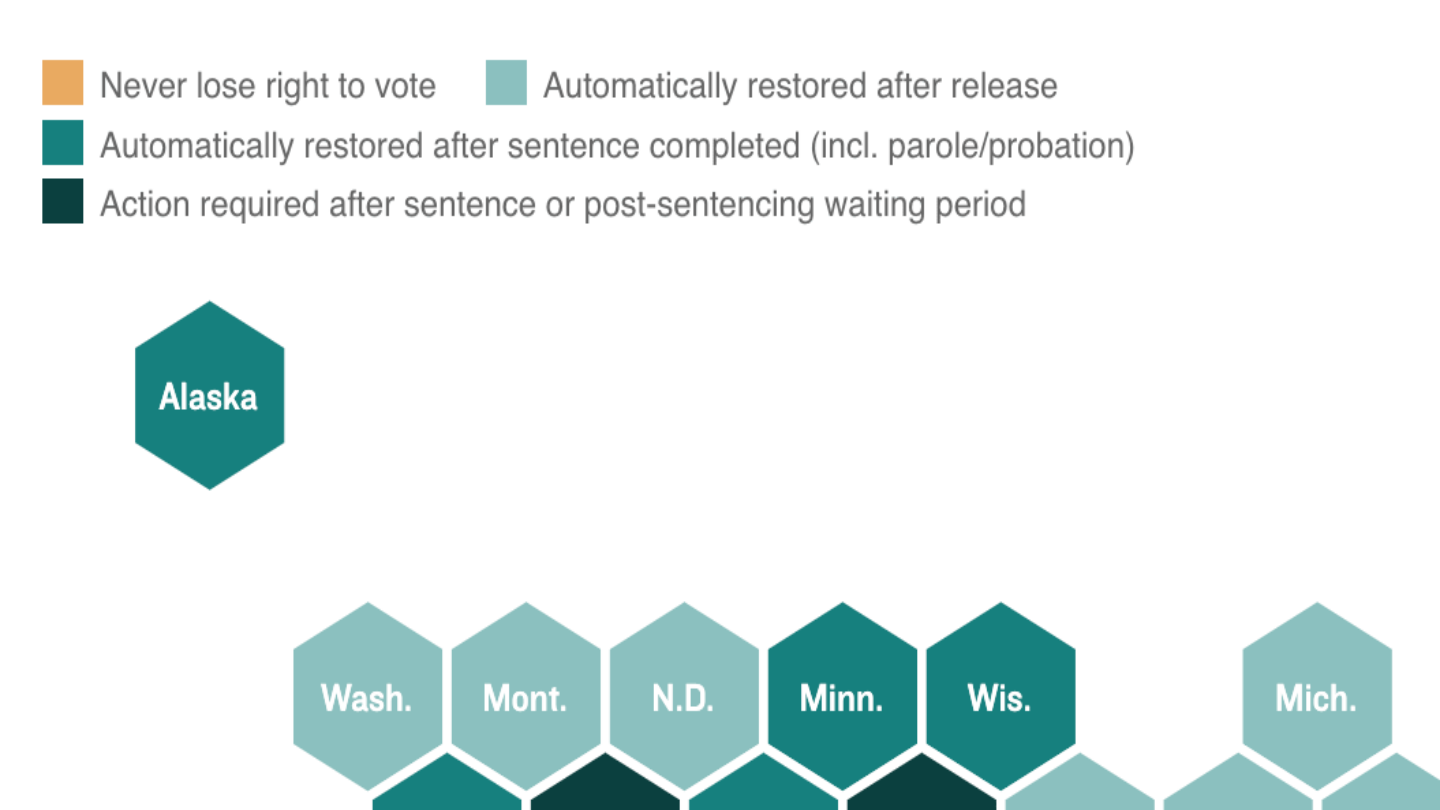
An estimated 2% of the voting age population in the United States will be ineligible to cast ballots during this year’s midterm elections due to state laws banning people with felony convictions from voting.
That’s according to research released Tuesday by the Sentencing Project, a nonprofit organization that advocates for restoration of voting rights for people with prior felony convictions.
“This report makes it clear that millions of our citizens will remain voiceless in the upcoming midterms,” Amy Fettig, the group’s executive director, said in a statement. “Felony disenfranchisement is just the latest in a long line of attempts to restrict ballot access, just like poll taxes, literacy tests and property requirements were used in the past.”
Read this story now for free
To continue reading, sign up for our newsletter and get unlimited access to WABE.org
You can select your preferences for news and local content. We will never share your email address. Learn how your newsletter sign-up will support WABE and Public Media