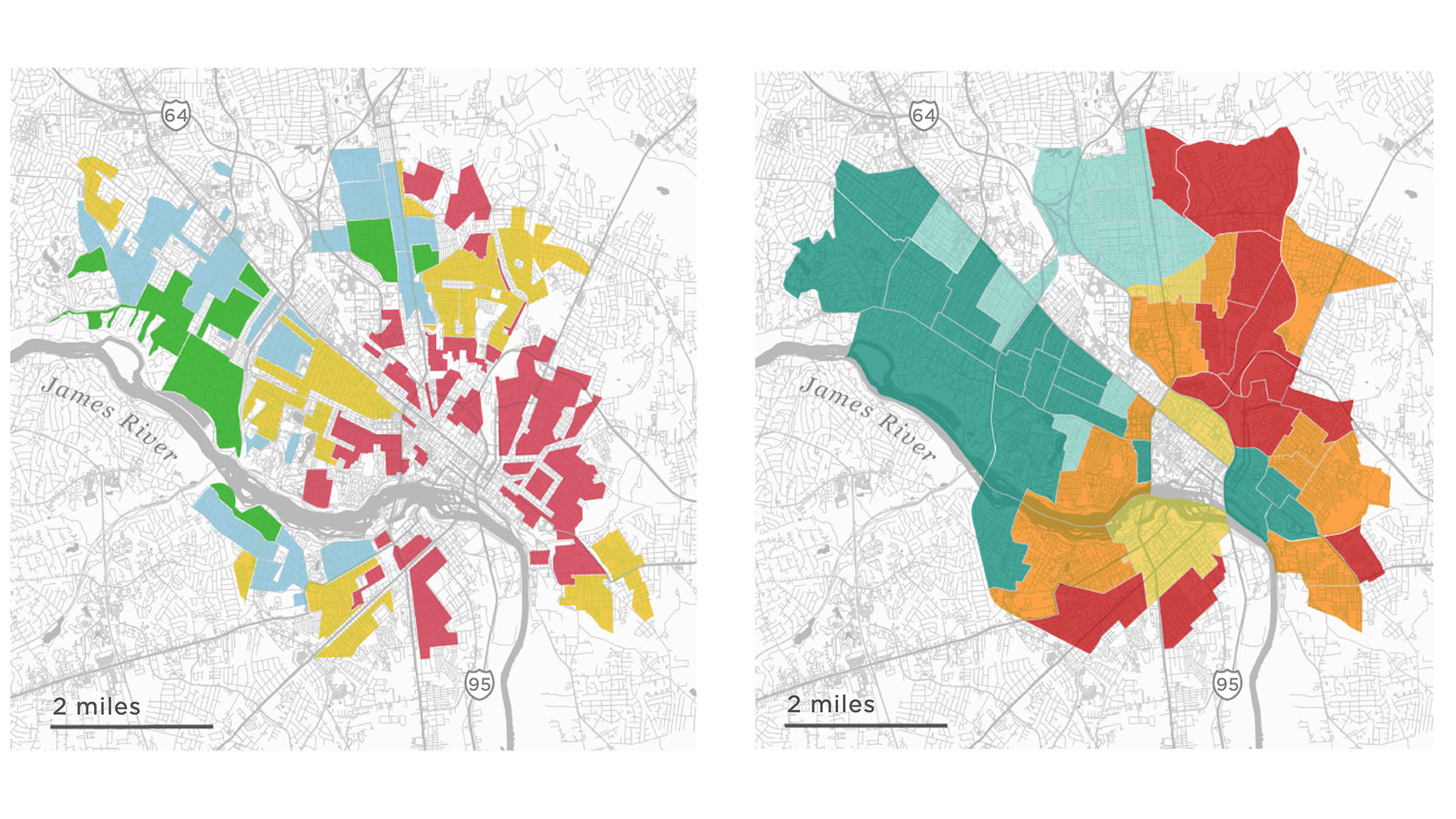
The lingering harms of racist lending policies known as redlining are apparent today. Researchers created a set of interactive maps allowing you to explore the current impacts in your city.
Torey Edmonds has lived in the same house in an African-American neighborhood of the East End of Richmond, Va., for all of her 61 years. When she was a little girl, she says her neighborhood was a place of tidy homes with rose bushes and fruit trees, and residents had ready access to shops like beauty salons, movie theaters and several grocery stores.
But as she grew up, she says, the neighborhood went downhill. By the 1970s, stores had disappeared; those that did return were corner shops selling cheap alcohol but “no real food,” Edmonds says. Houses declined too, as homeowners – including her parents – were rejected for loans.
Read this story now for free
To continue reading, sign up for our newsletter and get unlimited access to WABE.org
You can select your preferences for news and local content. We will never share your email address. Learn how your newsletter sign-up will support WABE and Public Media