Georgia nonprofits are joining national organizations in a lawsuit to force the U.S. Environmental Protection Agency to continue to enforce one of its clean air laws.
The Southern Environmental Law Center, Georgia Interfaith Power and Light and the Savannah Riverkeeper have joined the suit claiming the EPA has stopped enforcing air quality rules for soot.
Soot is made up of tiny particulates that can get into a human’s lungs and bloodstream. Soot can lead to adverse health impacts, particularly for children, those with asthma, and the elderly. It can come from burning fossil fuels, vehicle emissions, manufacturing, wildfires and other activities that burn organic material.
Typically, the EPA looks at if states are meeting the limit for soot in the air by averaging daily levels over three years.
“Basically a standard for how much of this soot pollution can be in the ambient air that people are breathing,” said Caroline Cress, a senior attorney with the SELC’s air program.
And if states are out of compliance they’re designated as in “nonattainment.”
“That sets in process a whole series of tools in the toolbox from the Clean Air Act that state and local permitting agencies then have to implement,” Cress said.
States can decide what actions they want to take, such as changing air pollution permits, setting more stringent emissions limits or purchasing offsets, then they put them into plans to lower emissions. The EPA doesn’t dictate how emissions are lowered, just that soot is at the legal level.
Soot regulations in the courts
Cress claims the EPA isn’t declaring states in nonattainment anymore. The deadline to do so was in February. Cress said once the deadline passed, SELC filed paperwork putting the EPA on a 60-day notice of their intent to pursue legal action for failing to meet Clean Air Act deadlines.
She said in the past, the EPA would use those 60 days to talk about a settlement, agree upon a new deadline, or find some resolution. This year, she said, the agency hasn’t.
“There are things that they have done publicly that kind of give us an insight into what might happen next,” Cress said.
She said it goes back to February of 2024, when the EPA under the Biden administration made a new, more stringent standard for soot pollution.
That month, Cress said a coalition of industry and conservative states filed a lawsuit against the EPA against that rule change.
At the time, the EPA defended the rule and the science backing it up, Cress said. But under the Trump Administration, the EPA flipped positions, and argued the judge should reconsider the ruling. Last fall, the EPA asked federal courts to vacate the new soot standard altogether.
The EPA is waiting for a ruling, but in the meantime the legal standards for soot pollution are still the Biden-era standards — and Trump’s EPA has blown past the deadlines for enforcement.
Georgia impacts from lapsed soot standards
With this lawsuit, the SELC, Georgia Interfaith Power and Light and the Savannah Riverkeeper are seeking to have a judge create a new deadline for the EPA to resume its work. Others participating in the suit include the Alliance of Nurses for Health Environments, the American Public Health Association, the Natural Resources Defense Council and the Sierra Club.
Codi Norred, executive director of Georgia Interfaith Power and Light, said the EPA dropping this clean air enforcement impacts communities his organization works with.
“We find it to be an important part of our work to hold these entities accountable — These are the federal agencies that are supposed to protect us in the midst of all the things that working families and congregations are trying to deal with on a day to day basis,” Norred said. “They shouldn’t be worrying about one, is their air polluted, and two, are the people that are supposed to protect them from it and regulate it, actually doing their job.”
And for them, it hits home. Norred said GIPL is concerned with air quality policy because they have over 40 congregational Green Teams — partners at faith organizations that work with GIPL on environment issues — that are in counties with air quality that violates the 2024 pollution standards at hand.
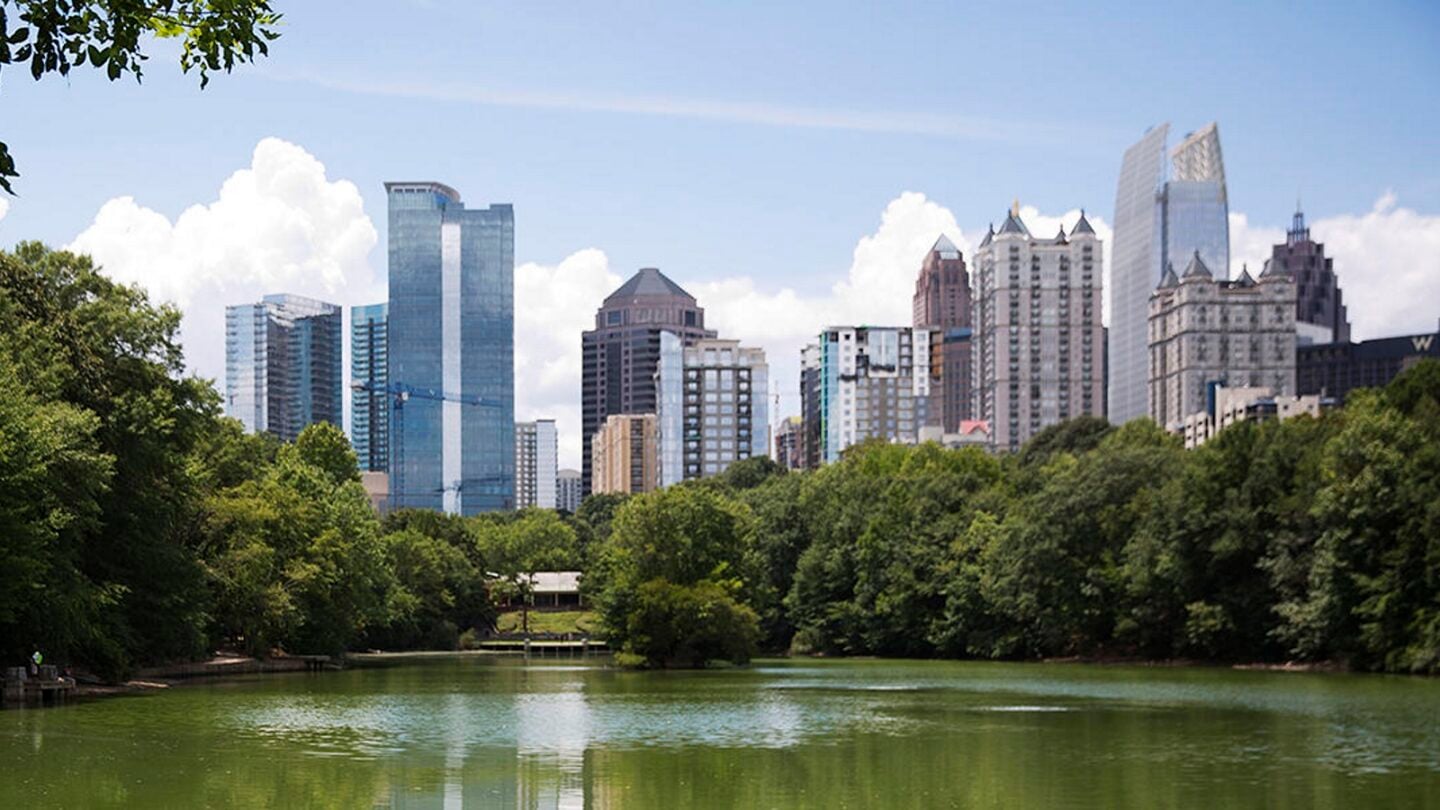
According to the American Lung Association’s 2026 State of the Air report, the metro region covering Atlanta, Athens-Clarke County and Sandy Springs is rated 38th worst in the country for annual particle pollution out of 211 metropolitan areas.
Danna Thompson, director of advocacy at the American Lung Association said the report highlighted that nearly 945,000 kids in Georgia are being exposed to unhealthy levels of air pollution.
“The greater Atlanta area worsened slightly for ozone and it did improve slightly for short term and long term particulate matter,” Thompson said.
She said there’s different types of air pollution — like ozone, which is better known as smog, versus particulate matter, which includes soot — and it’s tricky to pinpoint all the separate sources and advocate holistically across the sources of air pollution.
Thompson said different types of air pollution and sources also mean some places struggle with some forms of air pollution and not others. Augusta and greater Richmond County, Georgia, is one of the cleanest cities in the country for smog, but it’s also one of the worst for short term soot pollution.
The U.S. Environmental Protection Agency declined to comment for this story because the litigation over the soot standard is ongoing.
For now, Cress with the Southern Environmental Law Center said the EPA regulations are in the hands of the court and there is no exact timeline for when enforcement of the air quality regulation will resume.