Supporters of a Georgia program that puts money toward conservation and parks say they are disappointed but already regrouping after Gov. Brian Kemp vetoed a bill earlier this year that would have extended the program’s life and increased its funding.
The Georgia Outdoor Stewardship Act, or GOSA, takes some of the sales tax from outdoor recreation goods and dedicates the money to a grant program that funds land acquisition and park construction across the state.
Since the fund began distributing money in 2019, it’s been used to protect land around the Panola and Arabia Mountains in metro Atlanta, improve ADA access at state parks, support the Atlanta Beltline, protect land in the Okefenokee Swamp, and expand the Chattahoochee Riverlands project.
The program brings in about $30 million annually and attracts millions more in matching funds, according to George Dusenbury, vice president of the southern region with the Trust For Public Land, a national nonprofit for park development and land conservation.
“By providing a regular, steady source of funding for land acquisition that we conservation groups know we can rely on, it just is an essential element to doing land conservation in Georgia,” he said.
What happened to GOSA legislation?
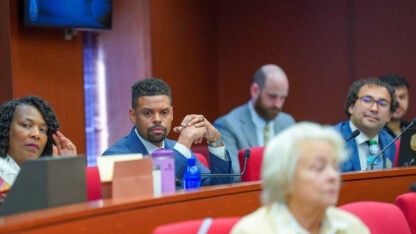
The program has been “massively” popular, according to state Sen. Sam Watson, a Republican from Moultrie.
GOSA was first passed in 2018 by a statewide ballot referendum, with a whopping 82% of Georgians voting in favor of the measure.
It has fans on both sides of the aisle and routinely receives more applicants than it can fund, Watson said.
That’s why he sponsored a bill this year to increase the amount of outdoor gear sales tax revenue going to GOSA from 40% to 60%. It also extended the life of the program, which is currently set to sunset in 2029.
“Just because of the success, we wanted to look at adding to that dedicated funding,” Watson said.
The bill passed in both the Georgia House and Senate with nearly unanimous support.
But Kemp vetoed the bill in May, citing concerns for the tax revenue it takes away from Georgia’s general fund.
“The General Assembly failed to account for this loss of revenue in the appropriations process, instead prioritizing general taxpayer relief,” the governor wrote in a statement at the time.
How GOSA works for conservationists
People involved in land conservation in Georgia emphasize how important the program has become.
Members of the Georgia Outdoor Stewardship Coalition released a statement following Kemp’s veto of Watson’s bill, stating that by vetoing the bill Kemp “acted against the wishes of Georgia residents, diminished economic opportunity, damaged efforts to safeguard Georgia’s natural heritage, and lessened protections for clean water and clean air.”
The letter states that outdoor recreation creates jobs and income for many communities throughout the state, and as development grows, so do the pressures to continue to conserve land.
Dusenbury said GOSA is pivotal to conservationists’ work because it streamlines funding.
He said buying land is difficult, and having a regular program to plan and budget around allows organizations to act more quickly and nimbly.
“If we were waiting every year for the general assembly to pass some specific legislation to provide funding for us to acquire a piece of land, like stuff like the Okefenokee, that just would not have happened,” he said.
And it’s important for state land acquisitions, too, though the state has to compete for funding, just like any other group. Steve Friedman, the chief of real estate for the Georgia Department of Natural Resources from 2005 to 2024, said the fund has helped bolster major conservation goals at the state level.
One project he highlighted is the Gopher Tortoise Conservation Initiative, a public-private partnership bolstering gopher tortoise populations through land conservation.
“That initiative was so successful that it avoided the need to federally list the gopher tortoise,” Friedman said. “I mean, that was monumental, and GOSA had a huge hand in making that successful, as did the partners.”
Friedman said continuing to push land conservation is critical in Georgia. He said that at about 10%, the amount of land protected in Georgia by governments or private entities is low compared to other states.
“So we need to protect a lot more land in Georgia, and we need to protect this land to create corridors, connective corridors, so that wildlife can move within them, so birds can migrate within them,” Friedman said.
What’s next after the GOSA veto?
Watson said he understands the governor’s reservations, but he said he knows there’s a strong coalition that will renew efforts to grow and extend GOSA in the future.
“Obviously, this is a revenue bill, it removes revenue, funding from our state budget,” Watson said.
But, he said GOSA was written smartly with concerns like these in mind. The original bill creating the program includes provisions to claw back funding if the state enters a recession so that tax revenue can go toward paying teachers, state employees and general state operations.
Watson said this trigger clause “kind of puts it back up at the top of the list of trying to get back in” when he proposes his legislation again next year.
He said the state has many unknowns ahead — new leadership, turnover in the state House and Senate — but he is prepared to enter the appropriations process next year to advocate for GOSA again.
“We’ll be back, and we’ll do it again, and we’ll keep just keep protecting our natural resources and improving our state parks,” Watson said.