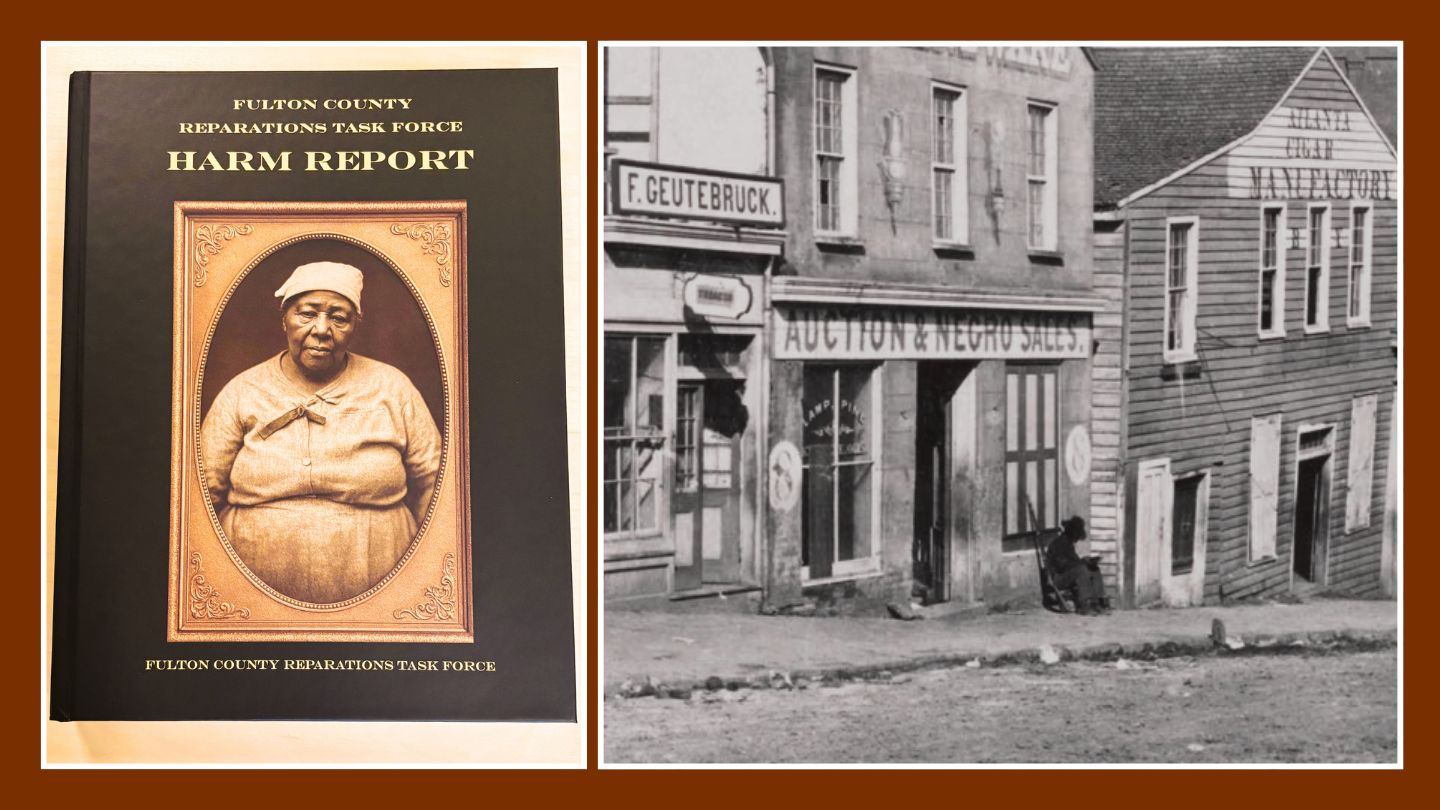
It took two years of extensive research and compilation, but the Fulton County Reparations Task Force Harm Report is now public. The Fulton County Commission approved the report and allocated an additional $250,000 for its completion. The task force was required to limit its findings to harms for which the county was directly responsible during a defined period of enslavement, specifically, 1854 to 1864.
There are no universally accepted formulas for calculating an adjusted monetary figure tied to the enslavement of Africans and, later, their American-born descendants. But scholar and researcher Dr. Karcheik Sims‑Alvarado says her work with the Nobel Prize Museum in Sweden helped shape a possible framework.
Related story: Fulton’s Reparations Task Force produces 615-page report on harm done to Black residents
“I was there during this one exhibition,” she recalled. “They had all these different formulas and scientific discoveries showing how the world can be made better through science, technology, and medicine. And I began to think, ‘How can we use science and math to solve social, economic, and environmental challenges?’”
She told “Closer Look” host Rose Scott that a central question emerged: “Can we measure harm?” As the Morehouse College professor examined the concept of harm and whether it could be quantified, the task force began compiling large amounts of quantitative data.
“We began to pull together all this data,” she said. “And I began to think about the extraction that came from the value of people — and then those who accumulated wealth.” From that, she developed the Extraction‑Accumulation Harm Theorem: H = ∑(PEt + PAt)(1 + r)ⁿ.
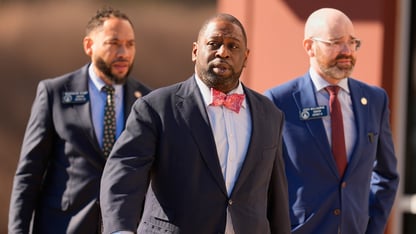
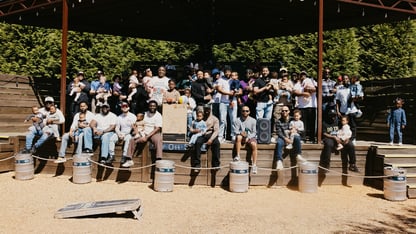
Sims‑Alvarado chairs the Fulton County Reparations Task Force alongside Dr. Amanda Meng, a Georgia Tech research scientist who also serves as secretary; Ann Hill Bond, a journalist, lynching historian and member of the Research Committee; and John Wright, a researcher. All four joined “Closer Look” for a special two‑day series about the final report.
Each described their role in the two‑year project, which culminated in a printed report of more than 600 pages. It includes tax records from slaveholders and assigned monetary values for enslaved people. Meng noted that the report also traces the history of convict labor, convict leasing and the use of chain gangs. But it begins with a detailed account of slaveholders in Fulton County.
“We wanted this to feel like where we’re from — where we are currently,” Meng said. “This is our legacy as a county, as a community. These names matter because they were the people holding power and maintaining the system. We still see some of their names today. We wanted to make it a very local experience and context.”
She added that nearly 55% of the county’s enslaved population in 1860 was under the age of 25.
But the harms extend far beyond enslavement itself. As Bond explained, “When we’re talking about enslavement, that is one harm. But taxation of enslaved people is another harm.” In total, the task force identified 21 distinct harms.
For context, Wright noted how “mind‑boggling” it was that “owning a slave made you somebody,” even if a white individual owned no land. “You didn’t need land or property—just owning one person could become a source of revenue.”
He said it was common for plantation owners to rent enslaved people to others during the “off‑season,” often as housekeepers. Enslaved labor was also routinely leased to railroads to lay track and build bridges when not needed on plantations.