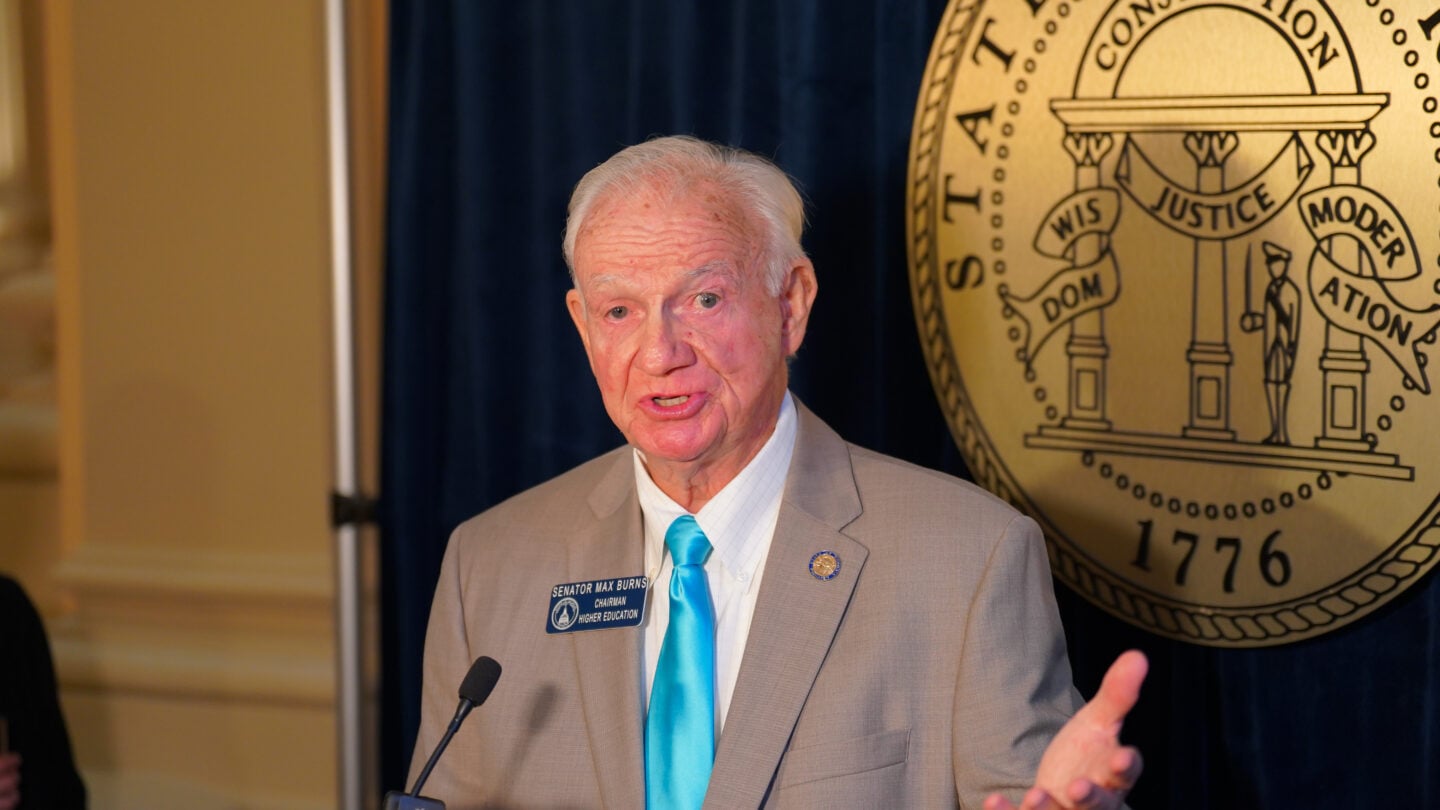
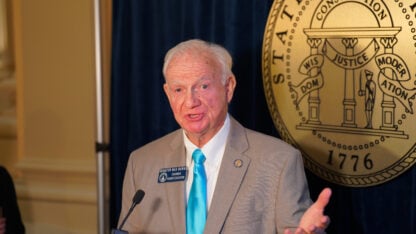
State Sen. Max Burns, R-Sylvania, after Sine Die, the last day of the special session on Tuesday, June 23, 2026. Burns is the author of Senate Bill 3EX, which allows QR codes to continue being used on ballots until 2028. (Matthew Pearson/WABE)
The Georgia legislature passed a bill Tuesday to extend the use of QR codes on ballots until 2028 and mandate hand recounts for the top two statewide races within 0.5%.
The bill only applies to positions like governor, lieutenant governor and other statewide offices, but not federal races like president.
The vote in the House was 94 to 79, and the vote in the Senate was 36 to 16.
This comes after a Georgia state House committee narrowed the scope of the controversial elections bill early Tuesday morning that otherwise would have mandated hand recounts for the top two races on a ballot under any circumstance before certification.
The recount under the current version of Senate Bill 3EX must be completed within 17 days. These changes would take effect immediately if the legislature passes the measure and it’s signed into law by Gov. Brian Kemp.
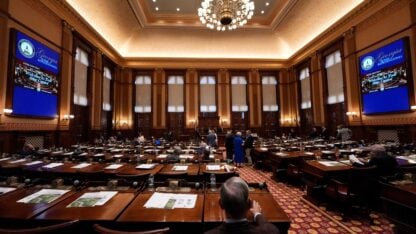
The state legislature convened for a special session that ended Tuesday in part due to a 2024 elections law that bans the use of QR code ballots starting in July. Lawmakers did not manage to pass a bill during regular session this year for a replacement system.
Senate Bill 3EX would push that deadline down the road to 2028. It also provides for an advisory committee made up of members appointed by the governor, Senate Committee on Assignments and the speaker of the House that would give recommendations on a new elections system to the legislature for the 2027 legislative session.
The House committee also passed an amendment to ensure that the advisory committee gives recommendations specifically for implementing hand-marked paper ballots produced with ballot-on-demand printing.
The author of the bill, State Sen. Max Burns, R-Sylvania, said it would boost voter confidence in Georgia elections.
“I think that historically we’ve used both manual counts and machine counts, and I would suggest to you that they can coexist and confirm each other’s ultimate results,” he said Monday.
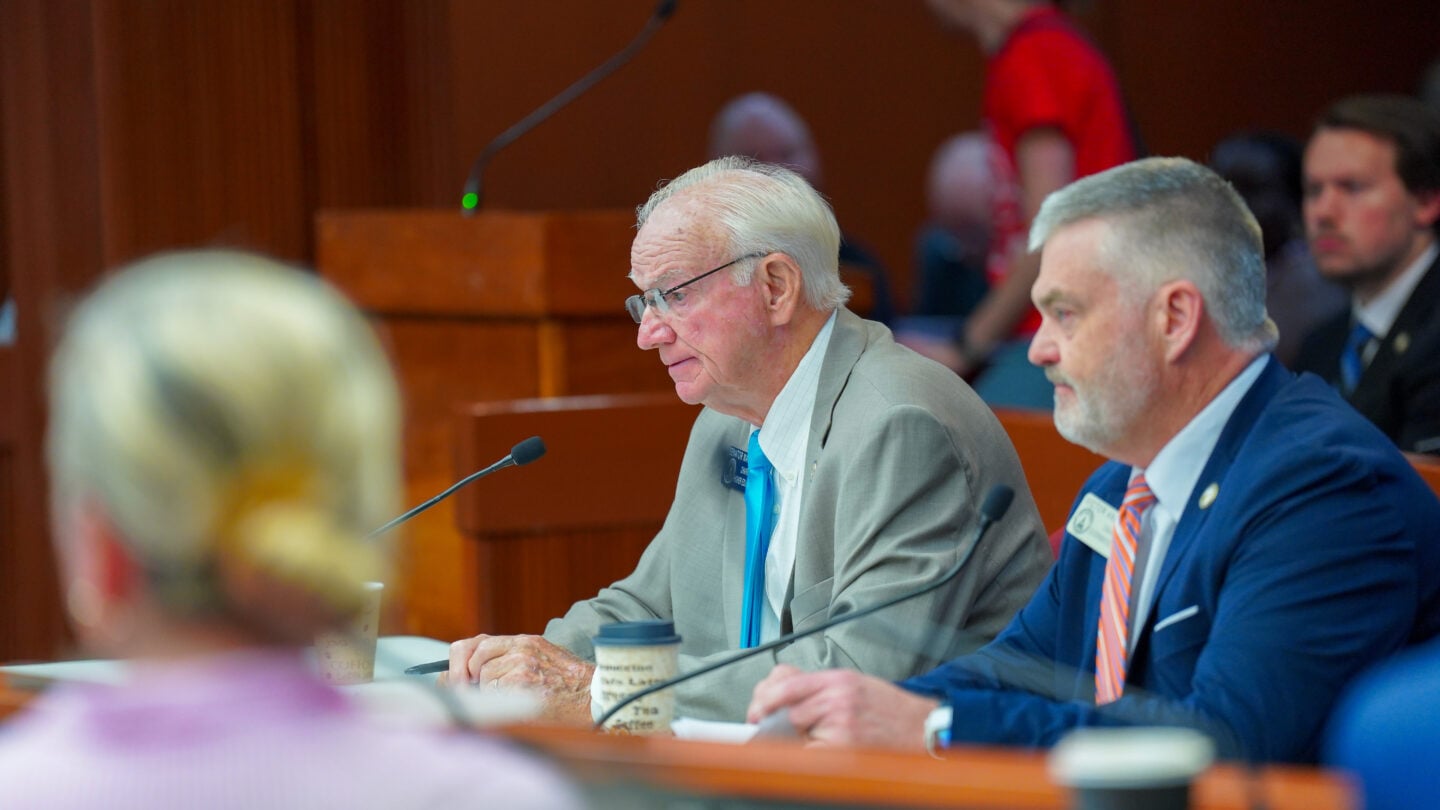
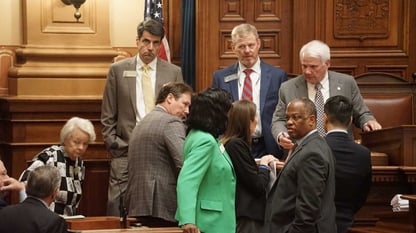
Georgia state Sen. Max Burns, R-Sylvania, present updates to SB 3EX to the Georgia House Committee on Governmental Affairs on Tuesday, June 23, 2026. The bill extends the deadline to remove QR codes from Georgia ballots but also includes an amendment that adds hand recounts of the top two races if they are within 0.5%. (Matthew Pearson/WABE)
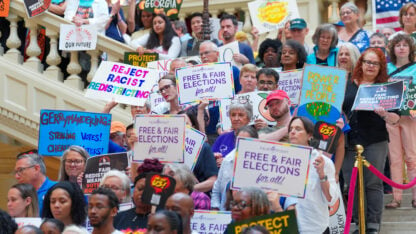
The House Governmental Affairs Committee made the changes after advocates and Democratic lawmakers raised objections to SB 3EX on Monday, saying hand recounting ballots would significantly delay election certification, lead to inaccurate results and cost taxpayers more.
“Hand counting is actually significantly more error prone and more costly than machine counting. It’s also slower, delaying the delivery of election results and risking certification problems,” said Brittany Burns, an organizer with the Black Voters Matter Fund, during Monday’s committee hearing.
Sen. Burns said he supports the changes to the bill on Tuesday.
“In most processes, no one party gets everything that they’d like to see, but at the end of the day I think we’ve landed at a place that makes sense for Georgia,” said Burns.
Democrats still have issues with the bill despite some support
Despite opposition to hand counting ballots, a few Democratic lawmakers voted in support of the bill in order to ensure that the state has a plan to implement a new voting system in the future.
Senate Minority Leader Harold Jones said he felt the special session was overall successful and that a few Senate Democrats voted in favor of SB 3EX to prevent confusion if the state did not have an elections system after the July QR code deadline.
“When you have people who do not mind watching the world burn, sometimes you have to make some decisions you don’t necessarily feel 100% comfortable with, and that of course dealing with the decision today on this QR code, but we realized that we were dealing with folks that basically would allow everything just to go total chaos and we couldn’t afford that risk,” he said.
Nevertheless, some Democrats were still not happy with the bill on various fronts, including the fact that the bill still includes hand recounting.
“Based on the evidence, hand recounts will inevitably get a different result from the original count, not because of fraud, but because of human error, because we’ll have thousands of people counting millions of ballots,” said state Rep. Gabriel Sanchez, D-Smyrna, who presented the minority report of the bill on the House floor.
Many Democrats said the bill aims to rehash the 2020 presidential election and plays into claims made by President Donald Trump that voting machines in Georgia inaccurately tabulated votes.
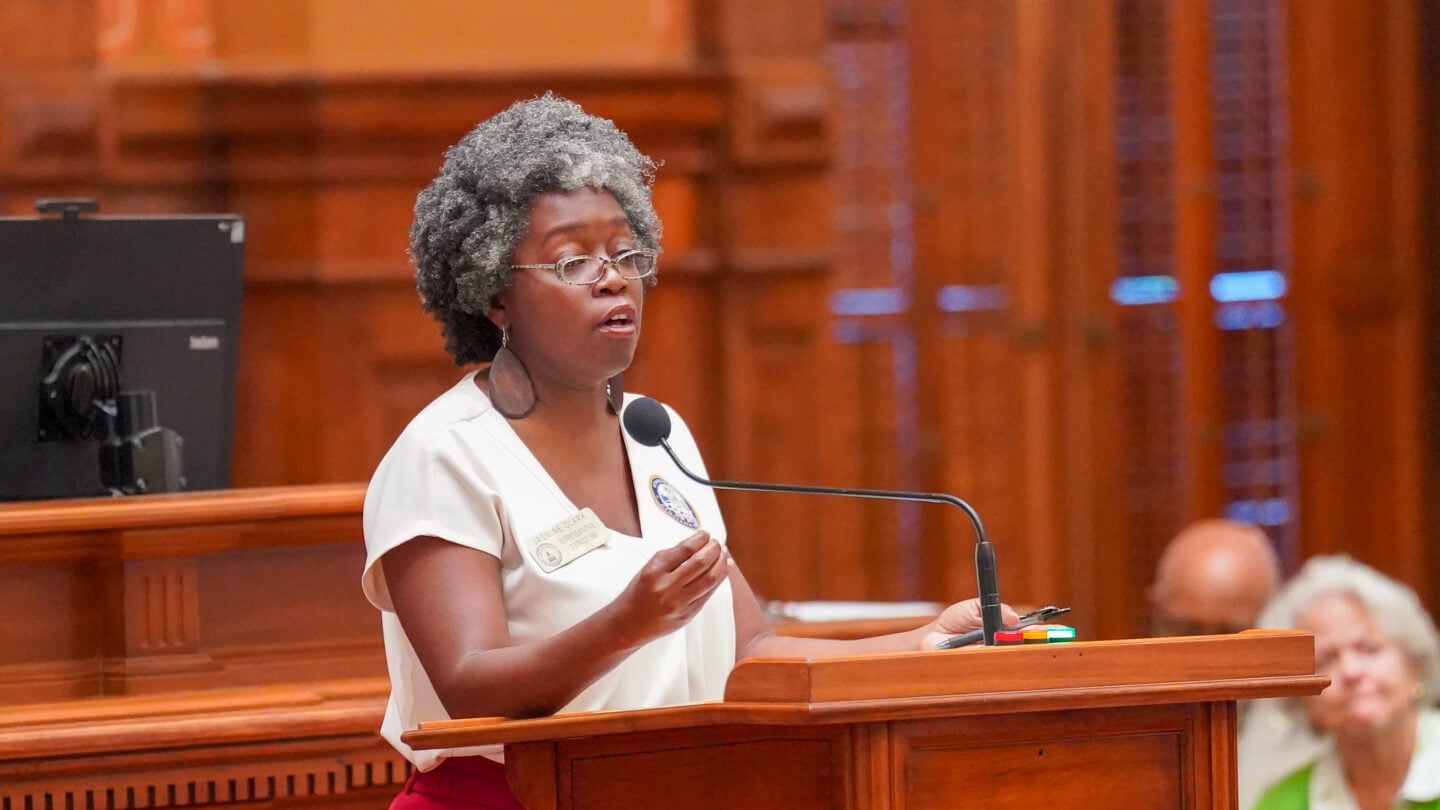
“We are spending time relitigating the 2020 election and the election denial that came from that, and we’re dressing it up as if this is election integrity. This is not it. Georgians deserve better,” said state Rep. Jasmine Clark, D-Lilburn.
State Rep. Jasmine Clark, D-Lilburn, speaks against SB 3EX on the floor of the House on Tuesday, June 23, 2026. (Matthew Pearson/WABE)
Several Democrats said the elections advisory committee members being up for appointment by Republican leaders could leave Democrats out of the process.
“Why would there not be any intentional effort to make sure that the committee makeup is bipartisan as opposed to leaving it to the whims of the people that are making the proposals, not even a list of recommendations from the minority party or any sort of comparable balance?” State Rep. Stacey Evans, an Atlanta Democrat, said during a House Rules Committee meeting.
State Rep. Victor Anderson, R-Cornelia, said he trusts House Speaker Jon Burns would ensure his appointments are bipartisan. Anderson is the chairman of the House Governmental Affairs Committee.
“Honestly, I have faith in our Speaker in the House. I don’t think there’s a committee in the House, a study committee in the House that does not have bipartisan representation,” he said. “My conversation with them is that that would be appropriate, but we did not want to restrict the speaker as to who those appointments would be, and I have faith that he will exercise that appropriately as he has in the past.”
Georgia lawmakers did not put local referendums on homestead tax exemptions on November ballots
Another item that Kemp put on the agenda for the special session was putting referendums on whether to issue a homestead tax exemption on local ballots in November.
This year, Kemp signed Senate Bill 33, which allows local governments to raise sales tax in order to pay for a property tax cut through a homestead tax exemption. The sales tax is known as a Local Homestead Option Sales Tax. Residents would need a majority vote in a referendum to pass an exemption.
Republicans argued that putting these local property tax referendums on the ballot for voters would allow them to decide what’s best for themselves.
“Let them vote and put it on the ballot,” said state Sen. Bo Hatchett, R-Cornelia. “Take the politics out of it for just a second, and give them a seat at the table.”
Nevertheless, lawmakers were not able to reach the requisite two-thirds majority to put such local referendums on the ballot.
“This would have been a new sales tax that would have applied to food, would apply to everyday purchases, and so you don’t create relief by creating a tax,” said state Rep. David Wilkerson, D-Powder Springs.