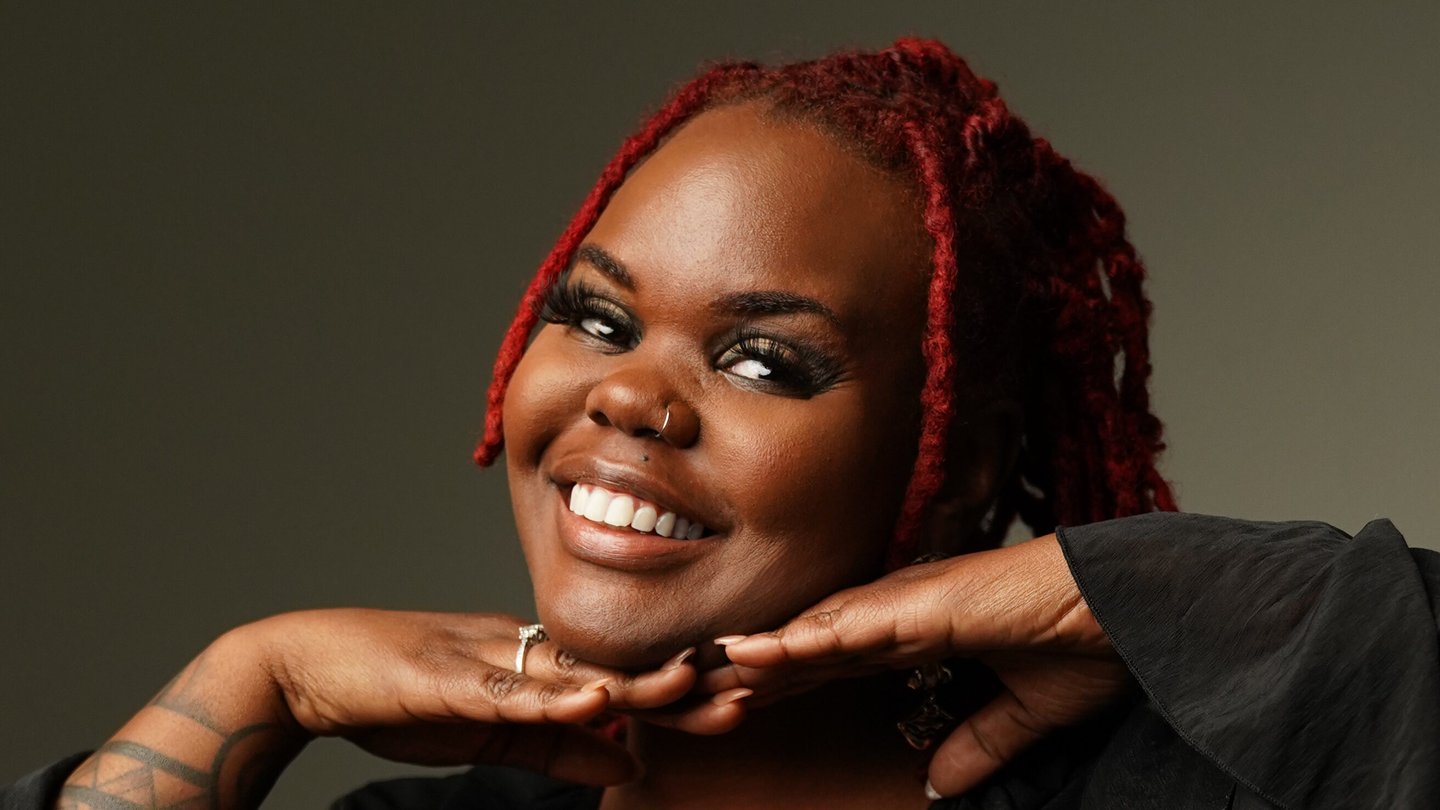
Atlanta poet and spoken word artist Ashlee Haze; is one of 16 writers to receive a 2026 South Arts Literary Arts Grant. Her award is going toward “KIERA,” a nonfiction book and audiobook exploring abundance, wealth and liberation for Black women and the historically marginalized. For Haze, the project is as much about how the story gets told as what it says.
Telling her own story
Haze describes her work in three parts. “Poet, producer, philosopher … most of what I do falls under one of those categories,” she said.
That multi-layered background carries over into how “KIERA” will reach audiences. The book is being released as an audiobook alongside a print edition.
“I am a spoken word artist first,” Haze said. “I’m very passionate about adult literacy, and I think a lot of folks don’t realize how much of a literacy gap there is… I’ve always wanted something for folks who may not be drawn to pick up a physical book, but who may need to listen to something… It was not only an opportunity for a different performance of the work, but also an opportunity to make the work more accessible.”
Rooted in the Great Migration
Haze’s family moved from Chicago to Atlanta when she was nine. Her mother was born in Greenville, Mississippi; her father was born in Chicago, though his mother was born in Natchez, Mississippi.