This story was provided by WABE media partner 285 South.
Alma Bowman walked out of the ICE field office on Ted Turner Drive on Tuesday morning with a big smile. “My heart is just like going boom, boom, boom right now,” she said. “I’m overwhelmed.”
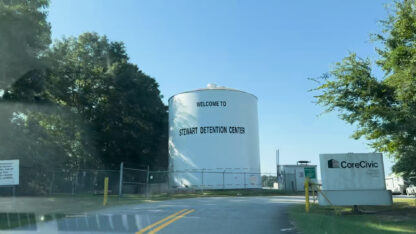
Eight months ago, Alma had walked into the same building, only to find herself loaded onto a bus and driven to the Stewart Detention Facility in Lumpkin, where she spent the next eight months locked up.
Born in the Philippines to a Filipino mother and an American father, Alma moved to Georgia when she was 10 and has documents showing her claims to American citizenship. Still, following a traffic stop in 2017, she spent nearly three years in immigrant detention. She was released in 2020, but was ordered to attend regular check-ins with Immigration and Customs Enforcement (ICE).
It was at one of those appointments, on March 26th this year, that she was detained.
“I didn’t think I was coming back,” she said, recalling that day.
But on Monday afternoon, one of Alma’s lawyers, Samatha Hamilton (who also provides legal advice for this publication), was at the airport about to board a flight home to California for the Thanksgiving holiday, when she got a call. It was Alma’s deportation officer, who informed her Alma would be released from Stewart that day. Samantha quickly messaged aWhatsapp chat group that Alma’s son, John, was on.
“I was sitting and playing games on my off day, when I checked my phone,” John told 285 South. “The lawyer puts the message in there, like, someone, go get [her], go now. She’s being released. And I’m just like, oh, what?”
A friend went to pick up Alma from Stewart, while John and Kris prepared her room back home in Macon, and then drove to an IHOP on Roswell Road to see her (they spent the night in Atlanta to make sure they’d be on time for her Tuesday immigration check-in).
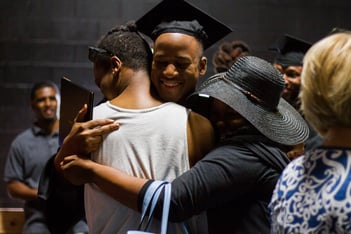
“It was so good to hold them, give them a hug,” Alma said. “I was speechless.” John couldn’t believe it either. “[She] came in, it was just like, oh, that’s Moomin,” he said, using the name that he and his sister call their mother. “We can actually see her.”
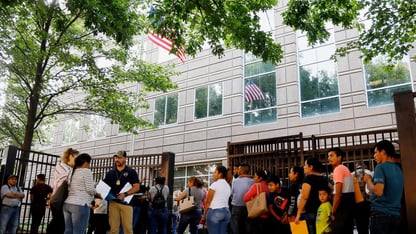
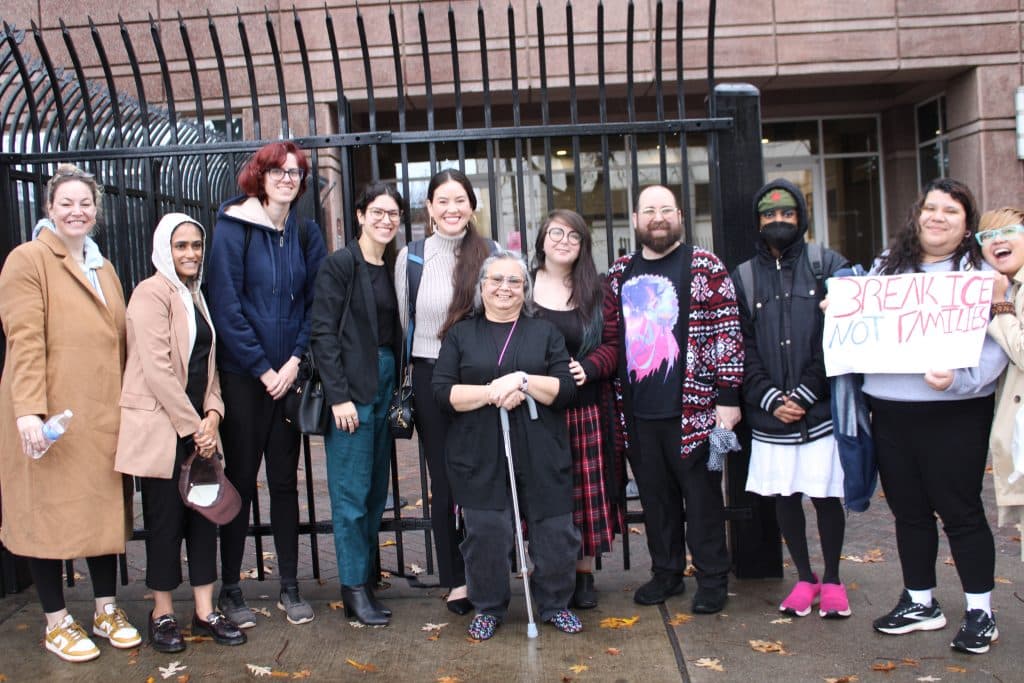
On Tuesday morning, the three of them, along with her lawyers and advocates, were at the Atlanta ICE field office for her first check-in since her release, and to request that Alma be given an alternative to wearing an ankle monitor, as she has swelling in her ankles from diabetes.
Meredyth Yoon, a lawyer with Asian Americans Advancing Justice–Atlanta (AAAJA), said the organization had filed a 180-day custody review. For people who’ve been arrested after being issued a final order of deportation, ICE is required to conduct such reviews at 90, and then 180, days to determine whether detainees are eligible for release. When Alma was released, Meredyth said, “she was told that it was because of the 180-day custody review.”
Alma was in shock when she found out: “Everybody said I was shaking while I packed my things to go,” she said, speaking to 285 South outside the courthouse. Other women detainees who shared the same holding area pod with Alma were “clapping and hollering,” she said. “The first thing they said: Did you have a lawyer? Can we get their number?”
She wasn’t the only one released that day, she said. “I mean, there is hope, because there was another girl that was a friend of mine that was released.”
AAAJA also submitted additional documents to provide evidence of her claims to U.S. citizenship through her father, a U.S. military veteran who served in the Philippines. Among them were her father’s military records, which included where he was stationed, and a baptismal certificate. “Her father’s mother, her maternal grandmother’s name was on that baptismal certificate,” Meredyth said. “So maybe they took that into consideration.”
At her Tuesday appointment, Alma had more good news: She won’t have to wear the ankle monitor. Instead, she’ll be required to use SmartLINK, a location-based electronic monitoring app that uses facial recognition, allowing Alma to keep her check-ins virtual, while she continues to fight her case.
Alma had been mentally preparing for a Thanksgiving meal inside the Stewart facility. “I was even asking the officers, How was Thanksgiving like here?” she said. “Some people said you get a lot of food, they give you a little care package, like Coca-Cola, honey bun.” She had decided to use the microwave—the one cooking appliance they’re allowed to use to make food. “Me and a couple friends had already decided I was gonna make chicken alfredo and a tuna log.”
Instead, she’ll be with her children and close family friends in Macon, enjoying a meal that’s not cooked in a microwave. “Miracles do happen,” she said. “There is hope.”