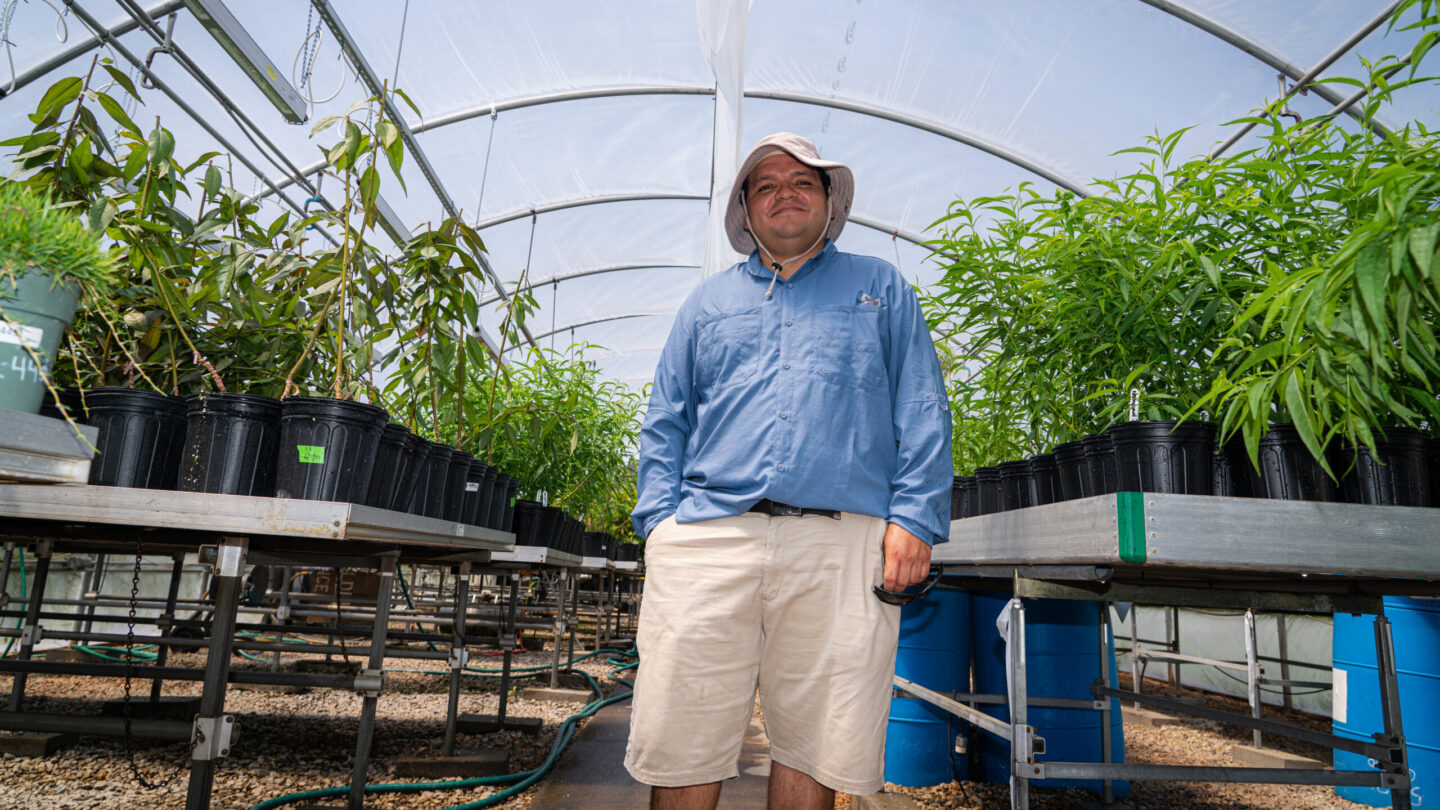
When Pam Knox walked into the peach orchard at the University of Georgia horticulture farm this spring, there was nothing on the trees except leaves and a couple of brown fruits — the result of one of the state’s warmest winters ever followed by two nights of freezing weather in March.
“It’s just really odd, because over the course of one night, they lost their entire crop and their entire production here,” said Knox, an agricultural climatologist with the University of Georgia Cooperative Extension, which shares research and expertise with farmers and others. Commercial peach farmers in the state lost as much as 95% of their yield, she estimated.
Georgia, with its iconic peaches, isn’t the only place in the south where farmers have had to deal with changing conditions. Houston, Tupelo and Atlanta all had one of their top five warmest winters on record this year, according to the National Centers for Environmental Information. Farmers are contending with those warming winters by using new or improved agricultural techniques, trying out new crop varieties and even growing crops that were previously less common in their regions.
Read this story now for free
To continue reading, sign up for our newsletter and get unlimited access to WABE.org
You can select your preferences for news and local content. We will never share your email address. Learn how your newsletter sign-up will support WABE and Public Media