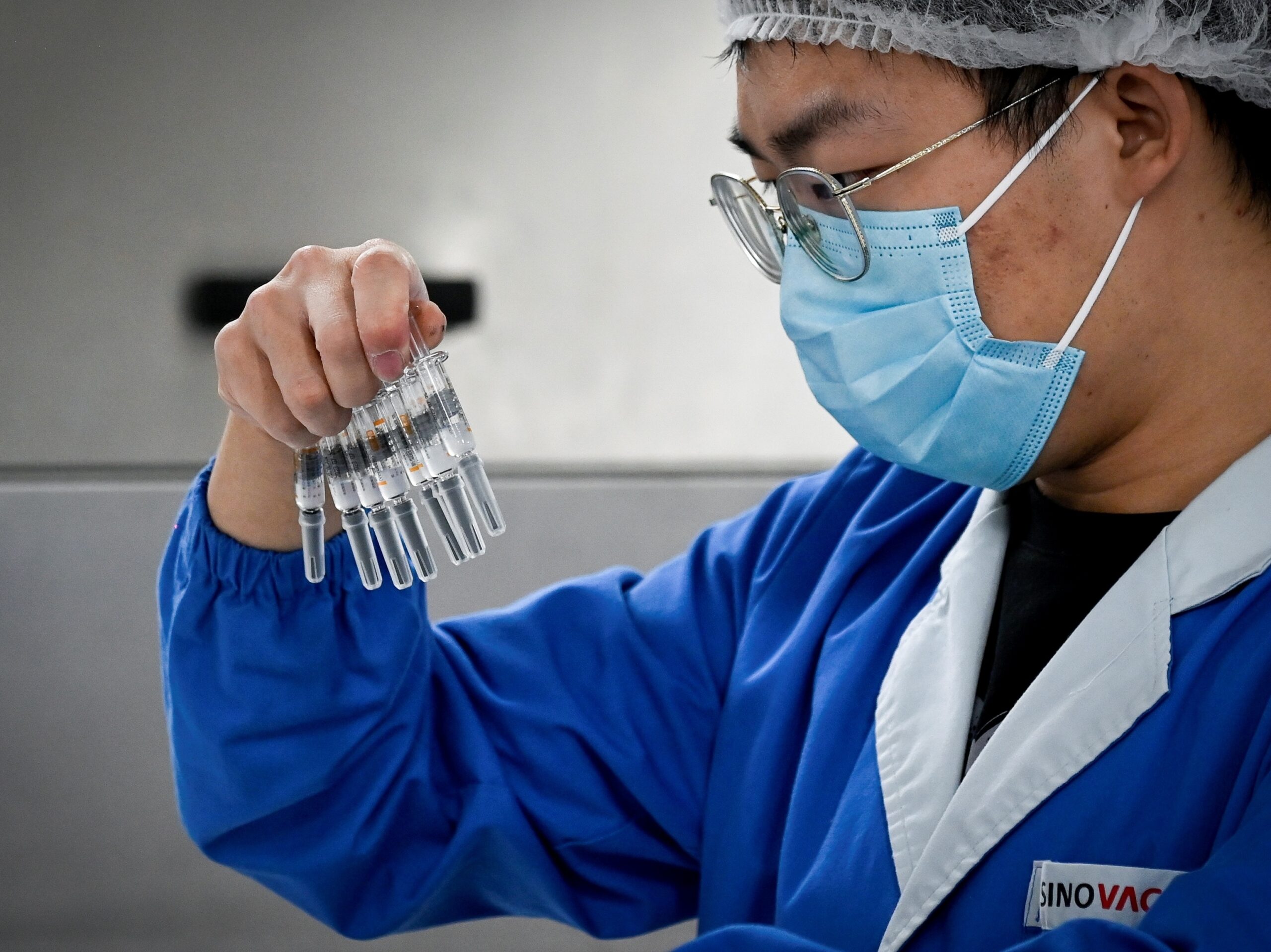
One early November morning, a Peking duck cook, several construction workers and a software engineer patiently lined up outside a Beijing vaccine facility, awaiting their turn to be injected with a coronavirus vaccine still awaiting regulatory approval.
As countries around the world race to develop the first viable coronavirus vaccine, China’s two biggest vaccine firms have already begun inoculating hundreds of thousands of mostly state workers in a bid to get a head start. But deploying unproven vaccines carries huge risks – both for those receiving the vaccination and epidemic control efforts. The major worry is that vaccinations will give people who’ve had them a sense of invincibility that is not warranted – and that could help spread the virus.
A vaccine may work to prevent bad outcomes from infection, but Jerome Kim, director general of the International Vaccine Institute in Seoul, South Korea, warns that in some cases it may not prevent infection itself. “That could mean that a person could still transmit the virus after they’ve been vaccinated,” he said.
Read this story now for free
To continue reading, sign up for our newsletter and get unlimited access to WABE.org
You can select your preferences for news and local content. We will never share your email address. Learn how your newsletter sign-up will support WABE and Public Media