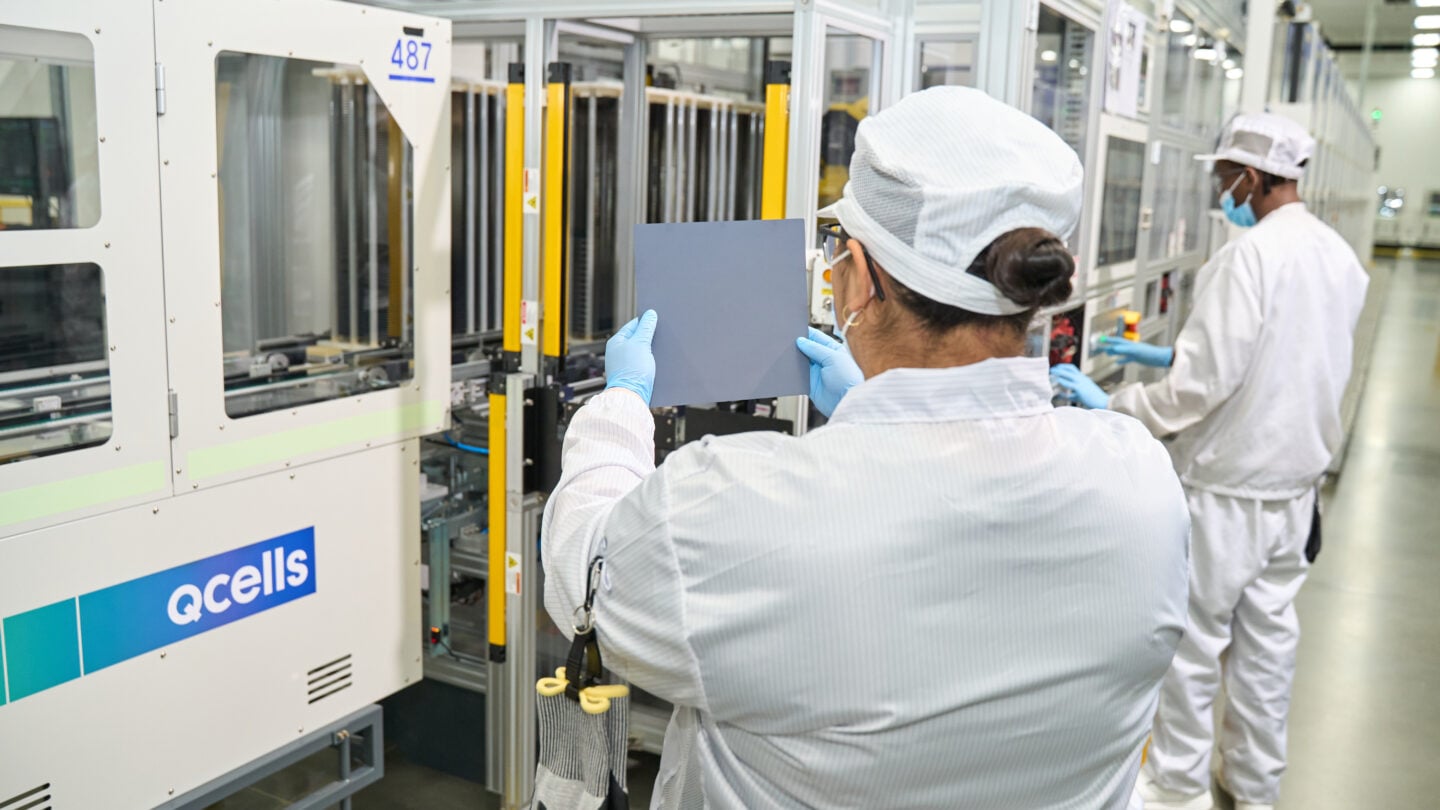
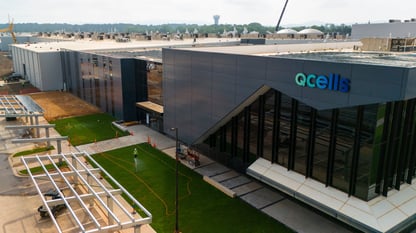
Solar manufacturer QCells has started making the key components that go into solar panels at its new factory in Cartersville, Georgia, a major milestone in moving solar production to the U.S.
QCells has been assembling solar modules in Dalton, Georgia, since 2019. But until now, the ingots, wafers and cells that make up those panels have been manufactured overseas.
“It’s where the critical technology of a solar panel comes from and what actually powers and creates the electricity from that solar panel,” explained Scott Moskowitz, vice president of industry affairs for QCells.
Making those parts abroad can create problems with customs, tariffs and other supply chain issues. Last year, QCells slowed down production and implemented furloughs due to such delays.
Making the cells locally should prevent those kinds of problems in the future, Moskowitz said.
“It’s a really meaningful milestone for QCells and the U.S. solar industry,” he said. “It more than doubles the available capacity of U.S.-made cells in the United States.”
The solar, battery, and electric vehicle industries are all trying to move more manufacturing to the U.S., both to address supply chain issues and to take full advantage of tax credits that favor domestic production.
Georgia has been a leader in that transition, Moskowitz said.
“We have been really supported by a state that has recognized that manufacturing is important,” he said. “It’s important to its citizens. It’s important to the economy.”
QCells plans to fully ramp up production at the new factory later this year. The factory is the first of its kind in the U.S., where all the major parts of a solar module will be made under one roof. Once both are at full capacity, the two QCells facilities in Georgia are expected to produce 47,000 panels a day, enough to power more than 1 million homes for a year, according to the company.