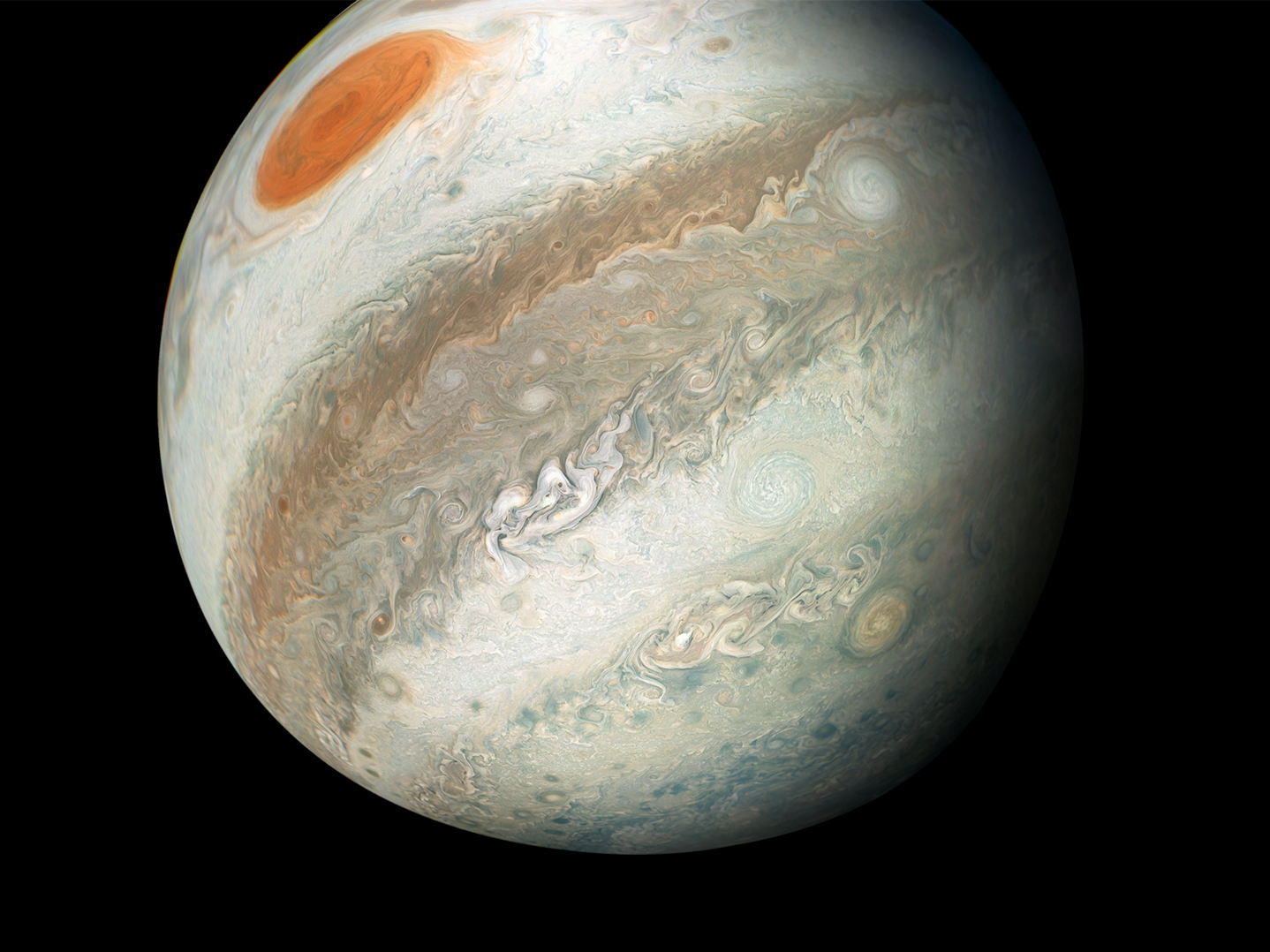
Jupiter is well-known for being the biggest planet in our solar system, and it’s also home to the biggest storm. It’s called the Great Red Spot, an enormous vortex that has been swirling for centuries. It’s bigger than our own planet, and yet we don’t know much about it. Until now, scientists could only observe the spot from afar. But thanks to a NASA spacecraft launched a decade ago, we’re finally getting a look inside Jupiter’s storm.
The Great Red Spot is like a storm here on Earth, but supersized. “It’s basically clouds,” says Paul Byrne, a planetary scientist at Washington University in St. Louis. Really, “it’s not all that dissimilar to the kinds of things we know as cyclones or hurricanes or typhoons on Earth.”
At 10,000 miles across, the Great Red Spot is the largest storm in our solar system and has been continually observed for around 200 years, but it’s been around for much longer. (Compare that with big storms on Earth, which generally last a few days or weeks at most.)
Read this story now for free
To continue reading, sign up for our newsletter and get unlimited access to WABE.org
You can select your preferences for news and local content. We will never share your email address. Learn how your newsletter sign-up will support WABE and Public Media