Typically, a pilgrimage is described as a journey taken for a religious purpose or, in a metaphorical sense, a quest for deeper, intangible clarity. In an April 20, 1964, letter, Malcolm X — then also referring to himself as Malik el‑Shabazz — wrote powerfully about the clarity and discovery he experienced during his pilgrimage to Mecca.
He wrote: “You may be shocked by these words coming from me. But on this pilgrimage, what I have seen and experienced has forced me to re‑arrange much of my thought patterns previously held, and to toss aside some of my previous conclusions. This was not too difficult for me. Despite my firm convictions, I have always been a man who tries to face facts, and to accept the reality of life as new experiences and new knowledge unfolds it.”
A new book draws from Malcolm X’s pilgrimage and the lived experiences of his short but world‑shaping and influential life to guide readers doing their own internal work in service of external change.
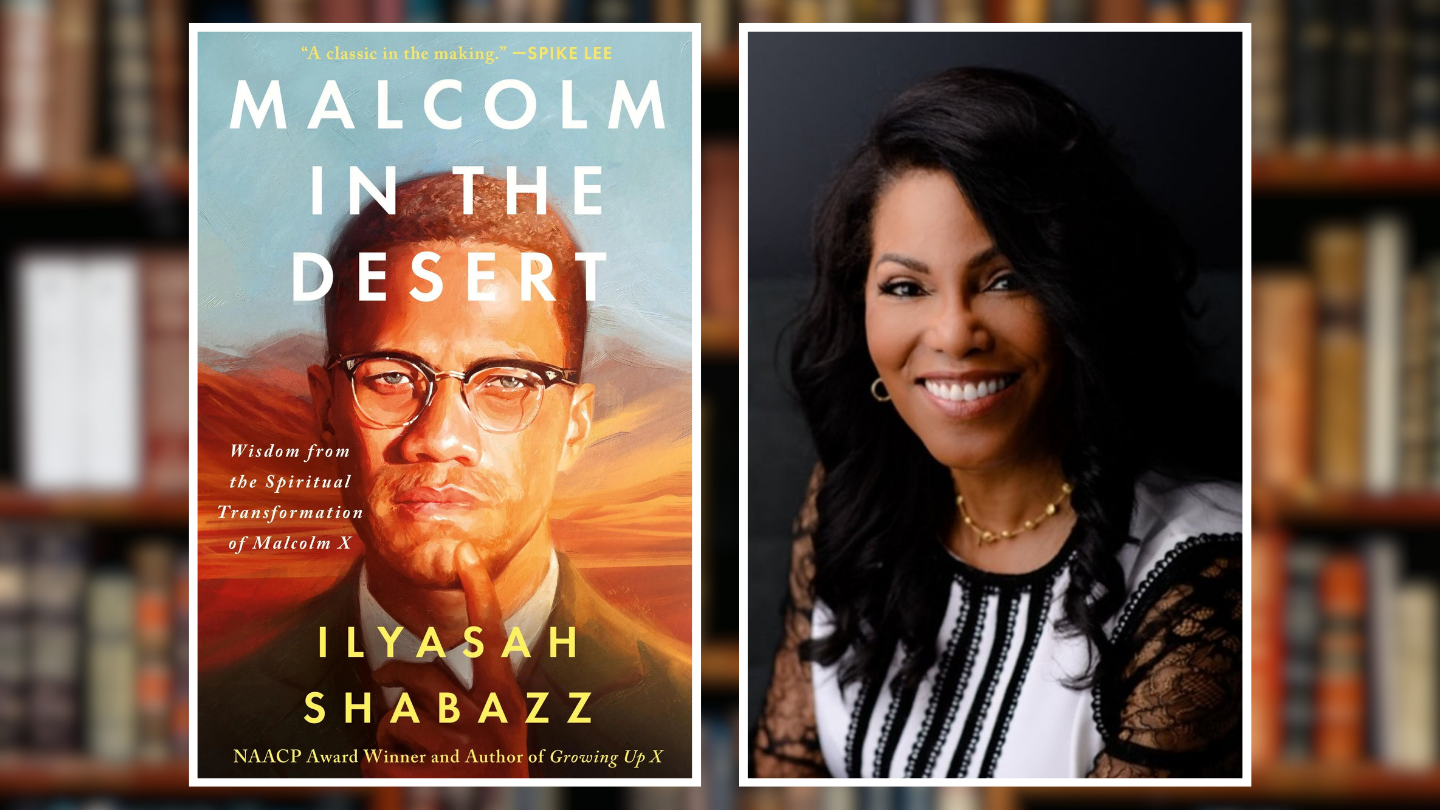
“Malcolm in the Desert: Wisdom from the Spiritual Transformation of Malcolm X,” written by educator, social activist and the third daughter of Malcolm X and Dr. Betty Shabazz, Dr. Ilyasah Shabazz, speaks directly to those feeling overpowered by the state of their world.
“This book is for anyone who feels overwhelmed by the pace of modern life; who feels called to act in the urgency of this tender moment but is unsure of where to begin,” she writes.
In a conversation with “Closer Look” host Rose Scott, Shabazz explained part of the inspiration for the book and for the chapter “Making Friends with Grief.”
“What is an appropriate response to our conditions? What is an appropriate response to human cruelties and to war? When I think of my mother — my best friend, my rock, my source of inspiration, encouragement, empowerment — I think of her as a young woman in her 20s, having lived through her home being firebombed, lived through surveillance. And then to have witnessed 21 bullets through her husband’s body and still protect us. She had four babies and was pregnant with twins. And yet, when I think of my mother, I think of the most loving, caring, compassionate, joyous person,” Shabazz said.
“I realized after she passed away that she was deeply spiritual. She modeled invincibility — showing us that we can be and do anything, and that we must not give in to victimhood or despair. And when I think of my father, the question continues. It is his moral and revolutionary spirit that has guided me through my grief,” she added.
Shabazz also shared a deeply emotional moment from her own spiritual journey: climbing Mount Arafat (Jabal Arafat), the sacred granite hill about 12 miles southeast of Mecca. At the summit of the “Mountain of Mercy,” her prayers were for her parents.
“It was a very steep hill, and I tell you, Rose, the closer I got to the top of that mountain, the darker the people were. It’s an incredible experience. That’s why I say it is the land of the Torah, the land of the Bible, the land of the Quran. It’s God’s land. And you feel this profound sense of humanity,” she said.