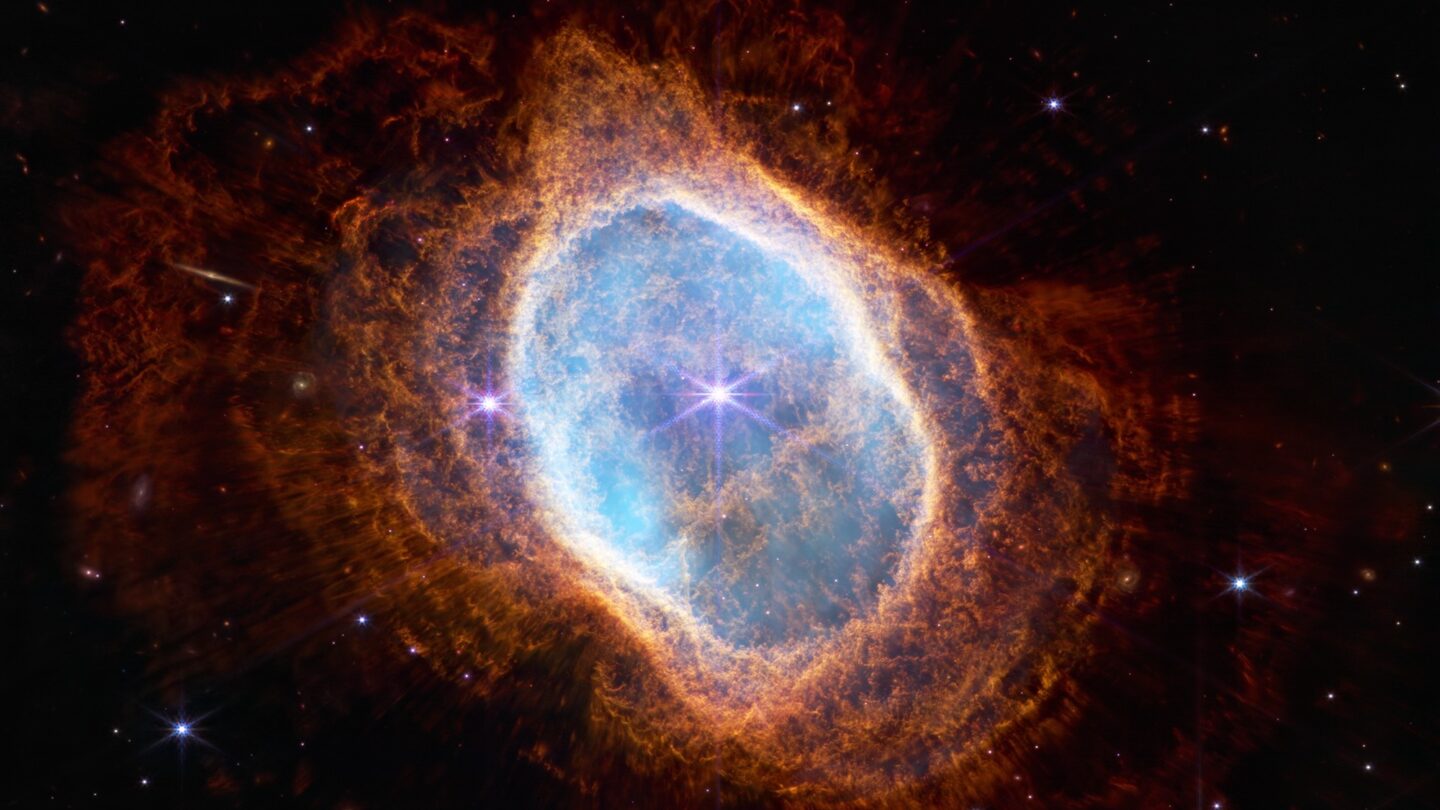
The universe’s splendor and breadth are on display like never before, thanks to a new batch of images that NASA released from the James Webb Space Telescope on Tuesday.
The images reflect five areas of space that researchers agreed to target: the exoplanet WASP-96 b; the Southern Ring Nebula; the Carina Nebula; Stephan’s Quintet (five galaxies in the constellation Pegasus); and the galaxy cluster SMACS 0723.
“WASP-96 b is a giant planet outside our solar system, composed mainly of gas,” NASA said. “The planet, located nearly 1,150 light-years from Earth, orbits its star every 3.4 days. It has about half the mass of Jupiter, and its discovery was announced in 2014.”
Read this story now for free
To continue reading, sign up for our newsletter and get unlimited access to WABE.org
You can select your preferences for news and local content. We will never share your email address. Learn how your newsletter sign-up will support WABE and Public Media