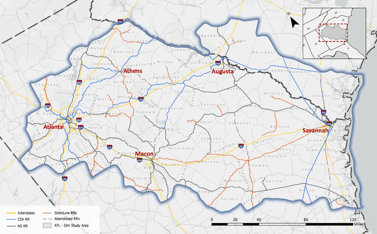
A Georgia Department of Transportation public survey on potential passenger rail service between Atlanta and Savannah ends on Aug. 6.
The survey most notably focuses on how much people would be willing to pay for rail service between Atlanta and Savannah, with options ranging from two-and-a-half to five hours one-way.
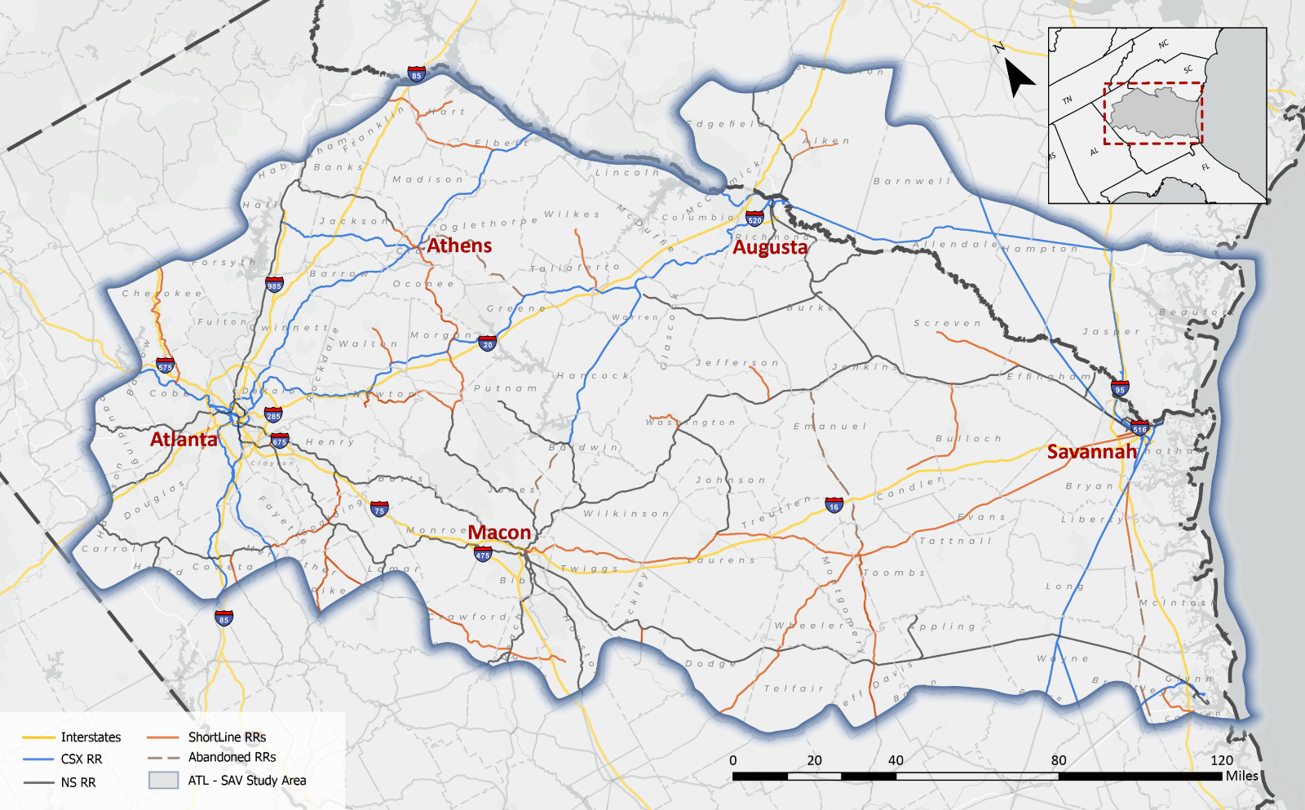
The survey is part of a larger $10 million study that also includes Athens, Augusta, Macon, Milledgeville and Statesboro. Those and other cities could be stops, depending on what the proposed service looks like. For example, it could involve commuter rail, intercity rail or high-speed rail.
The goal of the study is to produce a plan by early 2028 that includes where funding would come from to build and operate passenger rail service and who would operate it.
There are also separate ongoing rail studies, including Atlanta-Chattanooga-Nashville-Memphis and Atlanta-Charlotte.
As for passenger rail, Georgia is currently served by Amtrak through its Crescent train (Atlanta, Gainesville and Toccoa), Silver Meteor train (Savannah and Jesup), Floridian train (Savannah) and Palmetto train (Savannah).
2022 federal spending bill funded Atlanta-Savannah rail study
Georgia leaders have called for a rail connection between two of the state’s biggest economic centers in fits and starts for decades.
A federal spending bill passed in 2022 included $8 million to study the idea. The Georgia Department of Transportation added $2 million from the state’s rail budget for a total of $10 million.
“The paths to our shared futures have always been paved with connectivity. Atlanta, the state of Georgia and its cities can only benefit from forward-thinking policies like high-speed rail expansion,” said Atlanta Mayor Andre Dickens in a statement at the time.
Since then, project leaders have been doing market analysis, identifying service corridors and route types, coordinating with stakeholders, and identifying route options.
Train supporters say Atlanta-Savannah rail service would provide a huge boost for tourism. Most visitors to Savannah come from Atlanta.
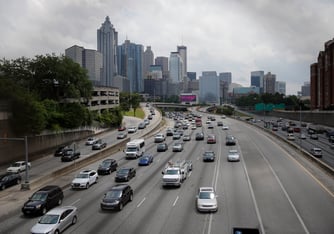
High-speed rail could also cut down on the emissions that cause climate change by reducing the number of cars driving along I-75 and I-16. The transportation sector is the biggest source of those emissions.
A train used to run between Atlanta and Savannah. Known as the Nancy Hanks, it stopped operating in 1971.
WABE’s Emily Jones contributed to this report.