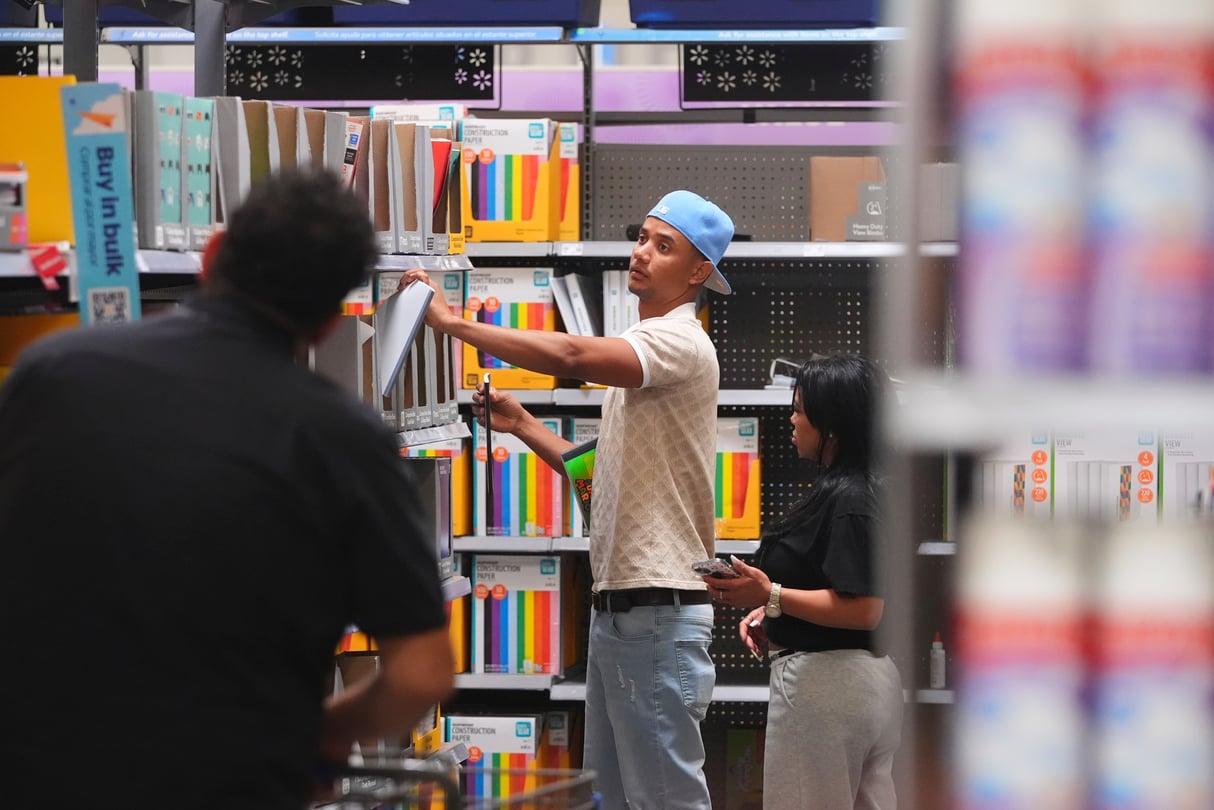
It’s back-to-school time! And preparing for the upcoming school year is getting more expensive for Georgia families.
That’s according to Democratic Sen. Raphael Warnock, who says tariffs are putting additional pressure on Georgia’s families. A new report from his office shows that Georgia families are spending more to fill up their kids’ backpacks compared to last year.
Commonly imported goods like notebooks and index cards are up over 20%, as well as lunch boxes – most likely filled with snacks that also cost more than the previous school year.
The politician says Georgia families are already facing inflation at the gas pump and in the grocery store.
“Here’s something the Trump administration can do. They can get rid of these tariffs. They’re not working. We’re seeing the ways in which it’s increasing the price of everything,” said Warnock.
The report reviewed 4th grade back-to-school lists from five schools across Georgia representing urban and rural communities and found that the cost of required school supplies can cost Georgia families more than $130 per child.
“If you have more than one child, that could be hundreds of dollars. Common school supplies like colored pencils and school lunch boxes increased in price by 31% and nearly 27% in only one year,” said Warnock, adding that he is again pushing to expand the child tax credit this year to help struggling families.
“Donald Trump said to people that he was going to lower their costs on day one, now nearly two years into his administration. Ordinary working-class, middle-class families are struggling every single day under the crush of the Trump tariffs,” said Warnock.
New Tariffs on the Block
Georgia businesses are preparing to weather another potential round of tariffs, this time on Canada.
The new tariffs President Donald Trump recently implemented impact more than 60 economies and 99% of U.S. trade. Trump says this measure is a replacement for his Section 122 tariffs, which included a universal 10% levy.
Administration officials claim that these countries have failed to take action against the importing of goods produced with forced labor.
“It presents a lot of challenges for companies that are trying to do business. This is almost impossible to forecast and plan if the plans keep changing,” said Tom Smith, an economist at Emory University’s Goizueta Business School.
President Trump also tacked on an additional 50% tariff on specific Canadian goods like lumber and machinery, covering $20 billion in Canadian imports that is set to go into effect next month.
When businesses cannot plan for the future, that impacts hiring, and it becomes more difficult for owners to know what they may charge for a product or service. Retaliatory tariffs from other countries become another issue.
“Now an increase in tariffs and an increase in reciprocal tariffs, most likely, that’s going to add an additional burden on top of what is already very constrained households,” said Smith.
He says other goods like plastics, lumber and dairy could rise in price, impacting consumers who are already facing hefty fuel costs.
According to the Georgia Chamber of Commerce, Canada is Georgia’s largest export market, receiving about $7 billion in Georgia exports in 2025. Canada is also the state’s fourth-largest total trade partner.
“I’m not sure if I can pinpoint one particular industry that’s like extremely vulnerable, but basically everyone will suffer,” said Sina Golara, a supply chain expert at Georgia State University.
In its latest tariff briefing, the Georgia Chamber of Commerce says potentially affected Georgia industries include construction materials, beverage distribution, furniture, retail and logistics.
“The cost of construction will go up … many other construction materials depend on what we import from Canada. So some increase will be felt. You know, even if it’s a small portion of what you need to build a house,” said Golara.
Chamber officials are making recommendations to business owners as they prepare for a new import tax, like monitoring implementation, keeping an eye on negotiations with Canada, and the potential for retaliatory tariffs by the effective date of Aug. 19.
He expects businesses to ramp up ordering similar to last year during previous tariff announcements.
“They’re going to scramble to get things on this side of the border as fast as possible. And that’s not going to be cheap; you have to pay extra to make that happen. But that would be a way to at least avoid parts of these tariff effects,” said Golara.
With less than a month until the tariff goes into effect, Golara says there is still time for negotiations between Canada and US trade officials.