This coverage is made possible through a partnership between WABE and Grist, a nonprofit environmental media organization.
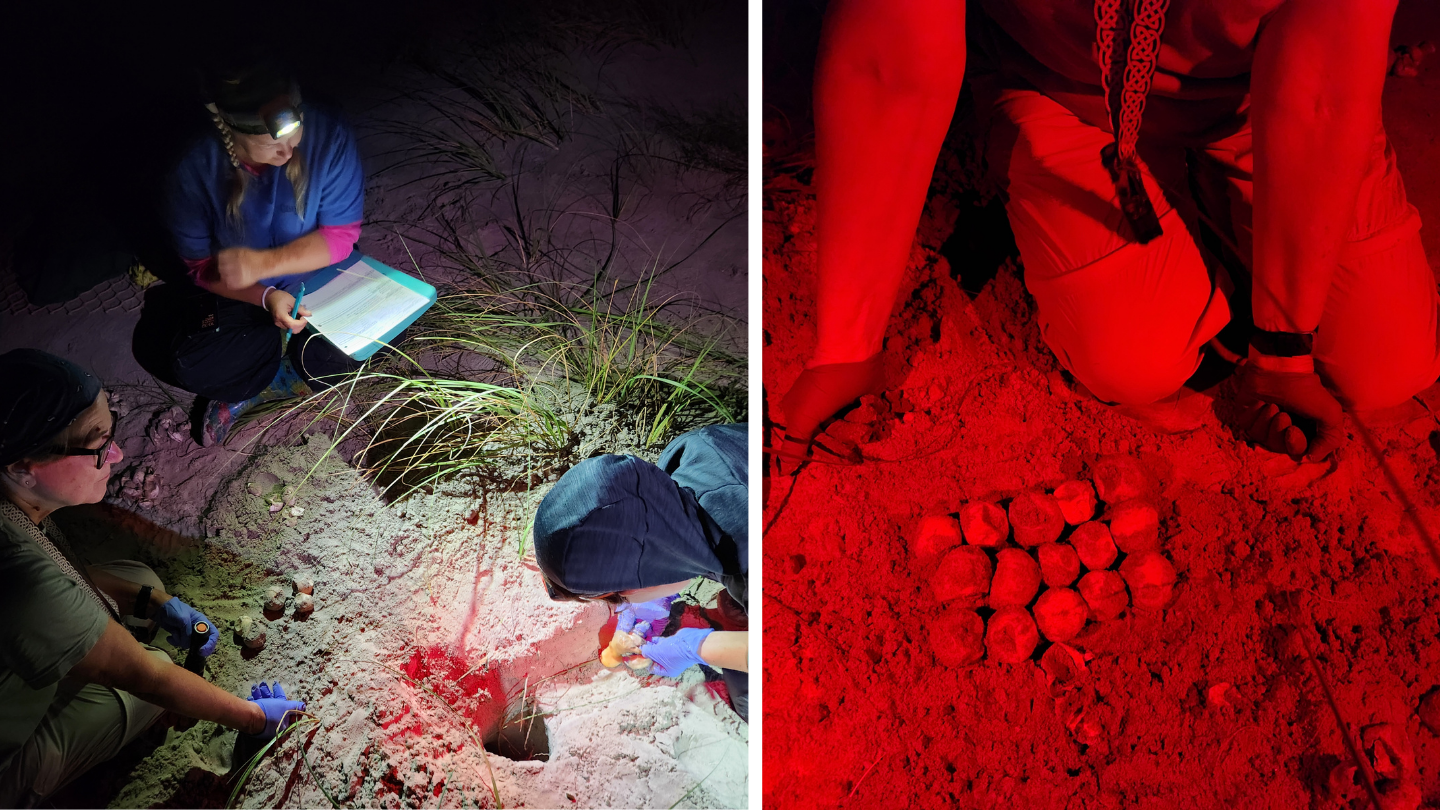
In the middle of a steamy July night on the Wassaw Island beach, volunteer Gabi Steinbach plunged her arm shoulder-deep in the sand to dig up a sea turtle nest that hatched five days before. She pulled out the eggshells that remained, and fellow volunteer Sheri Pittman sorted and counted the shells by the light of the moon and a red-tinted headlamp.
“Any eggshell that is over 50% counts as a hatched egg,” explained the Caretta Research Project’s Kristen Zemaitis, who directed this team. The volunteers and Caretta staff also investigate the eggs that didn’t hatch for signs of development. “Then we will categorize that by different stages to see the percentage of development in each egg.”
Read this story now for free
To continue reading, sign up for our newsletter and get unlimited access to WABE.org
You can select your preferences for news and local content. We will never share your email address. Learn how your newsletter sign-up will support WABE and Public Media