Two of three delayed Georgia Public Service Commission elections scheduled for November

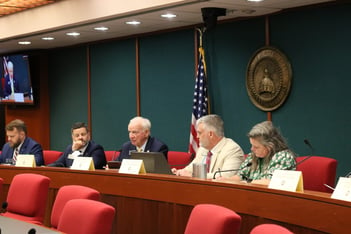
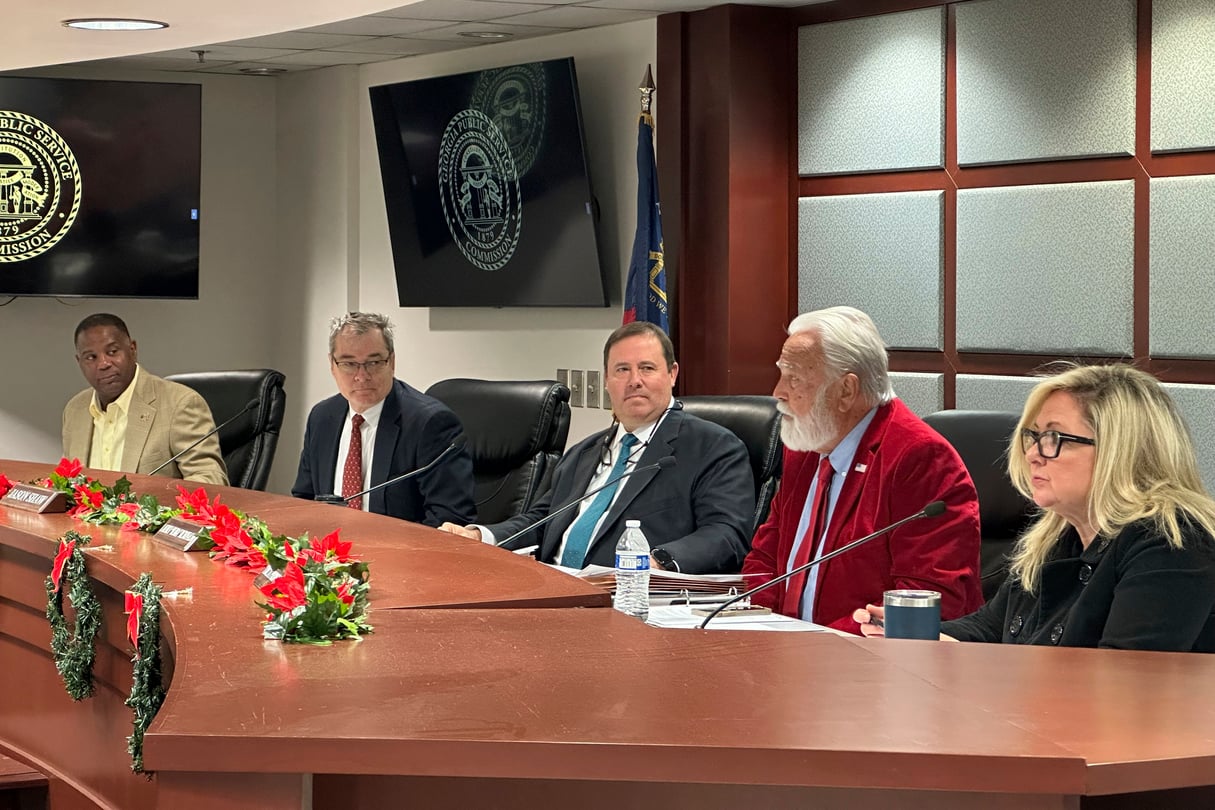
Members of the Georgia Public Service Commission discuss a rate increase for Georgia Power Co. to pay costs at the utility's Vogtle nuclear power plant, Dec. 19, 2023 in Atlanta. (AP Photo/Jeff Amy, File)

This coverage is made possible through a partnership between WABE and Grist, a nonprofit environmental media organization

Georgia voters can elect commissioners for two seats on the state’s powerful Public Service Commission this year, after years of delays and canceled elections.

The PSC oversees utilities like electricity, gas and telecommunications companies. That includes regulating Georgia Power, the state’s largest electric provider. The PSC has power over how the company makes electricity and how much it charges customers.


Georgians last voted for a public service commissioner in the 2020 general election runoff. Since then, the state has skipped two PSC election cycles as a lawsuit challenging the voting system worked its way through the courts

Three of the five commissioners were due to face reelection since then but did not. They continue to serve and vote on issues like Georgia Power’s long-term energy plan and electricity rates. The commission will consider both issues this year.

But now the PSC is back on the ballot. Under a state law passed last year, elections for districts two and three – the seats currently held by Tim Echols and Fitz Johnson – are scheduled for Nov. 4. Primaries are scheduled for June 17. The window for candidates to qualify for the ballot is April 1-3.

The law adopted last year also extended the current terms of all the commissioners, so the third delayed election – for the seat currently held by Tricia Pridemore – won’t happen until 2026. 

The remaining commissioners, Jason Shaw and Lauren “Bubba” McDonald, will face reelection in 2028 – instead of 2026, which would have been the date for the next election for their seats without the changes passed last year.

Typically, commissioners serve for six years. Though they represent different parts of the state and are required to live in their districts, all commissioners are elected statewide.