'Whales are going to suffer' advocates say as NOAA drops expanded right whale protections

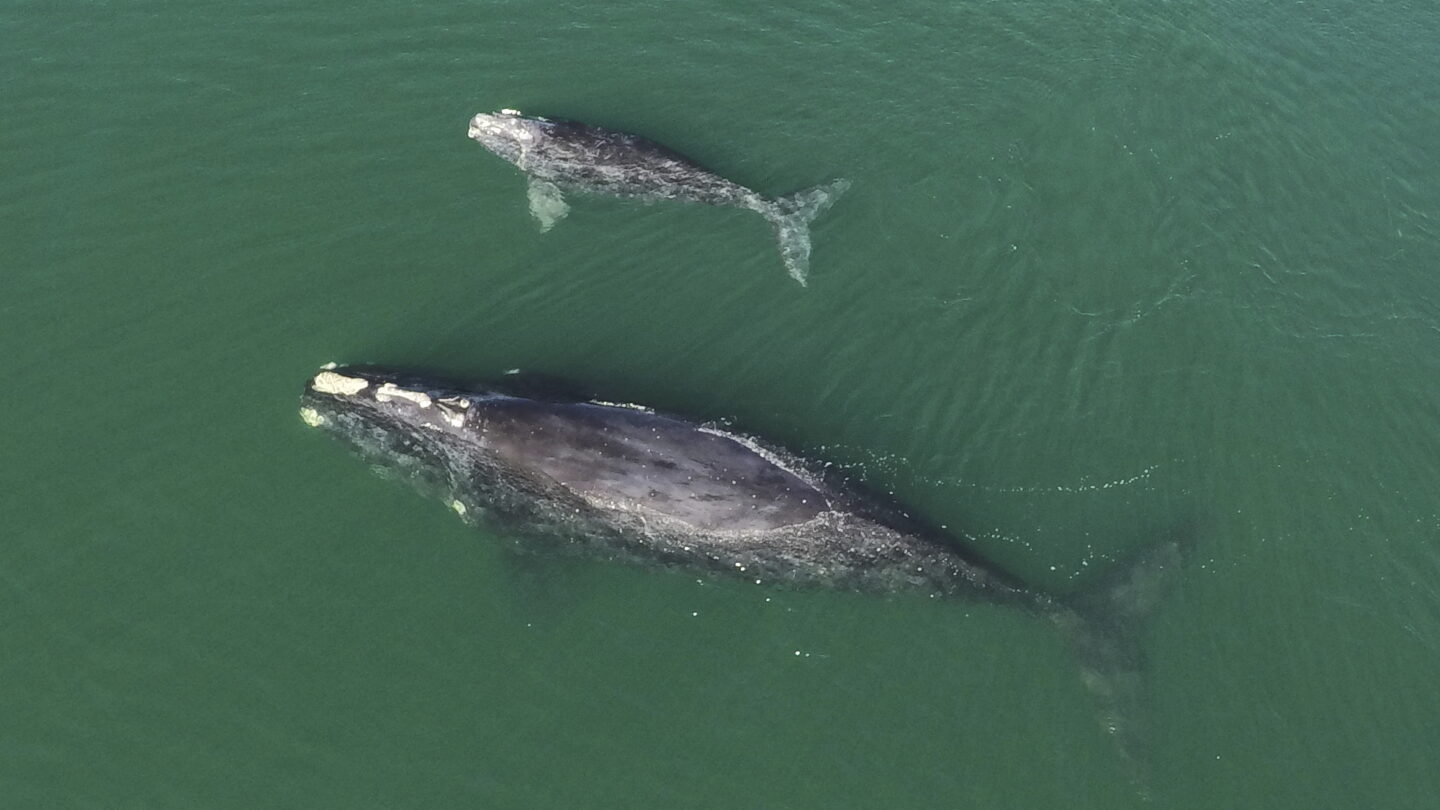
This Jan. 19, 2021 photo provided by the Georgia Department of Natural Resources shows a North Atlantic right whale mother and calf in waters near Wassaw Island, Ga. (Georgia Department of Natural Resources/NOAA Permit #20556 via AP)

This coverage is made possible through a partnership between WABE and Grist, a nonprofit environmental media organization.

Federal regulators are abandoning a proposal to expand ocean speed limits that were designed to protect North Atlantic right whales. 

The whales, which give birth off Georgia’s coast in the winter, are nearing extinction; just 370 remain, and vessel strikes are one of their leading causes of death. 


Marine industry groups applauded the move to abandon a rule they have criticized as overly broad, while whale advocates expressed disappointment.

“The whales are going to suffer because of the inaction by the Biden administration,” said Gib Brogan, campaign director with the advocacy group Oceana.

There are already some seasonal speed limits on large ships designed to cut down the risk of strikes during times of year when the whales are known to be in certain areas – like off the Georgia coast during the winter calving season. 

In 2022, the National Oceanic and Atmospheric Administration proposed expanding those restrictions to include smaller boats and apply over larger ocean areas for longer periods. The agency also proposed making some voluntary speed limits mandatory. 

Whale scientists and advocates had celebrated the proposal and pushed for its adoption because smaller boats can and do kill right whales. They also emphasized the urgency, as the North Atlantic right whale population numbers falter and whale behavior shifts due to climate change. 

However, marine industry groups fought the proposed changes, which they argued could hurt the fishing and boating industries and other related businesses. Among other criticisms, they contended that smaller boats often need the ability to move fast to respond safely to changing ocean conditions. They also said the rules would cancel or alter thousands of recreational fishing trips that are important for coastal economies.

“The rule’s many blind spots would have created dire consequences for boater safety and accessibility, the economic vitality of coastal communities and marine manufacturers, and the livelihoods of countless supporting small businesses,” said Frank Hugelmeyer, president of the National Marine Manufacturers Association, in a statement. 

He added that the rule “failed to distinguish between large, ocean-crossing vessels and small recreational boats, which could not be more different from each other.” 

The rule was never implemented, and now the agency is withdrawing it just days before a new administration enters the White House – a move whale advocates said was political based on its timing.

Congress can review and overturn some recent actions taken by federal agencies under a law known as the Congressional Review Act. This often comes into play when a new presidential administration and new Congress take over because it gives them the power to rescind recent actions taken by a prior administration. With this mechanism, Congress can also block the agencies from taking similar actions in the future. 

Whale advocates worry that’s exactly what a Trump administration and Republican-controlled Congress would have done with this rule had it gone into effect within the review window: they could have overturned the rule and prevented future changes to vessel speed rules to protect right whales.

“So the real deadline for the Biden administration was this past summer,” said Brogan. “They knew that they needed to act this past summer to put durable protections on for North Atlantic right whales, but with an election and other things in play, they chose not to.”

Whale advocates and scientists said they would continue to push for expanded right whale protections, despite what New England Aquarium conservation scientist Jessica Redfern called a “serious setback” in the effort to save right whales from extinction.

“I do have hope that we can save this species,” she said.

The aquarium maintains one of the longest-running right whale research programs in the country, and Redfern said the evidence is clear — the whales can recover “if we stop killing them.”

The research is also clear on how to do that, said Redfern, who testified twice before Congress in support of the now-withdrawn speed rule. She notes that the scientific evidence supports those changes and shows they would reduce vessel strikes.

Marine industry groups, meanwhile, advocate for using advanced technology like infrared imagery, 3D sonar and marine radar algorithms rather than broader restrictions to protect whales. Those groups promised to work with the Trump administration on whale protections that use that technology.

“[The American Sportfishing Association] is happy to see the draconian vessel speed rule sent back to NOAA so that we can find a collaborative, long-term solution that effectively mitigates the potential for vessel strikes and incorporates innovative safety technologies,” said Mike Leonard, the group’s vice president of government affairs.

While scientists like Redfern agree that new technology can help better track whales and communicate their locations to boats, they maintain that the technology just isn’t ready yet to protect the whales on its own.

“Right whales must survive long enough to benefit from other approaches” based on new technology, Redfern said. “While those approaches are developed, assessed and carried out, we must implement measures known to reduce the risk of vessel strikes to right whales.”

Whale advocates said they, too, would continue to push the incoming Trump administration to act to protect right whales.

“Regardless of who is in control in Washington, the need to protect right whales is constant,” Brogan said. “We are optimistic that the Trump administration doesn’t want to see the first large whale species go extinct on its watch.”