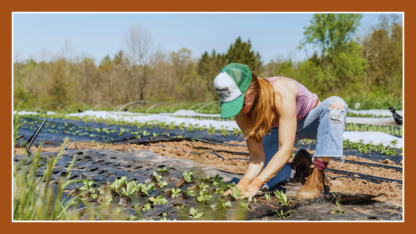
America’s farmers are enduring many new and ongoing challenges. From severe weather damaging crops and the need for federal funding to sustain their land, to the impact of tariffs, the Iran war, the high costs of fuel and fertilizer, drought, wildfires and farm closures — it all weighs on the mental health of people in the agricultural industry.
While farmers are known for their stoicism, mental health experts have told “Closer Look” that’s what can lead to farmers bottling up their emotions. Data also reveals farmers are three to five times more likely to die by suicide than the average population, according to the National Rural Health Association.
John P. McElveen is the director of the Georgia Agricultural Wellness Alliance. The organization was founded in 2022, and McElveen has searched for ways to help the state’s farming community with their mental health.
“I do think those outside of agriculture sometimes have this very rosy picture of the pastoral settings in which farmers work and that they get to be outside and enjoy that. And that’s true to a certain extent,” McElveen said. “But it is a double-edged sword, if you will. And so, they really need to understand — those consumers and others — and we’re all impacted and depend upon agriculture. We need to know about that stress and those challenges.”
He was introduced to a program based out of eastern Colorado, called COMET — the Changing Our Mental and Emotional Trajectory program. It’s a training designed specifically for rural communities, aligning with their cultural values of neighbor helping neighbor. High Plains Research Network developed COMET. Maret Felzien is a fourth-generation farmer and rancher, as well as the community advisor for High Plains Research Network. She explained how the program was developed.
“This grew out of some work in our community, in eastern Colorado specifically, where a group of medical professionals, researchers from the University of Colorado, and community members were meeting and coming together to discuss health and what was going on in our effort to achieve better health in this region, which is kinda under-resourced across the board,” Felzien said.
She said there was an overall worry about mental health, stress, and struggle among their rural neighbors — adults and children. But it came with the fear of not knowing how to respond to someone in distress. With a lack of mental health resources in small towns, that’s when the idea started to take shape to train ordinary people to help those who are struggling.
“And so, this was this opportunity to say, if we can activate each other by teaching them some language and helping them understand, not only what to say, but that it’s okay to lean in and have a caring conversation, that in fact, that’s incredibly helpful and can sort of help someone see their path forward without it becoming more challenging, more risk,” said Felzien.
“What I love about COMET, and what our alliance members all love about COMET, and the reason why we were so eager to bring it to Georgia, is because conversationally, it helps people know what to do and say,” said McElveen. “And how to do it to help somebody about whom they’re worried.”
Felzien and McElveen joined host Rose Scott on Wednesday’s “Closer Look.” They shared that COMET has so far trained 25 people in Georgia to respond to small communities to support people with their mental health, and additional training will occur. Anyone interested in applying to become a regional trainer is asked to contact the Georgia Foundation for Agriculture via email at [email protected]. Anyone interested can also visit the Georgia Agricultural Wellness Alliance website.