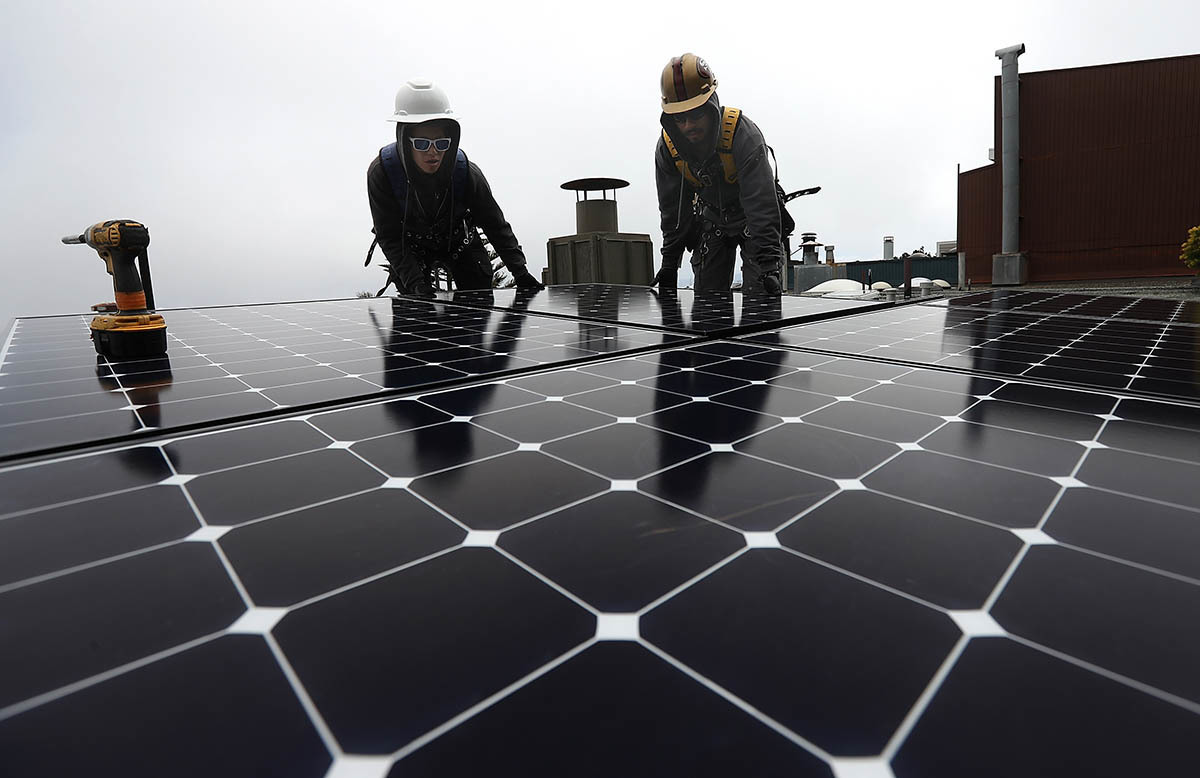
With billions of dollars for clean energy, the Build Back Better legislation has the potential to substantially and rapidly cut heat-trapping emissions in the U.S. But Sen. Joe Manchin, D-W.Va., rejected the bill on Sunday, and that means Build Back Better is effectively dead at a time when scientists say the world can’t afford to wait on climate change.
“It’s really disheartening,” says Leah Stokes, associate professor of political science at the University of California, Santa Barbara. “We don’t have any more decades left to waste, and failure is not an option.”
The legislation earmarked $555 billion for renewable energy and clean transportation incentives over a decade in the country’s largest climate change investment ever. The policies are crucial for President Biden’s goal of cutting greenhouse gas emissions 50%-52% by 2030, compared with 2005 levels.
Read this story now for free
To continue reading, sign up for our newsletter and get unlimited access to WABE.org
You can select your preferences for news and local content. We will never share your email address. Learn how your newsletter sign-up will support WABE and Public Media