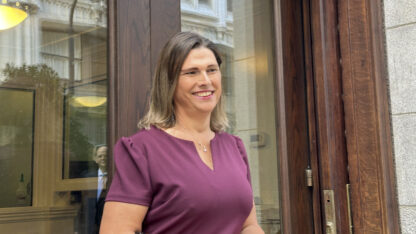
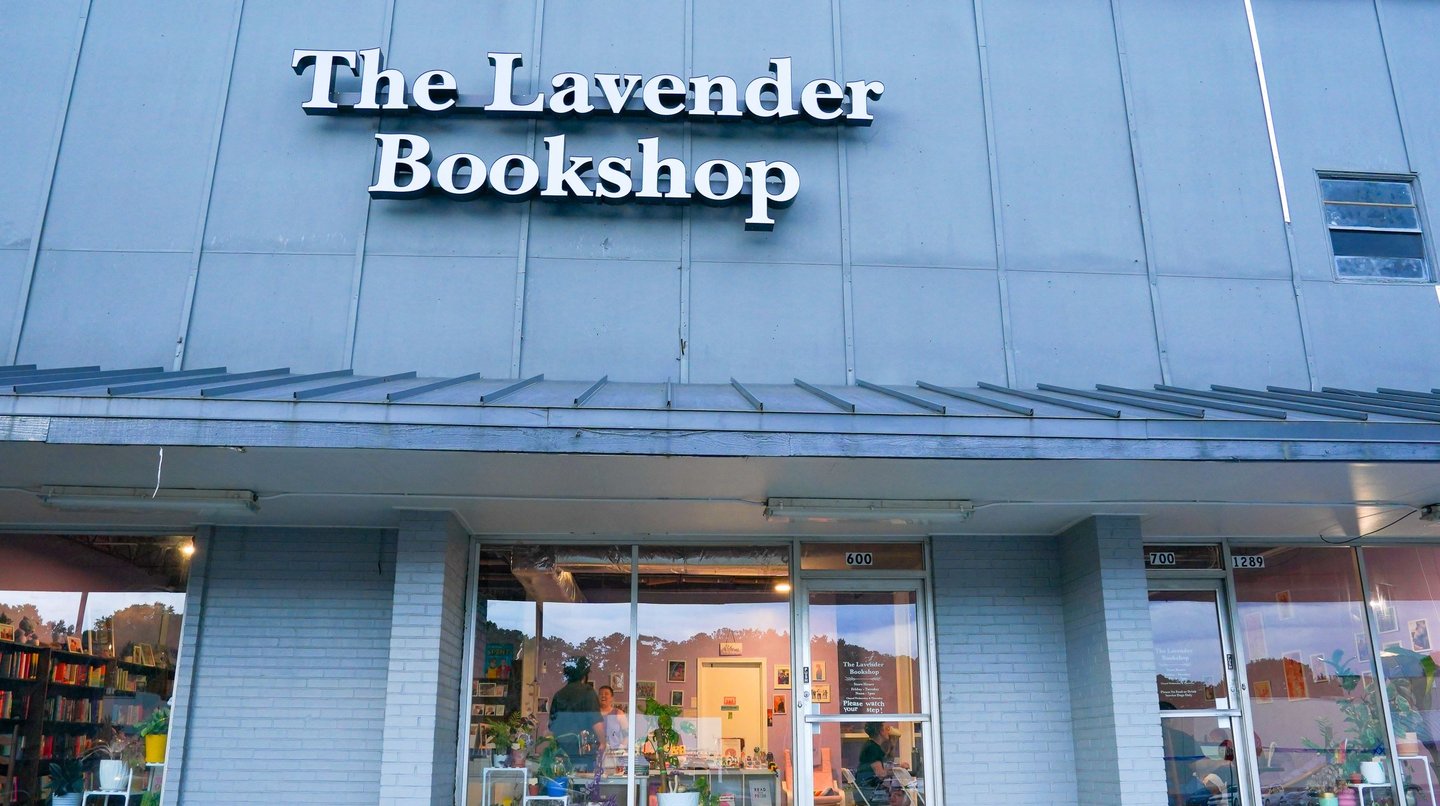
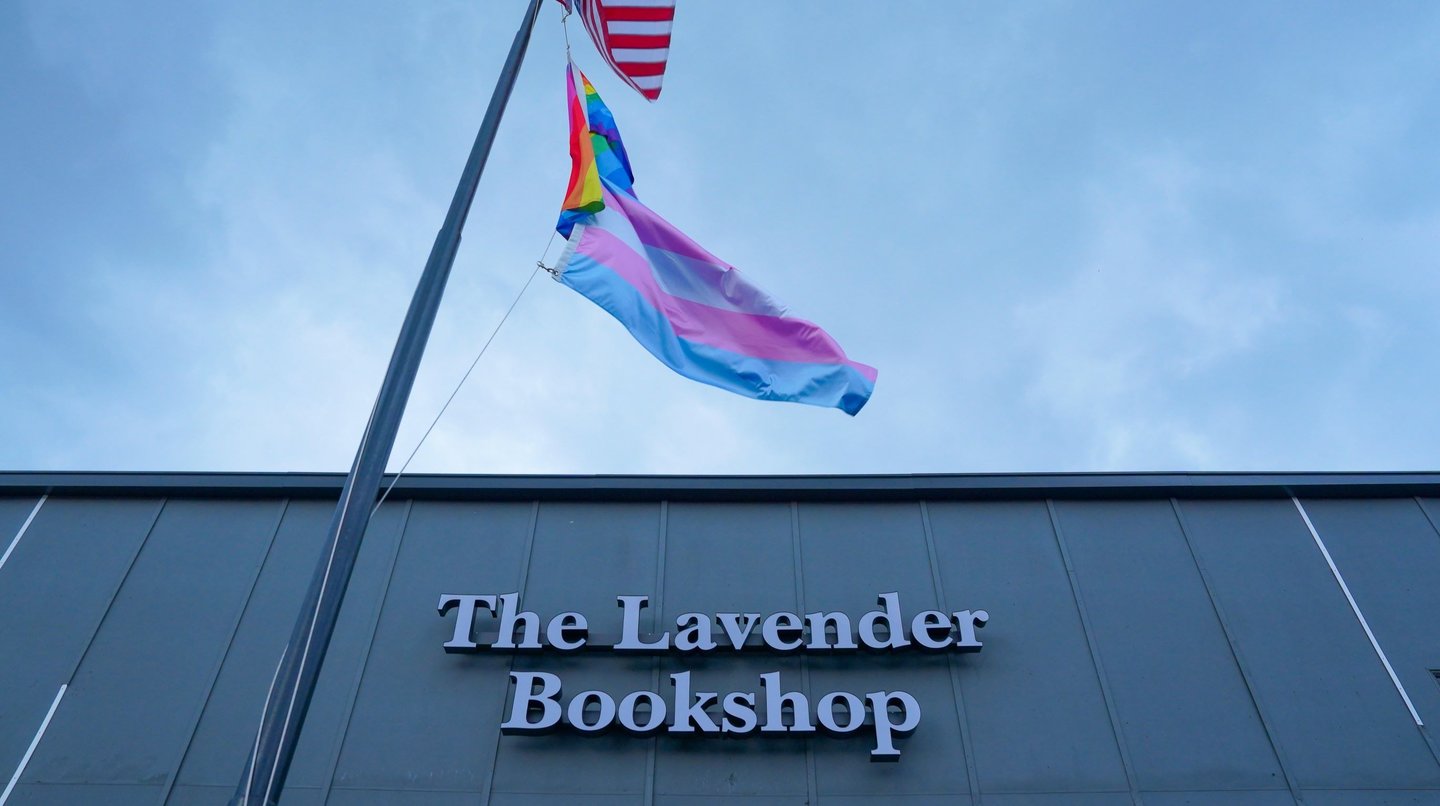
If you catch a glimpse of the Pride flags waving at a shopping center off I-75 and Roswell Road in Marietta, you’ll find Sara Williford’s LGBTQ bookstore.
A few decades ago, some say a business like this one would have been impossible in Cobb County. Even today, experts say LGBTQ-owned businesses across the state struggle to find parity.
But The Lavender Bookshop is helping build community for LGBTQ readers one book club, crafts circle and improv night at a time. And customers are coming from all over the South, looking for characters and friends like them.
“We’re not the sidekick. We’re not the best friend. We are the heroes and leaders in our own stories. We are our own protagonists.”
Lavender Bookshop owner Sara Williford on only carrying books with LGBTQ main characters
Lavender is a color long associated with the queer community, a reclaimed symbol stemming from the Lavender Scare. That’s in part why Williford chose it for the name of her shop.
“And I liked it because it has a little bit of plausible deniability for someone who is in the closet and maybe it’s dangerous for them to come out,” she says.
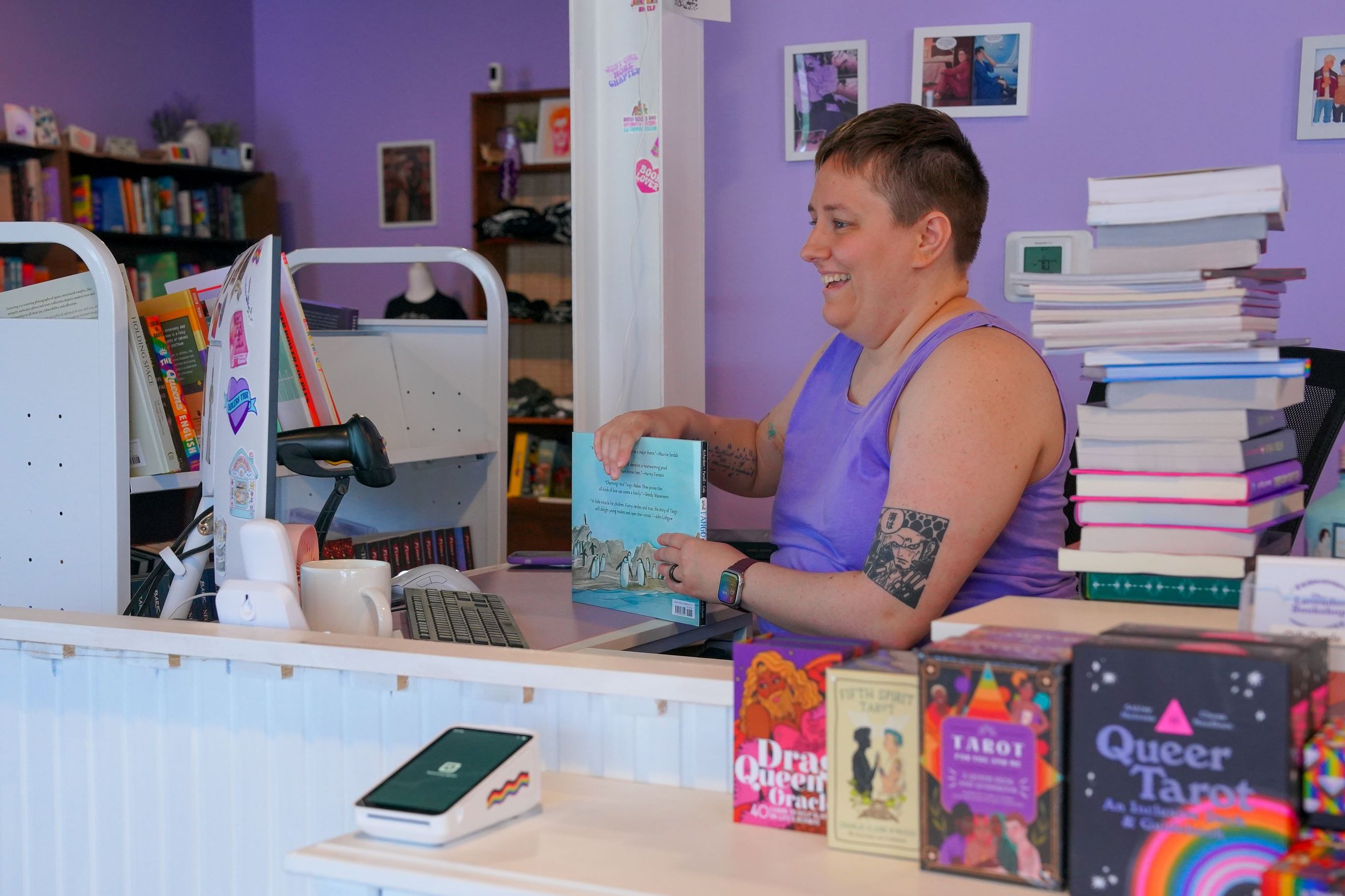
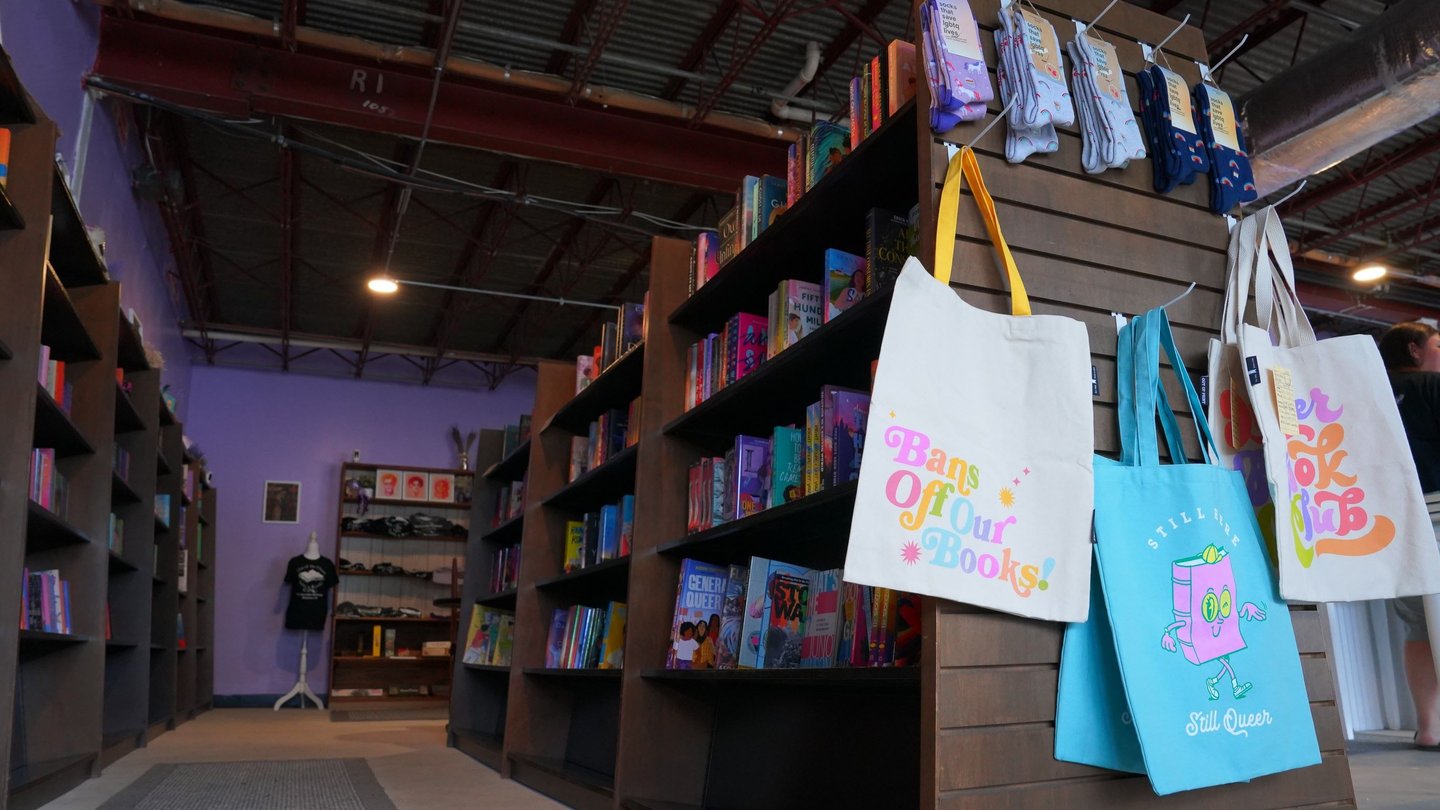
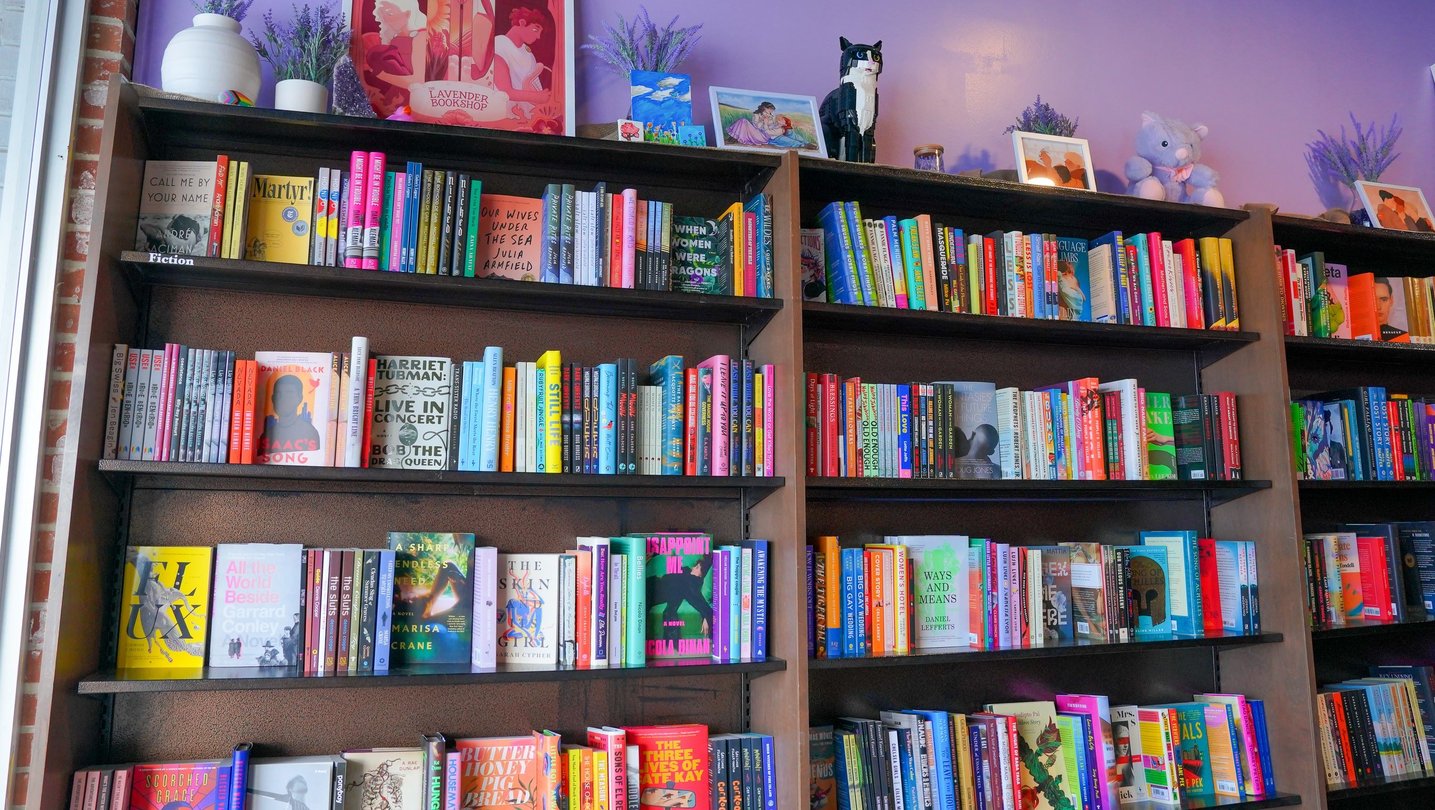
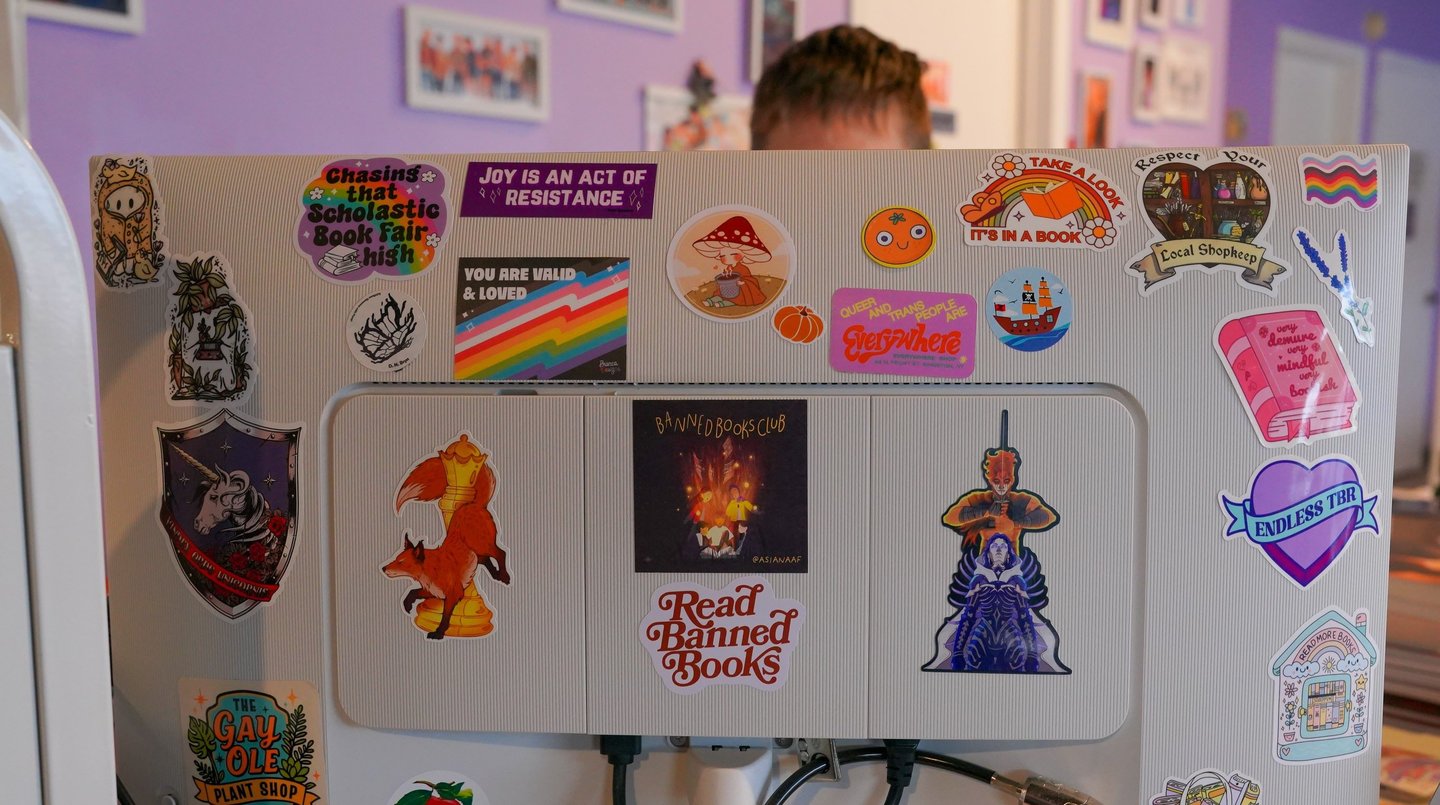
Inside, she’s painted the walls that titular color, dotted with fan art from different TV shows and books. There are also stickers and pins for sale from LGBTQ artists, fliers for queer-owned businesses, and local resource groups on display at the front table.
And of course, rows and rows of books, which must meet Williford’s only rule for the titles she carries: queer main characters only.
“We’re not the sidekick. We’re not the best friend. We are the heroes and leaders in our own stories. We are our own protagonists,” she says.
It’s not just romance novels on the shelves; she carries fantasy, science fiction, literary fiction, poetry, non-fiction … essentially any genre you’d find in a typical bookstore.
“We can fight the dragon, we can get the girl, we can save the world post-apocalypse, we can do all of those things, and we deserve to see ourselves like that.”
A world of LGBTQ main characters
Williford’s store opened last fall, filling a gap in the metro Atlanta area.
Atlanta’s long-time LGBTQ bookshop, Outwrite Bookstore, closed over a decade ago. Charis Books & More in Decatur — which caters to a queer, transgender and feminist clientele — is one of the only other stores in Atlanta to carry a dedicated stock of LGBTQ books.
Williford, who identifies as a lesbian, came to Georgia from Tennessee in 2007 to attend Agnes Scott College, where she met her now-wife. And businesses like Outwrite helped form the haven Williford was seeking when she left home.
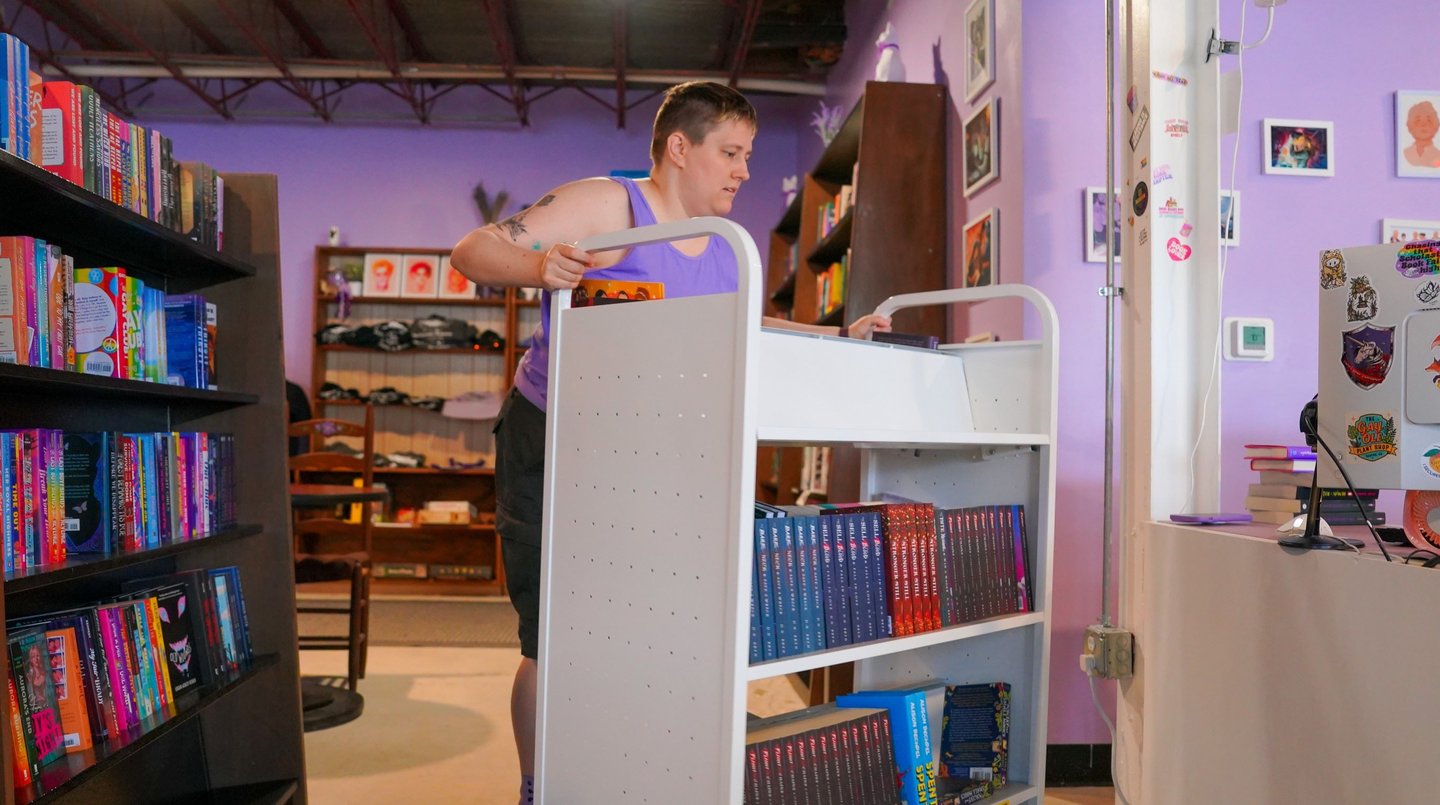
Williford tells me that, though the pair faced discrimination at times, she has seen Georgia come a long way.
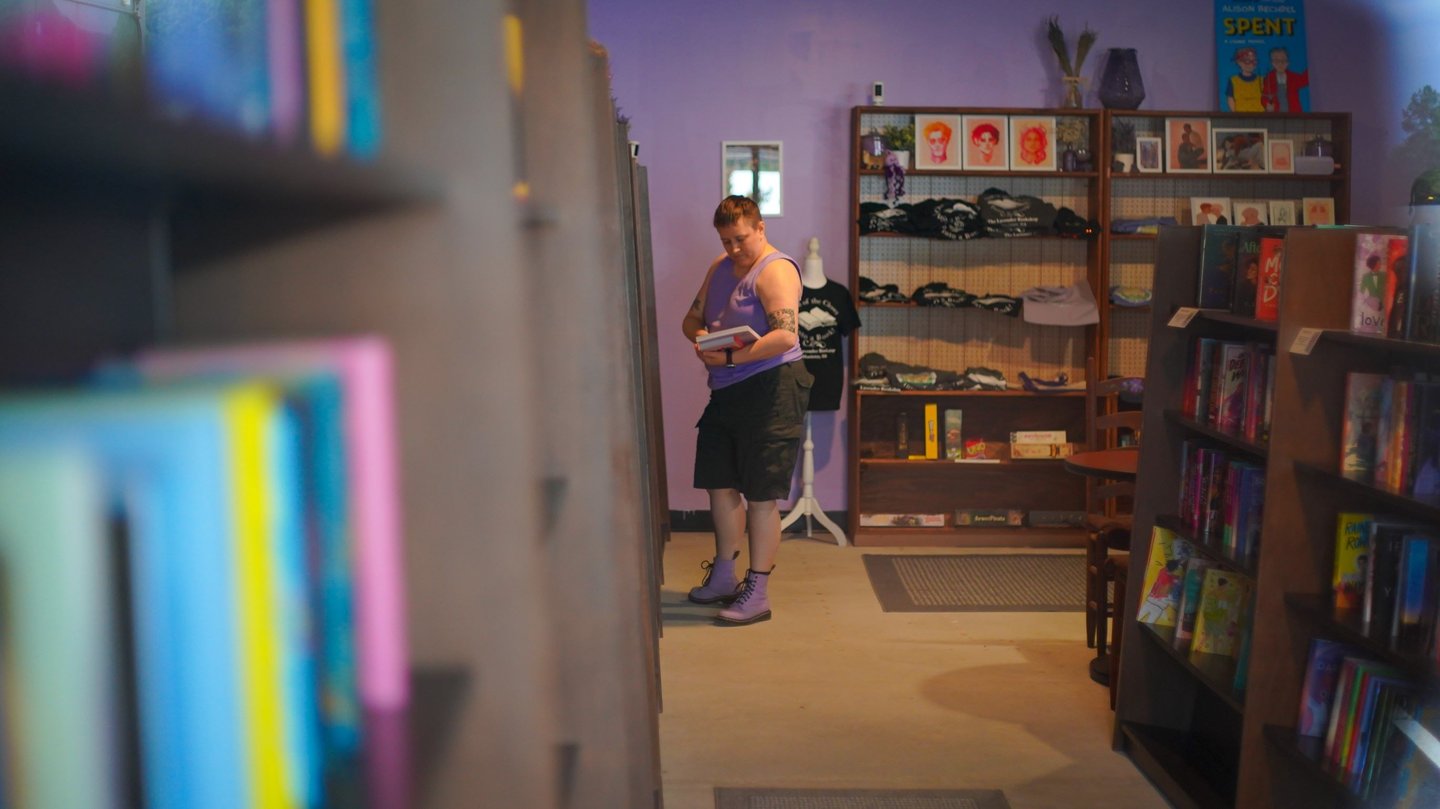
But LGBTQ people are still looking for community. A large portion of the store’s square footage is dedicated to sofas, chairs and open space for setting up other activities.
“I’ll have groups of people who will meet up here, and they’ll spend the day reading together, doing puzzles together, just chatting. I love that I’m able to provide that space,” she says.
“There’s not a lot of third spaces where you can just meet with other members of the community that’s not centered around alcohol, and I’m happy that I’m able to provide that, and that brings me more joy than anything else.”

Williford has 15 unique events scheduled in September ranging from book clubs and open mic nights to crafting circles and more. And, they’re all free.
At a recent creative writing circle, Rhys Edwards of Mableton says he waited a long time to read the kinds of books Williford sells.
“Well, I mean, when I was a kid, I didn’t see a lot of characters who were like me. And so when [publishers] started coming out with more teen fiction and stuff that actually had characters like that, I was already an adult, and I was like, ‘Oh my God, this is how I felt!’”
“You’re not alone in what you’re going through, and there’s always someone out there to help you.”
Lavender Bookshop customer Jackie Yarbough on the effect of seeing positive LGBTQ representation in books
And Atlanta resident Dahlia Diaz says it’s comforting for her to see herself in these stories.
“It’s nice to see written experiences that are similar to lived experiences,” she explains, “Maybe not necessarily the exact same situations, but similar interpersonal situations or similar like the world is trying to kill you or like everything just sucks and see them come out okay at the other end.”
Another customer, Jackie Yarbough, says it’s all about that positive representation: “You’re not alone in what you’re going through, and there’s always someone out there to help you.”
Cobb in transition
Williford says the shop has attracted visitors from all over the South, many from places she says are less progressive.
“I’ve had people from Florida, from Tennessee, from Alabama, who came to the area specifically to shop here.”
However, many of her regulars are from suburban Atlanta, including Cobb County, where the shop is situated.
Williford says she didn’t intentionally put the store in Cobb … but she calls it a “beautiful coincidence” to end up in a place not always friendly to LGBTQ people.
“I’ve had multiple elderly people come in and be in near tears or actually start crying and say they’ve lived here their whole life and they never thought they would see anything like this.”
In the early ’90s, the county’s Board of Commissioners passed a resolution condemning “gay lifestyles,” which led to a successful grassroots movement to move a portion of the 1996 Olympic Games out of Cobb.
More recently, in 2023, a Cobb County public school teacher was fired for reading “My Shadow is Purple“, a book about gender identity, to her fifth-grade class. The county barred the teaching of controversial issues the year before, coinciding with the state ban on teaching “divisive concepts.”
The county school district has also removed a total of 36 books from its libraries over the last two years, including books with LGBTQ themes.
While the school district has emphasized that the move is about student safety and pushed back on calling it a “ban,” Williford disagrees with this perspective. She donates all her damaged books to local PFLAG chapters, a national group for LGBTQ parents and children, in an effort to expand access to books with queer characters.
It’s made her an educational resource, too.
“I have also had lots of people who come in who were like, ‘Hey, my niece just came out as trans. Nobody in my family is getting it. I need books for these different ages to try to explain it,” she says, “And so we’ll get a few picture books that explain it for the really little kids. I’ll get some YA books for the teenagers. We’ll get non-fiction books for the grandparents.”
There’s no hard data on the number of LGBTQ people living in Marietta.
But in neighboring Smyrna, Leah Bulow says she has seen more families like hers move to Cobb County over time.
Bulow is the executive director of Smyrna Pride and has lived in the county for over 20 years. She says it wasn’t always easy.
“When we moved to the Smyrna area, I married my wife, and with two young kids, [it was a] new community to us,” she says.
“I was just very nervous for them growing up here. I can handle how people treat me sometimes, but I didn’t want our family to be treated a certain way.”
Many same-sex parents are drawn to Cobb because of its high-performing school district, Bulow says. She began connecting with other families through a Facebook group and soon became involved in LGBTQ advocacy.
Smyrna Pride just celebrated its fifth festival earlier this year. Having a Pride celebration happen so close to home is significant to Bulow.
“I think for me, it was so important because I’m raising two young kids, and I wanted to be an example for them. No matter how they turn out to be or who they marry, I want to normalize their family here, where we call home in Cobb County.”
In 2019, Bulow began advocating for a non-discrimination ordinance in Smyrna. There are only a handful of cities and counties with one on the books in Georgia. The think tank Movement Advancement Project estimates that about 12% of the state’s population is fully protected under an NDO.
After conversations with the mayor and city government, Smyrna’s own NDO passed in the summer of 2020.
“When you have a mayor coming out reading a Pride proclamation and passing a non-discriminatory ordinance for the city limits, like I feel like residents by default, just feel a little safer, right?” says Bulow.
The fight for economic parity
There’s no comprehensive federal or statewide protection for LGBTQ people. A reality that can make the so-called “number one state for business” … challenging to do business in for LGBTQ people.
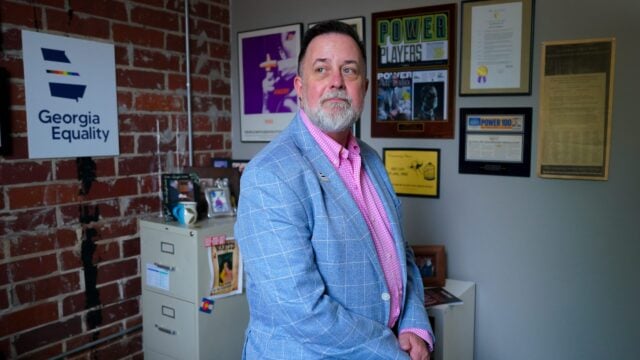
“There’s research that’s shown that LGBTQIA businesses often are not approved for capital on the same rate as non-DEI businesses,” says Joey Tripp.
He serves on the board of the OUT Georgia Business Alliance, a chamber of commerce for LGBTQ business owners and entrepreneurs.
According to the finance corporation J.P. Morgan, LGBTQ people often face barriers to accessing capital and other resources like private coaching and mentoring. A 2024 Human Rights Campaign report showed that three in 10 LGBTQ adults report facing discrimination while trying to access financial services.
That’s despite a growing number of LGBTQ business owners like Williford. Payroll company Gusto found in 2024, LGBTQ people made up 10% of new business owners. And, LGBTQ-owned businesses are more likely to offer better benefits to employees compared to an average business.
“The LGBTQIA population has a large buying power. We would be at an economic deficit if we were to shun and discriminate against the LGBT community.”
OUT Georgia Business Alliance board member Joey Tripp
But since President Donald Trump took office earlier this year, Tripp says LGBTQ business owners are entering a new era of challenges.
“With the elimination of federal DEI programs, that has been a dramatic change to what the resources are available to LGBT individuals. A lot of companies have ended their DEI programs. We have seen a drop in diversity supplier programs amongst a lot of businesses because of the national DEI elimination from Trump’s administration,” he says.
Tripp is also concerned about the Religious Freedom Restoration Act becoming law in Georgia earlier this year. The bill’s supporters say it helps protect the freedom to exercise one’s religion freely. Opponents say it would act as a license to discriminate against LGBTQ people.
The Metro Atlanta Chamber of Commerce and Georgia Chamber of Commerce both opposed the law a decade ago when it was initially passed, but vetoed by then-Gov. Nathan Deal, and again this year, saying it would hurt the state’s business reputation and lose the region money.
Business group Out Leadership found policies like RFRA make Georgia harder for businesses to recruit and keep LGBTQ talent, and pose a risk to brand reputation and client relationships.
“The LGBTQIA population has a large buying power,” Tripp says. “We would be at an economic deficit if we were to shun and discriminate against the LGBT community.”
Personal safety is another challenge.
“Especially the further you get away from an urban area, you often have to have a safety and security plan for yourself and your employees,” he says.
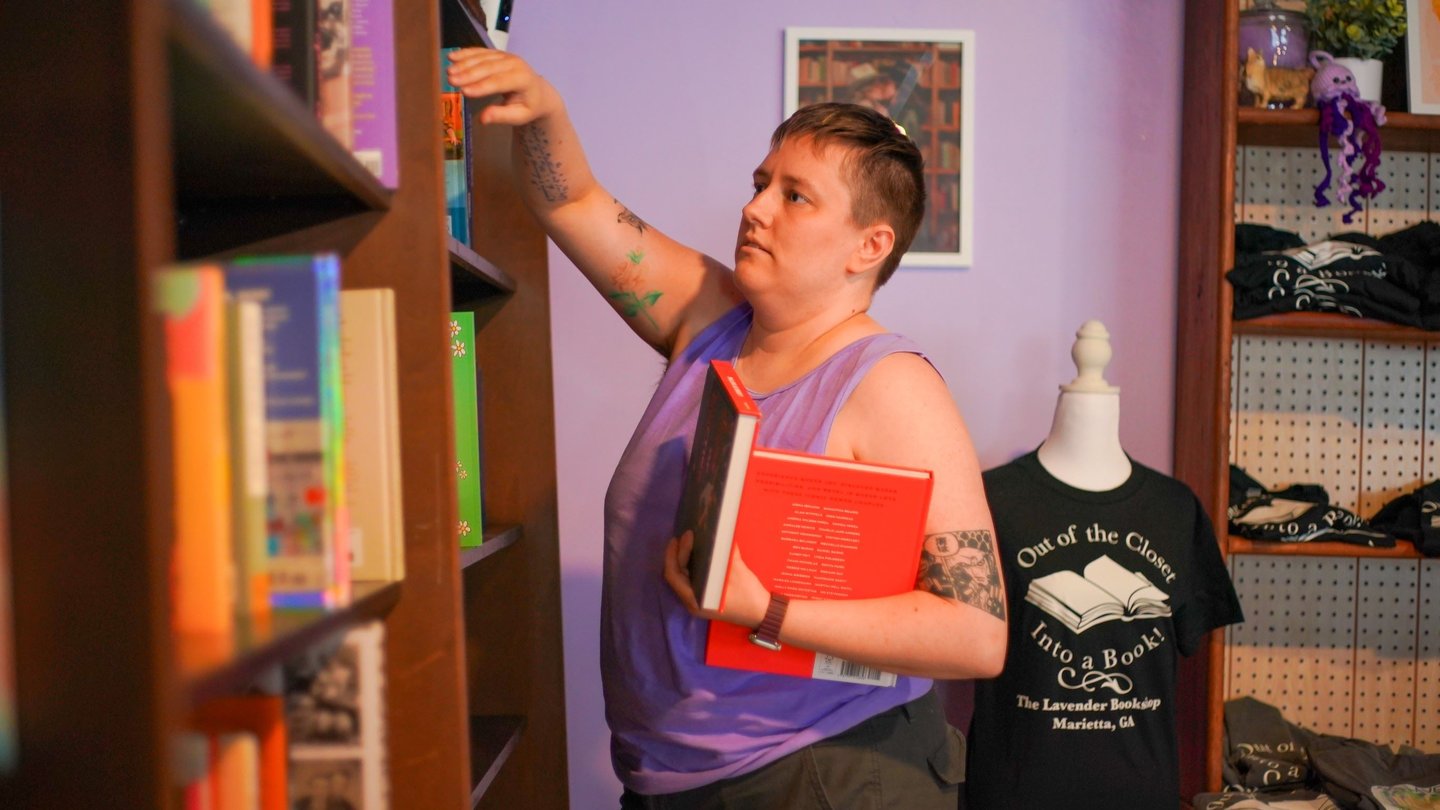
Williford says she’s not faced any dangerous situations since opening the store, but because she’s the only employee for the foreseeable future and often spends time alone, she has made sure to take precautions.
She has cameras pointed throughout the store, including at the bookshelves. She’s concerned someone could deface the books or leave religious pamphlets in them.
Similar to what Tripp described, Williford faced many challenges in opening the Lavender Bookshop.
She worked on commission at her old job to save enough money to start the shop. And, she says she had trouble renting a space once potential landlords learned about her business plan.
Williford hasn’t been able to pay herself yet either, something Tripp says is common for first-year business owners. She hopes to hire an employee once she’s able to pay a living wage.
She’s gotten a lot of interest, she says, from people seeking a safe workplace.
“We will make it. The biggest thing is having a community and not isolating yourself.”
Lavender Bookshop owner Sara Williford on the backlash against LGBTQ rights in the past decade
Williford says the LGBTQ community has gone through many ups and downs in the 20 years or so since she came out.
“I know that we’re in a backslide right now, but one thing I try to keep reminding my younger customers or my customers who haven’t been out that long is we’ve been here before, we’ve been in worse places before, and we’ve made it through,” Williford says.
“We will make it. The biggest thing is having a community and not isolating yourself.”
In the shop’s future: more community events, more books added to the catalogue, and maybe one day, a cafe.
This story is part of the ongoing series Beyond Pride, in which WABE reporters take a deeper look at the issues affecting LGBTQ people in Georgia. Plus, hear LGBTQ Atlantans in their own words, check out a Pride events calendar running through the fall, LGBTQ coverage from other NPR stations across the South and more.