Native American communities reflect on the nation’s 250th anniversary

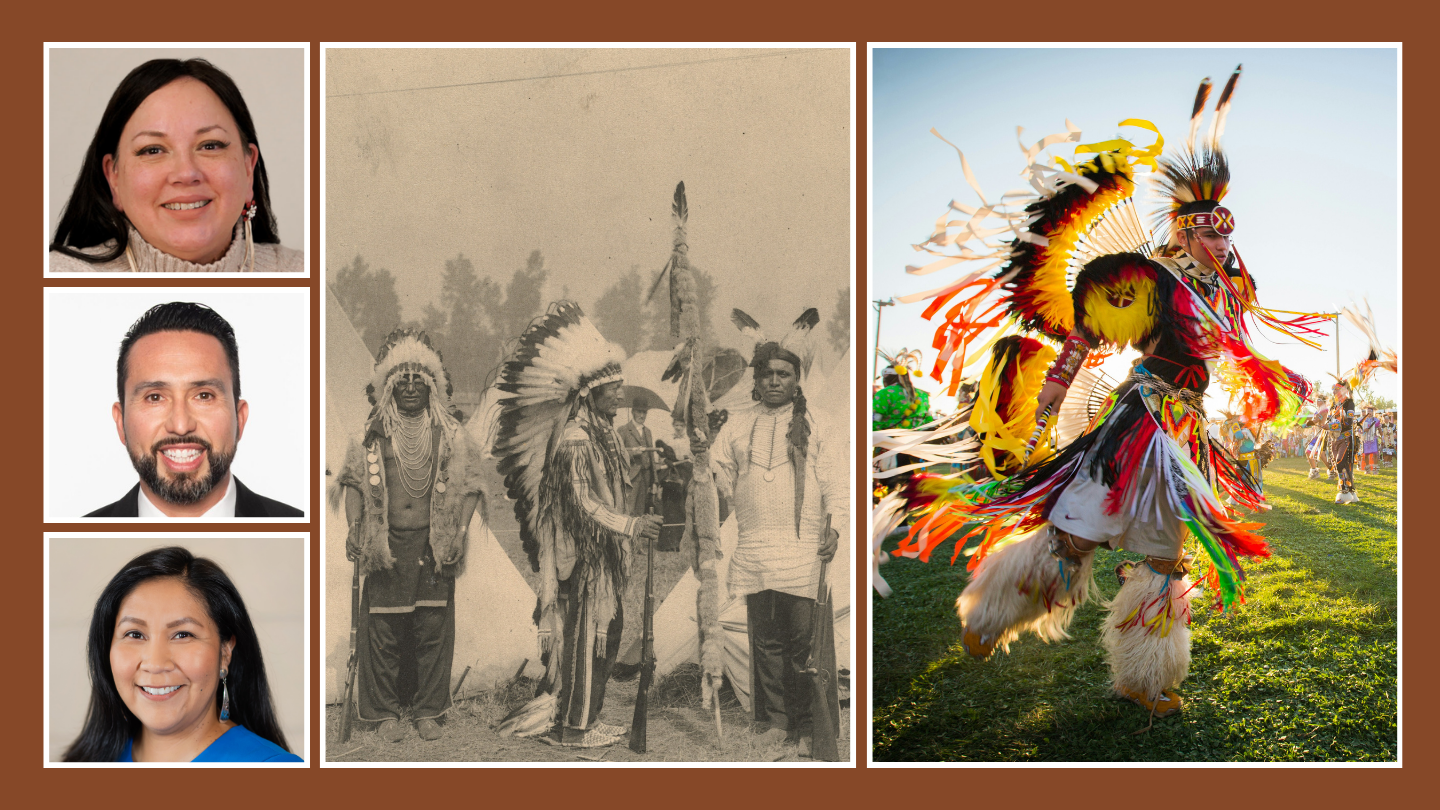
On the left, three portraits of people, in the middle, a historical photograph of Native Americans standing in a row, and on the right, a contemporary photo of a person wearing traditional clothing
From Top: Patina Park, Josh Arce, and Beth Michel reflect on what the country's 250th Anniversary means to the Native American community. (Daniel Lloyd Blunk Fernandez; Boston Public Library; Partnership with Native Americans; Emory University; North American Traditional Indigenous Food Systems)

America marks 250 years of independence on the 4th of July this year, and observances will be wide-ranging. That includes those who are the descendants of America’s original inhabitants.

By the time European settlers arrived, historians estimate more than 10 million Indigenous people inhabited the land now called America. In the centuries that followed, battles, diseases, diminishing resources and forced land removal led to the rapid decline of the Native population. According to the U.S. Census Bureau, the population of Native Americans is currently under 7 million people — only 2% of the nation’s population.

As Native people continue to face land disputes and the highest poverty rate in the U.S., “Closer Look” assembled a Native American panel to reflect on the country at 250 years and offer perspectives as the nation reaches this milestone.


Patina Park is the chief operating officer at North American Traditional Indigenous Food Systems. She says America’s anniversary is a holiday full of contrasts and contradictions.

“Our community serves in the military at the highest rate per capita. So, there’s a lot of people who have put their lives on the line and lost their lives supporting the United States of America,” Park said. “On the flip side, we can’t be ignorant or ignore the fact that historically, for Native people who have been here for millennia, most of that history of 250 years has been filled with violence and genocide and forced removals and taking our children away and historic trauma.”

Park thinks it’s also important to reflect on how to expand everyone’s knowledge about the contributions Native Americans have made to the country at large, instead of seeing “a one-sided view of all trauma or invisibility and erasure.”

Josh Arce, the president and CEO of Partnership With Native Americans, said the nation should reflect on how interwoven Native and Indigenous history is with American history, while also being aware of the needs of tribal communities.

“Many of the communities I work with through Partnership With Native Americans are the rural and remote, geographically challenged reservation communities,” said Arce. “There are still communities that lack water access. They lack electricity and even basic housing infrastructure isn’t there, let alone a technology desert.”

Beth Michel is the senior associate director for Emory University’s Center for Native American and Indigenous Studies. She said it’s exciting when undergraduates step into a classroom that’s led by a Native or Indigenous scholar for the first time.

“I hope that what we continue to do is uplift Muscogee storytelling, and culture, and bringing it to our campus so that our students can learn more,” said Michel, who encouraged people to visit local museums and cultural centers that are dedicated to the history of the more than 575 federally recognized tribes in the United States.