Officials celebrated the one-year anniversary of the Multifamily Program for Georgia’s Home Energy Rebates at the Legacy at Walton Crossing. (Marlon Hyde/WABE)
Energy costs have gone up for many Georgians. Efficiency measures, like installing better insulation, can save people on their energy bills. But the upfront costs can be steep, meaning landlords often don’t want to spend in order to save their tenants money.
Inside the recently completed Legacy at Walton Crossing in Norcross, crisp cold air blows from the air conditioning system.
A rebate program through the Georgia Environmental Finance Authority helped cover the costs of the HVAC, energy-efficient stoves, and insulation in a multi-family and senior living project.
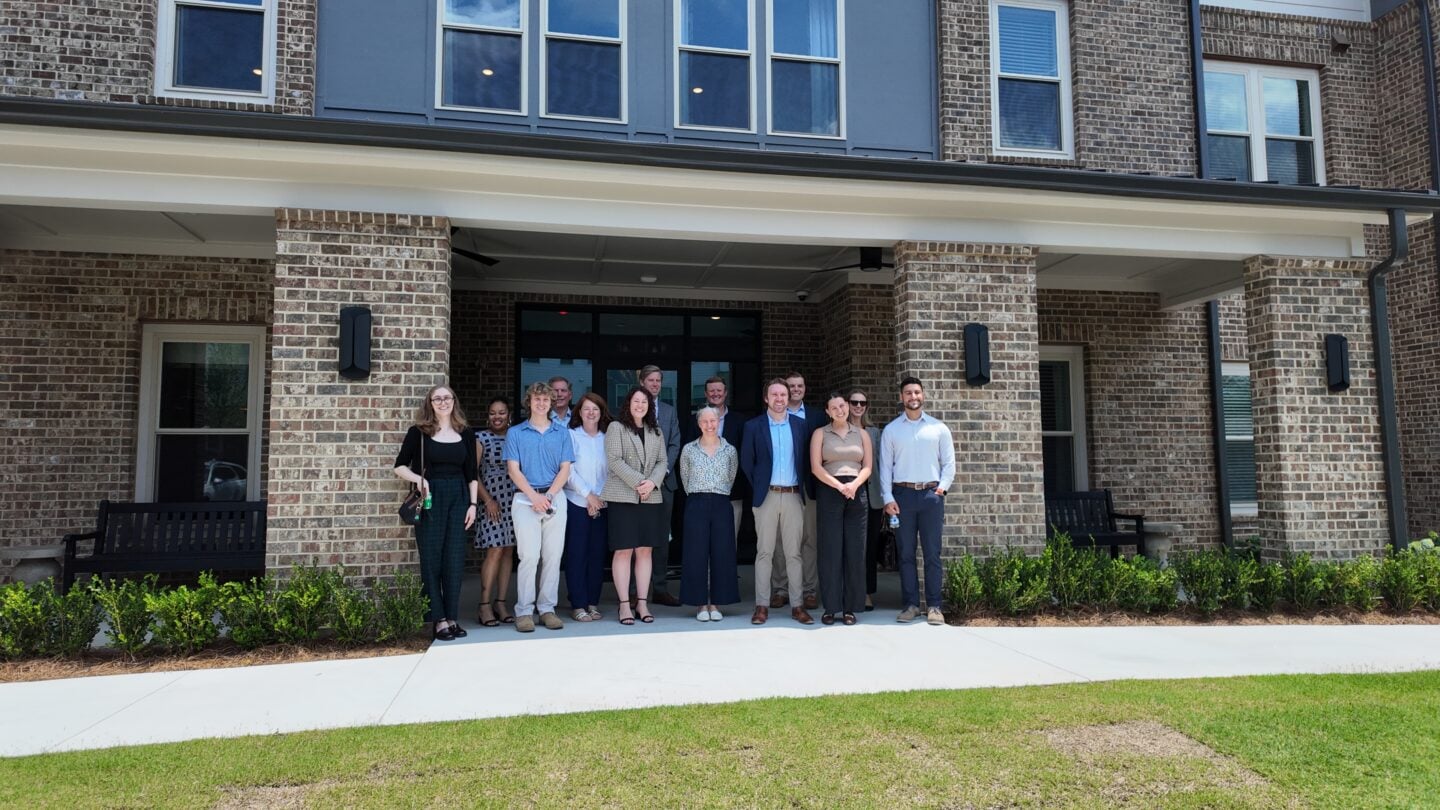
Representatives from GEFA, Walton Communities and SK Collaborative attended the event at the newly completed Legacy at Walton Crossing. (Marlon Hyde/WABE)
“We’re meeting two needs in the community,” said Corbin Adams, the CFO of Walton Communities.
He said these efficiency measures should lower residents’ energy bills.
“We’re providing affordable housing, safe and affordable housing, plus at a reduced cost. And through the energy savings that we’re having, it definitely plays a big part in that. So it’s kind of a win-win for the community,” said Adams.
This apartment complex received over $600,000 in rebates through one of the two state-offered rebate programs.
“They’re designed to help Georgians reduce their energy bills, improve their housing, and do a number of energy efficiency upgrades in their homes, heat pumps, HVAC upgrades, appliance upgrades, insulation, air sealing, et cetera, with the ultimate goal of lowering their energy bills,” said Kristofor Anderson with the Georgia Environmental Finance Authority.
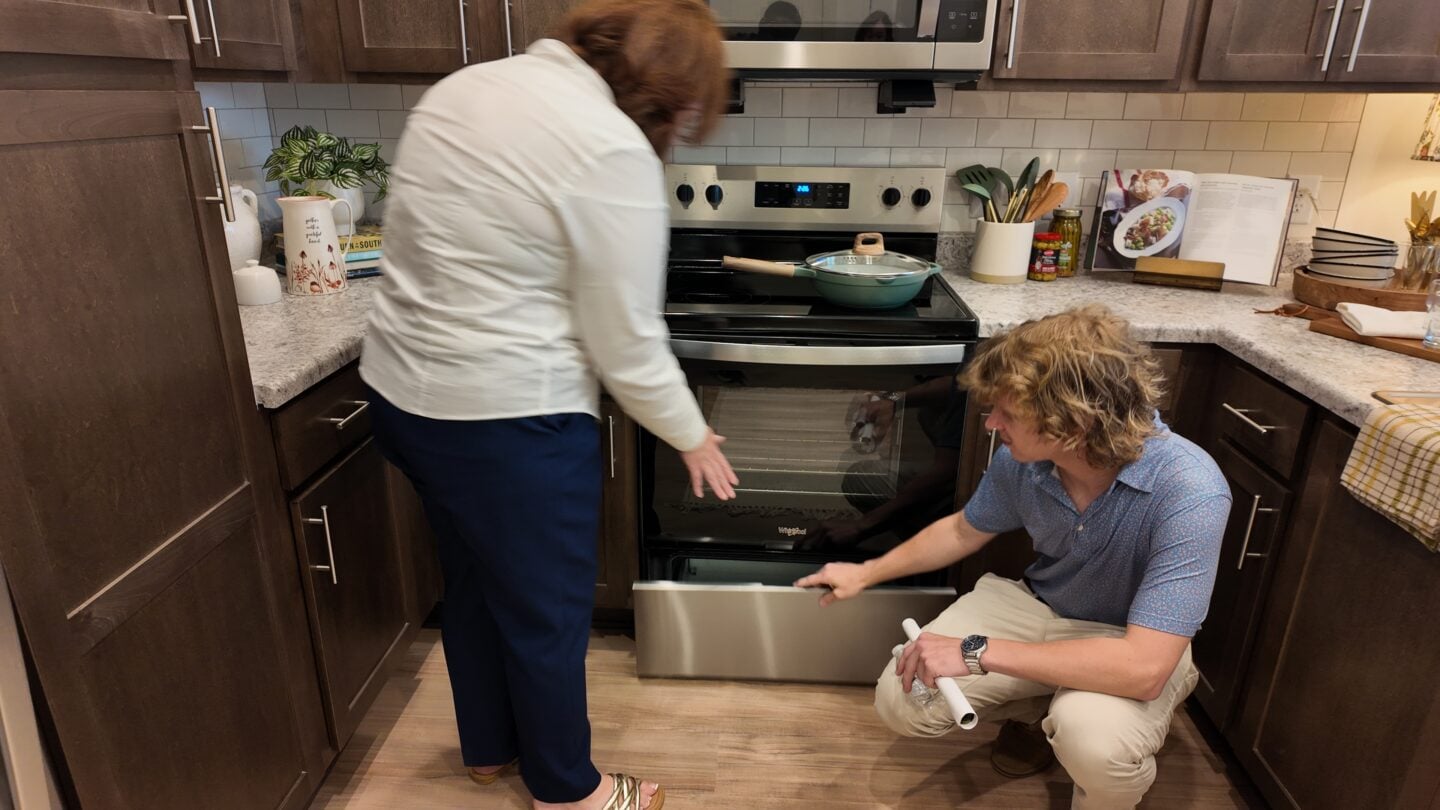
The rebates help to fund the cost of energy efficient stoves, insulation, air sealing and electrical panels. (Marlon Hyde/WABE)
He said the rebate programs will remain open despite federal changes.
“There are some minor changes that are gonna come to the program due to changes reflective of the new administration. But we’re working through those currently. We don’t expect any major impacts to it,” said Anderson.
The Department of Energy recently issued guidance on upcoming changes, including ending households’ eligibility for rebates when they replace fossil-fuel-fired appliances with electric alternatives.
Officials said the programs have served over 2,600 Georgia households, saving each an average of $1,500 a year on energy costs.
“We have over $60 million still available, so we’re going to continue to serve households across the state,” said Emily Smith with Guidehouse, the state’s implementation partner.
The recently completed Legacy at Walton Crossing in Norcross received over $600,000 towards upgrades through one of the two rebate programs offered by the state. (Marlon Hyde/WABE)