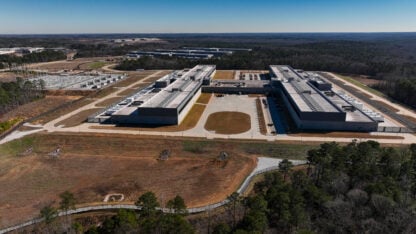
In April, Coweta County commissioners approved a $17 billion data center, called Project Sail, for a northwest portion of the area. People who have lived in the region for decades say the campus will be built on conservation land. Backers of the project say it will cover 4.34 million square feet. Critics say the data center will consume an area roughly the size of 606 football fields.
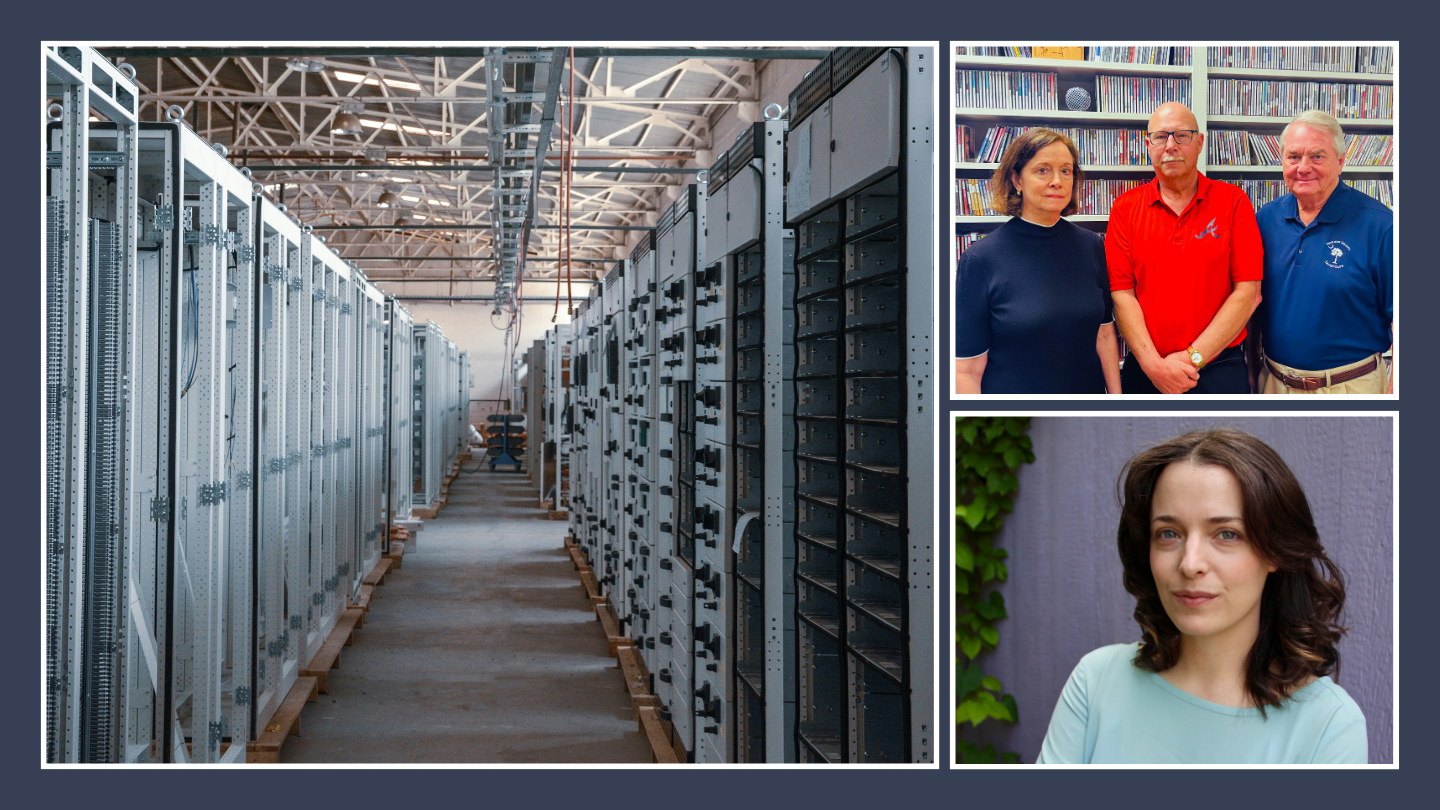
Steve Swope is a Coweta County resident. He raised his kids there, he’s a tutor at a local school and lives in a home that dates back to the 19th Century. He said Coweta County has always operated under intelligent development and to keep its rural character.
“Intelligent development is to allow new businesses and industry to come in, but to locate them in areas that are already zoned for industrial development,” said Swope. “We had Niagara Water come into our county, and we’ve had Yamaha. They’ve come into our county, and they’ve located along Interstate 85, which is all industrial. They’ve become great corporate citizens in our county.”
Citizens of Coweta County have packed public meetings and stood in line for hours to sign petitions against building a new data center in their community. They’ve raised concerns about water consumption, rising energy costs, the impact on local neighborhoods and schools and the projected 4,000 additional automobile trips taken through their usually quiet community.
“I think data centers should go where they’re wanted, and they should be good corporate citizens, to Steve’s point. They’re not being that,” said Patty Durand, the director of Georgians for Affordable Energy. “I define a corporate citizen as one that doesn’t damage the ecosystem, which data centers are doing through the huge expansion of gas underway that Georgia Power is choosing, and by cost shifting the grid costs that they’re causing onto the residential and small business customers.”
Robert Lytten joined Swope and Durand on Monday’s “Closer Look with Rose Scott.” He said the Project Sail data center is planned to be built near his home.
“Most of the citizens had absolutely no idea what a data center was,” said Lytten. “And when we did our research and we looked at the size and the magnitude of this one and found out that it was one of the largest ones in the United States, that’s when people got really concerned.”
The group also warned the new data center will require new transmission lines, and said over 25 homes have been targeted for destruction under eminent domain to pull the power to these data centers. In a statement on the website for Project Sail, it disputes the project will lead to eminent domain.
“Project Sail was intentionally sited next to existing power infrastructure so energy can be delivered efficiently without the need for new transmission lines to be built across Coweta County. Prologis is not involved with Georgia Power’s separate transmission line project in the area,” the statement reads.
“Georgia Power has gotten approval from the Public Service Commission to add 1,300 miles of those 500 kilovolt transmission lines and poles,” Durand rebutted. “They’re the size of a building. It is going to absolutely change the face and character of the State of Georgia. People have no idea what’s coming.”
“Closer Look” reached out to state and local representatives, plus the developer, Prologis, who is tasked with building the data center. We await their response.
Also in today’s special, we turn to neighboring Fayette County. In May, Politico published a story about residents in Fayetteville who “noticed their water pressure was unusually low.”
Then an investigation by the county’s utility provider discovered more than 29 million gallons of unbilled water, all used by a nearby data center. The center’s developer, Quality Technology Services, ultimately paid the nearly $150,000 bill and attributed the discrepancy to a change in the county’s water meter system.
“I don’t think the story is necessarily one of intentional wrongdoing,” said Arianna Skibell, the Politico climate and energy reporter behind the story. “As communities are wrestling with how much water and power these facilities consume, there’s a real question about whether local governments have adequate visibility into that, and whether they’re really prepared for the rapidly growing data center development.”
Skibell joined Monday’s “Closer Look” to share how she first heard about the low water pressure and how this story relates to the industry’s nationwide boom.