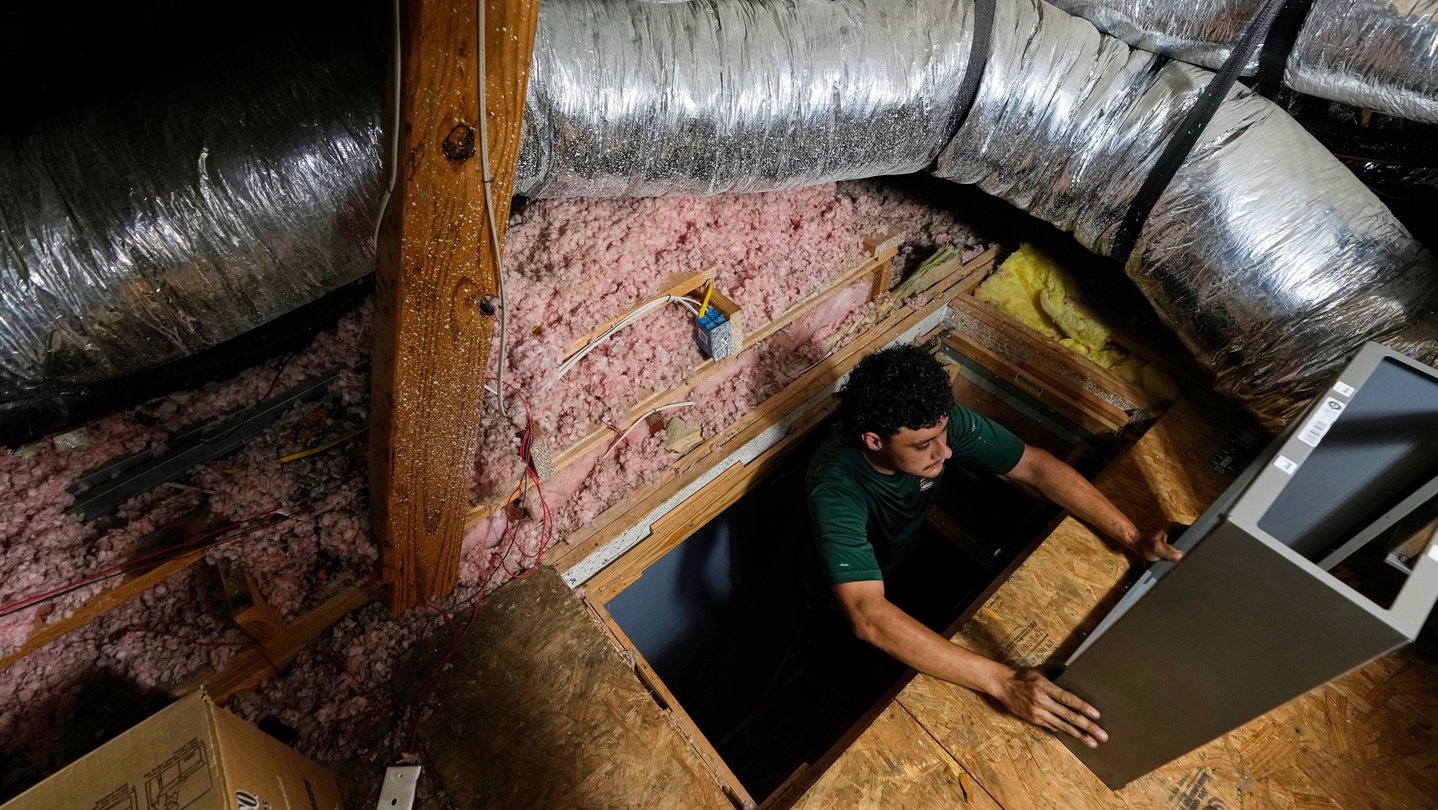
Many Georgians are likely seeing higher electric bills as the summer weather warms up. That’s typical, and it’s still happening this year even though Georgia Power just lowered the rate it charges for fuel.
Two of the main factors in a power bill — how much energy you use and the rate the utility charges — both increase in the summer. Cranking up the air conditioning to fight rising summer heat drives up a household’s energy use. And millions of people all over Georgia running their ACs can put a strain on the whole grid.
“When we need to produce more energy at a peak load like that, especially from hours from the hours of 2 p.m. to 7 p.m., it does cost more to create energy,” said Georgia Power spokesperson Matthew Kent.
When utilities are already producing large amounts of energy, piling on more demand could mean firing up additional power plant turbines, which is expensive. That’s one reason Georgia Power and many other utilities charge a higher base rate for electricity in the summer. Another is to discourage customers from using so much energy it overloads the grid, according to Liz Coyle, executive director of the consumer advocacy group Georgia Watch.
“You’re gonna pay more for using extra power during peak time in hopes that maybe you’ll use less than so that they can make sure they can keep the lights on,” she said.
The higher rate multiplied by increased usage means bills can be 30-50% higher for a typical customer using 1,000 kilowatt-hours a month, according to Georgia Power.
Summers are also getting hotter due to climate change, amplifying the challenge. Atlanta’s average summer temperature has increased by more than three degrees Fahrenheit since 1970, according to Climate Central.
Beating the heat, lowering power bills
“The good news is there are steps that people can take to make their homes more energy efficient,” said Coyle. “Depending on their income level, some can get access to no-cost services to come out to make their homes more energy efficient.”
There are simple ways to cut power use, like unplugging chargers and appliances that aren’t in use. Finding ways to reduce air conditioner use can have a major impact too.
“Air conditioning being the most expensive thing that you are powering this summer, knowing when you have that on by using a programmable thermostat, you can really cut your bill throughout the summer,” Kent said.
Increasing the temperature on the thermostat by one degree can mean a 3-5% savings, he said.
Georgia Power offers free home energy audits for customers, as do Electric Membership Cooperatives. Rebates are also available for efficiency improvements like insulation, sealing, and more efficient appliances and HVAC through both Georgia Power and the Georgia Environmental Finance Authority.
“It’s worth looking and checking a variety of sources to see what’s available in terms of a rebate for replacing an old HVAC,” Coyle said. “That can save thousands of dollars in a year or two.”
There are also different electricity rate options that can help customers save money, Kent said, including the Smart Usage plan, which adjusts the rate based on the time of day to encourage customers to avoid peak usage hours. There’s also FlatBill, which charges the same amount every month based on the utility’s estimate of how much energy a household uses.
But Coyle urged caution in switching to those programs, because they can sometimes mean higher costs in the long run and remove the incentive to reduce energy use.
“I understand that some people need the predictability, but the main thing we want to do is help people lower their power bills year round,” she said. “We generally hope that people will do more to take advantage of…programs to help lower their power bills in the summer, rather than just think that they’re doing better by spreading those higher costs over the rest of the year.”